
SCORES & OUTDOORS: Robins don’t necessarily head south for the winter

Roland D. Halleeby Roland D. Hallee

Just the other day a friend told me she thought robins went south for the winter. That is the common thought.

The American robin is a migratory songbird. While robins occasionally overwinter in the northern United States and southern Canada, most migrate to Florida and the Gulf Coast to central Mexico. Most will depart south by the beginning of September and begin their northern migration in February and March, which gives the illusion they don’t migrate during a regular winter, when snow covers the ground during those times.

Despite being depicted in the film Mary Poppins, in London, this species is actually a rare occasion to western Europe.

Robins breed in woodland and more open farmland and urban areas. It becomes less common as a breeder in the southernmost part of the deep south of the United States.

The sexes are similar but the female tends to be duller than the male, with a brown tint to the head, brown upperparts and less bright underparts. However, some birds cannot be safely sexed on plumage alone.

Robins are active mostly during the day. During the winter, they flock in large groups at night to roost in trees in swamps or dense vegetation. The flock breaks up during the day when the birds feed on fruits and berries in smaller groups. However, during the summer, the American robin defends a breeding territory and is less social.

The adult robin, however, must stay alert. It is preyed upon by hawks, cats, and larger snakes. Brown-headed cowbirds lay eggs in robin nests but robins usually reject the cowbird eggs. Juvenile robins and eggs are preyed upon by squirrels, snakes and some birds such as blue jays, common grackles, crows and ravens.

The robin is the state bird of Connecticut, Michigan and Wisconsin. It ranks behind only the red-winged blackbird as the most abundant bird species in North America, just ahead of the European starling.

American robins have an extensive range, estimated at 6.2 million square miles. The International Union for Conservation of Nature (IUCN) lists the bird as “least concern” when evaluating its position as a threatened species. At one point, the robins were hunted for their meat, but it is now protected throughout its range in the United States by the Migratory Bird Act.

The species was first described in 1766 by Carl Linnaeus in the 12th edition of his Systema Naturae. The term robin has been recorded since 1703.

Despite is wonderful song, the American robin is known to carry West Nile virus. While crows and jays are often the first noticed deaths in an area with West Nile virus, the American robin is suspected to be a key host, and holds a larger responsibility for the transmission of the virus to humans. This is because, while crows and blue jays die quickly from the virus, robins survive the virus longer, thus spreading it to more mosquitoes, which then transmit the virus to humans.

Robins eat primarily (approximately 60 percent) on wild and cultivated fruits and berries, and (approximately 40 percent) on invertebrates, such as earthworms, beetle grubs, caterpillars and grasshoppers. That ability to switch to berries allows them to winter much farther north than most other North American thrushes, of which it is a member of that family.

The answer to the question as to whether they go south for the winter or not, is that it does migrate, but some don’t travel as far as others, and some will stay behind, probably depending on the severity of the winter. Their return in February and March also contributes to the belief they don’t migrate.

Roland’s trivia question of the week:

Have the New England Patriots and Houston Texans ever met in a playoff game?

Answer
Yes, 2012, 2016, and 2024. Patriots winning all three encounters, all in Foxborough.

SCORES & OUTDOORS: Lady bug sighting

Roland D. Halleeby Roland D. Hallee

Ladybug, ladybug, fly away home/Your house is on fire and your children are gone/All except one, and that’s Little Anne/For she has crept under the warming pan.

I actually saw my first ladybug of the season just before Christmas.

The ladybug as immortalized in the still-popular children’s nursery rhyme. They have been, for very many years, a favorite insect of children. But what about these little bugs that appear in our houses at certain times of the year?

Well, they come from the beetle family and are found worldwide with over 5,000 species, with more than 450 native to North America.

It is known by numerous names, but only in the U.S. is it called a ladybug. Other names include ladybirds, God’s cow, ladycock, lady cow and lady fly. Scientists increasingly prefer the name ladybird beetle, as ladybugs are not true bugs.

Coccinellids are small insects, and are commonly yellow, orange, or scarlet with small black spots on their wing covers, with black legs, head and antennae. A common myth is that the number of spots on the insect’s back indicates its age.

For the sake of this column, let’s refer to Coccinellids by the commonly-known name, ladybug.

A few species are considered pests in North America and Europe, but they are generally considered useful insects, as many species feed on aphids or scale insects, which are pests in gardens, agricultural fields, orchards and similar places. These insects were introduced into North America from Asia in 1916 to control aphids, but is now the most common species as it is out-competing many of the native species. While predatory species are often used as biological control agents, introduced species of ladybugs outcompete and displace native insects, and become pests in their own right.

Ladybugs are brightly colored to ward away potential predators. Mechanical stimulation — such as by predator attack — causes reflex bleeding in both larval and adult lady beetles, in which an alkaloid toxin is exuded through the joints of the outer shell, deterring feeding. Ladybugs are known to spray a toxin that is venomous to certain mammals and other insects when threatened.

These insects overwinter as adults, aggregating on the south sides of large objects such as trees or houses during the winter months, dispersing in response to increasing day length in the spring. Eggs hatch in three to four days from clutches numbering from a few to several dozen. Depending on resource availability, the larvae pass through four phases over 10-14 days, after which pupation occurs. After a moulting period of several days, the adults become reproductively active, and are able to reproduce again. Total life span is one to two years on average.

Predatory ladybugs are usually found on plants where aphids or scale insects are, and they lay their eggs near their prey, to increase the likelihood the larvae will find the prey easily. A larva uses its sharp jaws to crush an aphid’s body and sucks out the aphid’s juices.

The most common plants where you will find ladybugs include any type of mustard plant, such as other early blooming nectar and pollen sources, like buckwheat, coriander, red or crimson clover, and legumes, and also early aphid sources such as bronze fennel, dill, coriander, caraway, angelica, tansy, yarrow of the wild carrot family, dandelions and scented geraniums.

These insects are sensitive to synthetic insecticides.

Many cultures consider ladybugs lucky. In many countries, including Russia, Turkey and Italy, the sight of a ladybug is either a call to make a wish or a sign that a wish will soon be granted.

In Christian areas, they are often associated with the Virgin Mary, and the name that this insect bears in various languages in Europe corresponds to this. Though historically many European languages referenced Freyja, the fertility goddess of Norse mythology, in the names, the Virgin Mary has now largely supplanted her.

For example, freyjuhoena (Old Norse), and Frouehenge (Norwegian) have been changed into marihone, which corresponds with Our Lady’s Bug.

Although the ladybugs are beneficial insects to have around, they still gather the curiosity of children. In the animated film, A Bug’s Life, Francis the Ladybug (voiced by Dennis Leary) is an aggressive beetle and the clown in P.T. Flea’s circus. The contrast between him being a male and a “lady”bug, is a recurring joke in the film.

Don’t squish that ladybug, it will keep unwanted insects off your plants, and even entertain the children and grandchildren.

Roland’s trivia question of the week:

Name the four NFL teams to never appear in a Super Bowl.

Answer
Cleveland Browns, Detroit Lions, Houston Texans, Jacksonville Jaguars

SCORES & OUTDOORS: Where do loons go?

Roland D. Halleeby Roland D. Hallee

Every fall, when we begin the depressing work of closing down camp, a group of us campers get together for the “end of the season suppah.” And, inevitably, the questions are asked of me, “where do loons go in the winter, why do they leave, and how do they know to return at precisely the time ice goes out?”

Let me see if I can answer the questions.

Although the summer breeding range of loons is well documented, how they get to and from their summer range and exactly where they go during the winter has been a puzzle to scientists for some time. In recent years, with the banding of loons, data shows that loons migrate to the open and warmer waters of the ocean during the winter.

Loons leave their summer breeding lakes because they freeze up. They don’t go farther south, where lakes don’t freeze, because a new set of dangers awaits: preying alligators, water that is too warm for loons, or too shallow and murky for diving and hunting. Loons need very clear, deep, open water for diving and catching fish. The ocean is the right place for loons in winter.

Because loons are heavy birds with large feet, they must “run” across the water for about a quarter of a mile before taking flight. Like jets, loons need long runways to gather speed before lifting off. If there’s ice on the lake, they can’t run for lift-off, and they may become trapped. Trapped loons are at risk of death.

What about food? During the summer, loons feed on fish, aquatic vertebrates and once in a while on plants. Their favorite summer food is yellow perch, but will eat whatever is available and what they can catch. This includes trout, though trout tend to be too fast for loons. They also enjoy dragonfly larvae.

But, fresh water is different from the ocean’s salt water. Loons have a special adaptation to handle salty fish and salty water. They have salt glands in their skull between their eyes. These drip almost constantly during the winter season. Even young chicks as young as two weeks old are competent to remove salt if they are fed salty solutions.

During the winter, they eat, among other things, flounder, crabs, lobster, shrimp, gulf menhaden, bay anchovies and silversides. Menhaden, a Native American word (munnawhateaug), is a fish found in great numbers along the Atlantic coast of North America, and is also used as manure and produces a valuable oil. They may be so important to loons that it can influence their migration.

It is also asked how far loons can fly at one period of time. Actually, it’s not really known how far they can fly without stopping. They have been clocked at 90 mph and we know that they are capable of migrating long distances, but they do stop en route to feed and rest. It is also known, that some loons migrate from the Adirondacks to the coast of Maine. Their flight lasts about 48 hours and they fly in a virtually straight line to the coast, with no stopovers.

And, about their timely arrival back to their breeding lake? We already know that since loons can’t stand on land, they fly to the open waters of the ocean. But how do they know when to come back on the very day of ice out? They make exploratory flights each morning, moving closer and closer to their nesting destination, and fly back if they don’t find open water. Sometimes loons begin checking its lake several days before the lake opens up. That means the loon will certainly be there the day the ice finally goes out.

Keep in mind, though, that since loons need a running start to take flight, they have to be careful. Should they return, and the lake re-freezes, they could get trapped. They seem to have adapted its behavior for this special circumstance, and seem to be able to avoid the danger.

Finally, why do they gather on one lake in the fall just before migrations? Loons gathering, called “rafting,” may help them feed more efficiently. Adults gather on a few large, non-breeding lakes, allowing the young to remain on their breeding lakes without competition as their flight feathers grow all the way in and their wings grow strong enough for the final migration. Also, as loons lose their territorial drive in late summer and feed in groups, they no longer spend time and energy chasing off other loons. If the lake is a breeding lake, usually the adults are nesting and the pair is no longer defending the nest. Sharing a space makes more sense because everyone can spend their time eating. It may also help to prevent loons being attacked by predators because there are more eyes looking out for attacks.

The primary importance for a “rafting lake” is that is has to have a lot of fish to feed on. Having islands for protection from the wind also seems important.

Hopefully, that has answered many of the questions about the mysterious, enchanting loons, who seem to be in a world of their own.

Roland’s trivia question of the week:

Has an NFL team with a losing record ever made it to the Super Bowl?

Answer
2010 Seattle Seahawks with a 7-9 record.

SCORES & OUTDOORS: Feral cats in our society

A feral barn cat.

Roland D. Halleeby Roland D. Hallee

My daughter just adopted a kitten. They are so cute and adorable, especially when you watch them chase a ball of yarn, fight to grab that elusive string hung in front of them, try to catch the red laser dot, or when they lay in your lap and purr into the evening hours.

There is, however, another strain of cat out there that is not so fortunate as to have a warm home, square meals, and the medical attention necessary.

They are feral cats. A feral cat is an unowned and untamed cat separated from domestication. Feral cats are born in the wild or may be abandoned or lost pets that have become wild. They should not be confused with the wildcat which are not descended from domestic cats. A stray cat, or alley cat, though unowned, still exhibits temperament similar to that of a pet. In popular usage, these terms are sometimes used interchangeably.

Feral cats may live alone but are usually found in large groups called feral colonies. The average life span of a feral cat that survives beyond kittenhood is about two years, while an indoor domestic house cat lives an average of 12 to 16 years.

Urban areas, Australia and North America are not native environments for cats. The domestic cat comes from temperate or hot, dry climates and was distributed throughout the world by humans. Cats are extremely adaptable, and feral felines have been found in conditions of extreme cold and heat.

Feral cats are sometimes at the top of the food chain as predators in local ecosystems, although they are sometimes preyed on by feral dogs, coyotes and other mammalian predators. Cats are effective at controlling small-animal populations, which is one of the major justifications for the keeping of farm cats. However, conservationists argue that feral cats contributed to the killing of songbirds and endangered birds, with estimates that bird loss is at 1 million a year because of predation.

Feral cats on islands have been implicated in the extinction of several species in the Caribbean, Pacific Mexico and Stephens Island. In a statistical study, they were a significant cause for the extinction of 40 percent of the species studied.

A ranger at a Hawaiian Island wildlife sanctuary witnessed a single feral cat kill 33 ground-nesting sea birds in a single incident. He also noted that cats killed 45 of 75 chicks in one bird colony.

A feral cat colony is a population, known as a clowder, of feral domestic cats. The term is used primarily when a noticeable population of feral cats live together in a specific location and utilize a common food source – such as food scavenged from refuse bins, dumpsters or supplemantary feeding by humans – and reach a population density which might be regarded to be undesirable.

Feral colonies occur when unsterilized domesticated cats become, intentionally or otherwise, disconnected from their respective human owners and managed domestic environment. They quickly have to learn to fend for themselves and form the breeding communities.

Although cats are traditionally believed to be loners, even despising the company of other cats, these colonies can actually increase the chances of survival with multiple cats to look after kittens. In addition, some cats seem to enjoy the company of others, especially those born as domestic.

There is debate about how to deal with feral cat populations. Some advocate culling feral cat populations by trapping and euthenasia. Others argue that hunting is the most cost-effective method of population control. Opponents to culling argue that if the factors that allowed the colony population to grow in the first place are not addressed as well, a new clowder can form in the same location when cats that escaped trapping and those moving in from surrounding areas continue to breed.

Proponents of Trap-Neuter-Release (TNR) programs contend that such program are more effective and humane. Volunteers trap feral cats, sterilize them through neutering, then release them. Tamed animals might be adopted out as pets, although many experts believe that it is prohibitively difficult, if not often impossible, to domesticate and adopt a feral cat unless it is trapped and socialized before six weeks of age. There is some evidence, however, that many people have adopted and domesticated adult feral cats. Some feral cat organizations offer techniques to do this.

Various long term studies have shown that TNR is effective in stopping the breeding of cats in the wild and reducing the population over time.

Regardless of the measures taken to control feral cats and feral cat colonies, wildlife rehabilitation centers are constantly receiving wild animals that have been attacked by cats, and few of these injured animals survive, even if the cat fails to kill them outright.

Do you know where your Tabby is tonight?

Roland’s trivia question of the week:

Patriots coach Mike Vrabel once coached the Tennessee Titans. From what city did they originate?

Answer
Houston (Oilers), in 1997.

SCORES & OUTDOORS: The resources of today’s “Great White Hunter”

Roland D. Halleeby Roland D. Hallee

When I was having my usual morning coffee and Danish last week following Sunday church, at a local eatery, I happened to look up at a wide-screen television mounted on the wall to notice an outdoor show. It was your typical show, sponsored by outfitters, outdoor equipment companies and the opinions of various “expert” hunters.

The reason the show caught my attention was the way they were going about hunting. I remember the days when I was an avid hunter (my wife says I have since “lost the thrill of the hunt”), we used to have our favorite spots, get out early in the morning on a full stomach, brave the weather conditions and have great expectations for the outcome at the end of the hunt. It was the hunter vs. the hunted. A classic exercise in who could out think, out maneuver or outwit the other. It was wild game hunting at its best. You needed to possess the skills to pursue your prey in its own environment, both parties equipped with all the instincts Mother Nature provided.

I can remember a couple of those adventures when the animal actually out-smarted me – something my wife says is easy to do (her opinion). I once followed a deer through the snow for many hundreds of yards, never catching sight of him, but I could hear him snorting up ahead of me, and hearing his antlers rattling against tree limbs. I followed him until we crossed our original tracks – basically traveled in a circle – and he actually passed through two conifers without disturbing a snowflake on the boughs. That was when I knew I was outwitted.

But that was then.

Today, it just isn’t fair. Here, on this show, they had hunters gathering on game farms, splashed with deer urine scent like it was Aqua Velva, equipped with global positioning equipment, calling the deer with artificial devices. Once the deer was lured, they employed a computerized gauge to calculate the distance to the target, refer to another hand-held instrument to measure the direction and velocity of the wind before finally sighting in the prey. Mounted on top of their high powered rifle was a scope capable of seeing a gnat’s tonsils at 200 yards.

The deer didn’t stand a chance. The only thing the hunters didn’t have were laser guided ammunition or “smart” bullets. After they dispatched the animal, they would break into a wild celebration. What’s with that?

If, after the use of all that sophisticated equipment, you didn’t come home with a deer that was essentially caged, you should be embarrassed to the point of taking up bowling. The whole episode was like shooting fish in a barrel.

So, I’ve decided that a money-making venture would be to make available to deer: human motion sensors, rear view mirrors, bullet proof vests, space-aged unpenetrable deflector shields a-la Star Trek, and laser guided bullet defense systems. After all, it’s only fair.

Remember the old saying, “We believe in the right to arm bears?” Well, the same could be said about deer.

Roland’s trivia question of the week:

Name the seven NFL teams with the initials of their cities on the side of their helmets.

Answer
Kansas City, San Francisco, Green Bay, Chicago, NY Jets, NY Giants, Tennessee.

SCORES & OUTDOORS: Raccoons extremely adaptive to their surroundings

Roland D. Halleeby Roland D. Hallee

Recently, a neighbor came over and warned me that he had just seen a raccoon enter my garage. It turned out to be another neighbor’s rather plump and large Maine coon cat. But it got me thinking.

Raccoons, although they prefer deciduous and mixed forests for their habitat, are plentiful in the city. I have had many an encounter with them, some comical and some a little more serious.

I remember, many years ago, when I heard a commotion outside of my home. I went out, noticed that the lid to my metal trash can was laying on the ground, and went to replace it. That’s when the head of a raccoon popped out from inside the can. I was able to overturn the can, and the “coon” went running off into the woods, from the persuasion of a hockey stick.

They are extremely adaptable to their surroundings, therefore, you’re likely to see them everywhere. They are basically considered pests.

Although they were previously thought to be solitary, there is now evidence that raccoons engage in gender-specific social behavior. Related females often share a common area, while unrelated males live together in groups of up to four animals to maintain their positions against foreign males during the mating season.

The most important sense for the raccoon is its sense of touch. The hyper sensitive front paws are protected by a thin layer which become pliable when wet. The five digits of the paws have no webbing between them, which is unusual for a carnivore.

Raccoons, however, have a rather peculiar intelligence. Only a few studies have been done to determine the mental abilities of raccoons, who have sensory perception, used to interpret tactile impulses, more than any other studied animal. They are able to identify objects before touching them. The raccoon’s paws lack an opposable thumb and thus it does not have the agility of the hands of primates.

In a study conducted, it was determined that raccoons were able to open 11 or 13 complex locks in less than 10 tries and had no problems repeating the action, even when the locks were rearranged or turned upside down. Other studies concentrated on a raccoon’s memory, and showed they can remember the solutions to tasks for up to three years. Another study indicated raccoons were able to instantly differentiate between identical and different symbols three years after the short initial learning phase. They can distinguish boxes containing two or four grapes from those containing three.

Going back to the raccoons that visited my house that night, I figured I would “out smart” them by attaching a bungy cord from the handles of the trash can through the handle on the lid. And, you guessed it, they figured out how to get in anyway. The only things that eventually worked was a cinder block on top of the can, with the aforementioned bungy cord also attached. They were unable to physically remove the heavy object.

Raccoons are thought to be color blind, although their eyes adapt well to green light, allowing them to see well in twilight. Visual perception is of subordinate importance to raccoons because of their poor long-distance vision. Their sense of smell is actually more important. They have a broad auditory range, from high pitch to quiet noises like those produced by earthworms underground.

Captive raccoons have been known to live for more than 20 years, while in the wild, life expectancy is 1-3/4 to 3 years. The most frequent cause of death in North America is distemper, which can reach epidemic proportions and kill most of a local raccoon population. Natural predators are bobcats, coyotes and great-horned owls, the latter mainly preying on young raccoons.

Raccoons are common throughout North America, from Canada to Panama. The population on Hispaniola (the Dominican Republic) was exterminated as early as 1513 by Spanish colonists who hunted them for their meat. They were also extirpated in Cuba and Jamaica, where they were last sighted in 1687.

But, be careful, raccoons are known to have the ability to enter a seemingly secure building. I have a story for that, too. One took up residence in my garage in 1991 (I still can’t figure out how it got there). I was able to capture that one with a Hav-a-Heart trap, and a can of cat food as bait, in pretty short order. It was relocated to a rural area, but not without a fight. He was a little disgruntled about the whole ordeal and actually tried to cut my hand with its sharp claws as I picked up the cage. The move was performed without injury to either party.

Should you encounter a raccoon during daylight hours, it may be looking for food, or, more than likely, is rabid. Do not approach raccoons at any time. Call the animal control officer in your town.

Unfortunately, space doesn’t allow me to relate other raccoon encounters. Perhaps that can be a column for some other time.

Roland’s trivia question of the week:

Of the five major sports, baseball, football, basketball, hockey and soccer. Which is the only sport that does not have penalties?

Answer
Baseball.

SCORES & OUTDOORS: The life and travels of the Monarch Butterfly

MMM, MMM GOOD: Emily Poulin, of South China, captured this monarch butterfly enjoying the nectar.

Roland D. Halleeby Roland D. Hallee

While watching the National Geographics channel on television, I saw an episode of a series called Great Migrations, and became very interested in the Monarch butterflies, who are among the most intriguing of the migrating species.

The monarch is probably the best known of all North American butterflies. Its wings feature an easily recognizable orange and black pattern, with a wingspan of 3-1/2 – 4 inches.

The monarch is most famous for its southward migration and northward return in summer in the Americas which spans the lifetime of three to four generations of the butterfly.

The upper side of the wings is tawny-orange, the veins and margins are black, and in the margins are two series of small white spots. The fore wings also have a few orange spots near the tip. The underside is similar but the tip of the fore wing and hind wing are yellow-brown instead of tawny-orange and the white spots are larger.

In North  America, the monarch ranges from southern Canada to northern South America.

Monarchs are especially noted for their lengthy annual migration. In North America they make massive southward migrations starting in August until the first frost. A northward migration takes place in the spring. The monarch is the only butterfly that migrates both north and south as the birds do on a regular basis. But no single individual makes the entire round trip. Female monarchs deposit eggs for the next generation during these migrations.

By the end of October, the population east of the Rocky Mountains migrates to the sanctuaries of the Mariposa Monarca Biosphere Reserve within the Trans-Mexican Volcanic Belt pine-oak forests in the Mexican states of Michoacán and México. The western population overwinters in various sites in central coastal and southern California, United States, notably in Pacific Grove and Santa Cruz.

The length of these journeys exceeds the normal lifespan of most monarchs, which is less than two months for butterflies born in early summer. The last generation – also known as the super generation – of the summer enters into a non-reproductive phase and may live seven months or more. These butterflies fly to one of many overwintering sites. The generation that overwinters generally does not reproduce until it leaves the overwintering site sometime in February and March.

It is the second, third and fourth generations that return to their northern locations in the United States and Canada in the spring. How the species manages to return to the same overwintering spots over a gap of several generations is still a subject of research; the flight patterns appear to be inherited, based on a combination of the position of the sun in the sky and a time-compensated sun compass that depends upon a circadian (repeating in a 24-hour cycle) clock that is based in their antennae.

Monarch butterflies are one of the few insects capable of making trans-Atlantic crossings. They are becoming more common in Bermuda due to increased usage of milkweed as an ornamental plant in flower gardens.

Because they feed mainly on milkweed, monarch butterflies are poisonous or distasteful to birds and mammals because of the presence of cardiac glycosides that are contained in milkweed consumed by the larva. It is thought the bright colors of larva and adults function as warning colors. During hibernation monarch butterflies sometimes suffer losses because hungry birds pick through them looking for the butterflies with the least amount of poison, but in the process killing those they reject. Some birds, such as orioles and jays have learned to eat only the thoracic muscles and abdominal contents because they contain less poison. In Mexico, about 14 percent of the overwintering monarchs are eaten by birds and mice.

Many people like to attract monarchs by growing a butterfly garden with a specific milkweed species. Many schools also enjoy growing and attending to monarch butterflies, starting with the caterpillar form. When the butterflies reach adulthood they are released into the wild.

Recent illegal deforestation of the monarch’s overwintering grounds have led to a drastic reduction in the butterfly’s population. Efforts to classify it as a protected species and to restore its habitat are under way. Also, a problem in North America is the black swallow-wort plant. Monarchs lay their eggs on these plants since they produce stimuli similar to milkweed. Once the eggs hatch, the caterpillars are poisoned by the toxicity of this invasive plant.

The common name “Monarch” was first published in 1874 by Samuel H. Scudder because “it is one of the largest of our butterflies, and rules a vast domain.”

Monarchs are beautiful to watch during the summer, but the next time you see one, think of what that particular butterfly may have gone through to be with us.

Roland’s trivia question of the week:

Who became the first major league pitcher to win 20 of his first 21 decisions in 2001?

Answer
Roger Clemens. He finished the season at 20-3.

SCORES & OUTDOORS: Coyotes have made remarkable return to Maine

Roland D. Halleeby Roland D. Hallee

There is nothing more soothing than to hear a coyote cry out in the darkness when at a remote location in Maine.

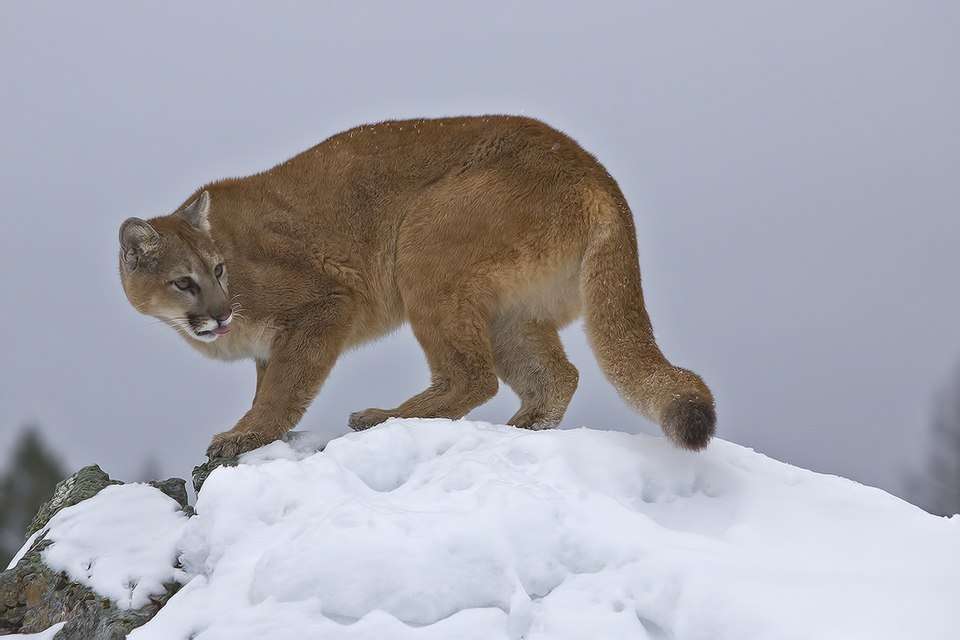
Coyotes have made a return to Maine. This happened sometime in the 1960s and they have settled in very well. Archeological research has shown that coyotes lived in the East 30,000 years ago. What caused the coyote to leave the East is not known.

With the extirpation of the wolf in the lower 48 states caused by clearcutting of the virgin forests, and constant predator control, coyotes began to roam. From the southwest they roamed to Alaska and Canada, and then on to the northern Great Lakes region, and into Ontario and Québec. In eastern Canada, coyotes encountered scattered packs of the Eastern Canadian wolf population. Generally, coyote and wolves do not get along. If a coyote comes across wolves, he is certainly going to die. But these groups of wolves acted differently toward the coyotes since their numbers had been decimated due to extensive hunting and trapping, breaking down their complex social structure. Subsequently, many eastern coyote offsprings possess some degree of wolf genes, but remain coyotes in both appearance and behavior.

Coyotes are one of the most adaptable animals in the world, changing their breeding habits, diet and social dynamics to survive in a wide variety of habitats.

The coyote can be found on the North American continent, and only on this continent. They are also known by other names, such in the southwest and Mexico where they are called “Old Man,” and in other areas of the continent as “America’s Song Dog.” Many Native American myths were passed on from generation to generation with coyote chosen as lead character in all their stories. The Native Americans recognized and respected the coyote’s intelligence, adaptability, cunning, curiosity and humor. The ancient Aztecs gave the coyote his name: “Coyoti,” meaning “God’s dog.”

The coyote is one of the few wild animals whose vocalizations are commonly heard. At night, coyotes both howl and emit a series of short, high-pitched yips. Howls are used to keep in touch with other coyotes in the area. Sometimes, when it is first heard, the listener may experience a tingling fear of primitive dogs, but to the seasoned outdoorsman, the howl of the coyote is truly a song of the West.

The howling shows territorial warnings to other male coyotes. Females are always welcome. Yelping indicates a celebration or criticism within a small group of coyotes. The bark is what the coyote is named for, Canis lantrans means “barking dog.” That is used to display threats when a coyote is protecting a den or a kill. Huffing is usually used for calling pups without making a great deal of noise.

That relationship with humans ended when the Europeans arrived in North America. In his book The Voice of the Coyote, Frank Dobie wrote, “The English-Americans have never taught coyote any language but that of lead, steel, and strychnine.” The coyote, though, was not alone in experiencing the wrath of the settlers, other native wildlife were either pushed into extinction, or their populations were diminished – the wolf being one of them. The coyote, however, would survive.

For centuries, coyote lived with wolves, but very cautiously. It was important for the coyote to stay outside wolf territory if they wanted to survive.

According to Geri Vistein, representing the national Coyote Project, “Coyotes are very capable of co-existing with us, but we need to keep coyotes wild, by never providing them food, water or shelter.”

Conversely, killing coyotes to protect farm animals can actually have the opposite affect. Stable, healthy families of coyotes are likely to be wary of humans, said Vistein, while wandering, unhealthy or starving coyotes are more likely to snag an unprotected chicken or other farm animal. Killing coyotes that have established their territories only opens those areas up to marauding coyotes.

Although there have been no reports of coyotes attacking people in Maine, there are a few things to remember if you should encounter one. Ninety-nine percent of encounters with coyotes result in no confrontation. They are wary of humans. Only on occasion will they display some aggressiveness. Watch its behavior. It’s natural reaction will be to identify you, and then turn away and run off. If it becomes aggressive, treat it like a dog. Show it that you are the master: shout at it, stand your ground, but do not run away.

The coyote’s tail is used to signify a threat. It becomes bushy and is held horizontally when the coyote displays aggressiveness.

Humans have mixed emotions about coyotes. Some want them killed while others see benefits in their presence. Some rural residents feel the presents of coyotes restrict the freedoms of their pets and their own lifestyles, while others who have farm animals, using the proper precautions, have never experienced the loss of any farm animals at the hands of coyotes that are obviously present in the area.

The coyote seems to be asking for humans to feel comfortable having wildness in settled places, it’s up to mankind if that is to happen.

Whether to allow the coyote to live or die is a debate that has gone on for centuries in the United States, but to quote Dell Hymes in his Fivefold Fanfare for Coyote: “…Never will he go from this land / Here always, as long as the land is, / that is how Coyote is in this land….

Roland’s trivia question of the week:

The MLB Texas Rangers have been in Texas for 53 years. However, their history goes back to 1961. From where did they move to Texas?

Answer
They were the second version of the Washington Senators (1961-1971. They moved to Texas in 1972). (The first version became the Minnesota Twins in 1961.)

SCORES & OUTDOORS: Mystery of the missing crickets

by Roland D. Hallee

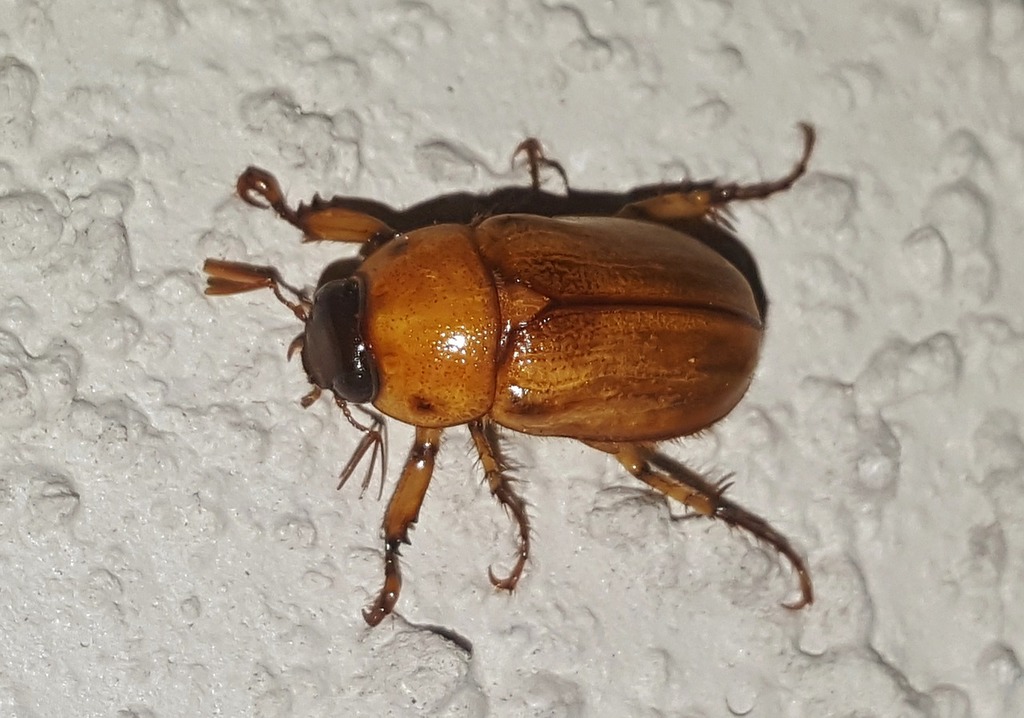
Over recent years I have been asked why certain creatures in nature seem to be disappearing. First we noticed a decline in fire flies, then June bugs, and even frogs.

Last week, I received an email from a loyal reader about the absence of crickets this past summer. After reflecting, I also wondered why we don’t hear them anymore.

Well, crickets haven’t disappeared, but their numbers and presence can be affected by seasonal changes and long-term environmental factors like habitat loss, climate change, and pesticides. If you don’t hear them, it could be because they are hiding from predators, seeking shelter indoors in colder weather, or it might be winter when they naturally die off and only their eggs overwinter. Conversely, a hot, dry summer can lead to an increase in crickets. So, OK, we had a hot, dry summer, why didn’t we hear crickets?

Here are some short-term reasons you might not hear or see crickets:

Seasonal changes: Crickets generally decrease or disappear during the colder months as temperatures drop. Many species die off after the first frost, with the next generation hatching from eggs in the spring.

Shelter-seeking: They may move indoors to find shelter from the elements, so you might not hear them in your yard anymore.

Predator avoidance: Crickets are sensitive to vibrations. If they hear you coming, they will go silent to avoid being detected by predators.

Long-term reasons for declining numbers.

Habitat loss: Increasing urbanization, large-scale agriculture, and wildfires destroy the natural habitats crickets depend on.

Climate change: Fluctuations in temperature and weather patterns can impact cricket populations.

Insecticides: The use of pesticides can directly kill crickets and contribute to overall insect decline.

What you can do.

For temporary seasonal absence: You can expect to hear them again in the spring, as they overwinter in the egg stage.

If you want to encourage them: Planting native grasses and flowers and reducing pesticide use can help create a more favorable environment.

If you’re seeing them inside: They are likely seeking shelter from the cold or looking for moisture. Focus on sealing cracks and entry points to prevent them from getting inside.

Let’s learn a little more about crickets.

Crickets have a cosmopolitan distribution, being found in all parts of the world with the exception of cold regions at latitudes higher than about 55 degrees North and South. They have colonized many large and small islands, sometimes flying over the sea to reach these locations, or perhaps conveyed on floating timber or by human activity.

Crickets are found in many habitats. Members of several subfamilies are found in the upper tree canopy, in bushes, and among grasses and herbs. They also occur on the ground and in caves, and some are subterranean, excavating shallow or deep burrows. Some make home in rotting wood, and certain beach-dwelling species can run and jump over the surface of water.

Crickets are relatively defenseless, soft-bodied insects. Most species are nocturnal and spend the day hidden in cracks, under bark, inside curling leaves, under stones or fallen logs, in leaf litter, or in the cracks in the ground that develop in dry weather. Some excavate their own shallow holes in rotting wood or underground and fold in their antennae to conceal their presence. Some of these burrows are temporary shelters, used for a single day, but others serve as more permanent residences and places for mating and laying eggs. Crickets burrow by loosening the soil with the mandibles and then carrying it with the limbs, flicking it backwards with the hind legs or pushing it with the head.

Other defensive strategies are the use of camouflage, fleeing, and aggression.

Most male crickets make a loud chirping sound by stridulation (scraping two specially textured body parts together). Most female crickets lack the necessary adaptations to stridulate, so make no sound.

Several types of cricket songs are in the repertoire of some species. The calling song attracts females and repels other males, and is fairly loud. The courting song is used when a female cricket is near and encourages her to mate with the caller. A triumphal song is produced for a brief period after a successful mating and may reinforce the mating bond to encourage the female to lay some eggs rather than find another male. An aggressive song is triggered to detect the presence of another male cricket.

So, how come this past summer, the only time I heard crickets was when I told a really bad dad joke?

Roland’s trivia question of the week:

Name the Red Sox player who is the only one to hit for the cycle in a post season game.

Answer
Brock Holt hit for the cycle in Game 3 of the 2018 ALDS against the Yankees, becoming the first player ever to achieve this in a post season game.

SCORES & OUTDOORS: Well-dressed pigeons

Fancy feather-footed pigeon

Roland D. Halleeby Roland D. Hallee

One night last week, my wife showed a photo to me she received from a friend, showing a pigeon-like bird with fuzzy feathers on its feet. I wasn’t quite sure what it was, but it did look like a pigeon.

Research led me to identify it as a fancy feather-footed pigeon. So, more digging was done, and this is what I found. Unfortunately, there wasn’t much about them online.

A fancy feather-footed pigeon, such as the English Trumpeter or Bokhara Trumpeter, is a domesticated pigeon bred for ornamental beauty, distinguished by “muffs” of feathers on its feet, which are a form of genetic variation from its rock pigeon ancestors. This distinctive feature, which gives the appearance of “feather pants,” is caused by genetic mutations that reprogram the leg to develop feathers instead of scales, and can vary in length from a few stray feathers to large, fluffy plumes.

Foot feathering is an uncommon trait among bird species, as most birds have scaly feet. Some raptors and boreal birds have feathered feet, and among chickens and pigeons, birds can have feathery or scaly feet, depending on their breeds.

Fancy pigeon refers to any breed of domestic pigeon, which is a domesticated form of the wild rock dove. They are bred by pigeon fanciers for various traits relating to size, shape, color, and behavior, and often exhibited at pigeon shows, fairs and other livestock exhibits.

OK, with all that beauty, are there any brains?

Rock Dove

Pigeons are considered to be quite intelligent birds. They can recognize themselves in mirrors, learn complex tasks, and remember long-range routes. How smart are pigeons? Pigeons can learn and remember tasks, solve problems, and recognize individual people and places.

Fancy pigeons with feathered feet are a sight that you can find often at bird shows and displays. But why do some pigeons have feathered feet while others don’t? What evolutionary processes lead to feathers on some pigeons’ feet?

Pigeons with this characteristic have become the subject of much discussion. You can see some of these birds in bird shows and exhibits.

Pigeons get feathery feet because of one or more genetic variations. Though you might think this is just some sort of overgrowth of feathers like humans that have hair in the wrong places, foot feathers are actually not the skin growing extra feathers.

Other bird species with feathers on their feet include Snowy owls, golden eagles, certain bantam breeds, and ptarmigans.

Aside from them, certain chickens and domestic pigeons have been bred with and without feathers in the same species. The evolution of feathered feet throws new light on how evolutionary processes work.

So, where did this particular fancy feather-foot pigeon come from? Well, although they are common among breeders for show purposes, this kind of genetic mutation does not occur in the wild. So this bird is probably one that has escaped from a breeder or an owner. It’s likely to have a home somewhere nearby.

Roland’s trivia question of the week:

Name the famous football player who is the brother-in-law of former Boston Red Sox star Kevin Youkilis?

Answer
Tom Brady.