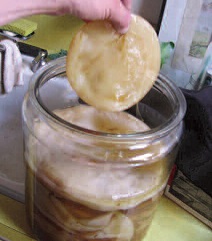

GARDEN WORKS: Wondering what to do now? You’re not alone!
GARDEN WORKS
 by Emily Cates
Help! I’m confused! Usually this time of year, I am planting trees and maybe peas. Normally, by now, maple sugaring has flown by, and I’m kicking myself for not pruning the entire orchard which has broken bud and is leafing out. And it’s usually on the late side for grafting and propagating. But wait! Hold it there! Is this really April as I type? Sure – it’s a glorious day, with the golden sunshine kissing everything outdoors with it’s luminous rays. The heady scent of thawing earth dances in my nostrils. But what is it with all the snow? A foot of it still blankets some parts of my yard and the ground is still frozen solid. Though in the warm spots there is mud, ice surely lurks beneath. The sap is still running in the maple trees without signs of budding yet. The bugs outdoors have awakened and buzzed around bewildered, seemingly not sure what to make of the snow. I must admit that neither do I!

“Son, this is a cold, gray day but spring is just around the corner….”
One thing that is a sure bet with our weather is unpredictability. We know that anyways, but sometimes it helps to be able to know the right time to do things. Otherwise, we can be paralyzed by uncertainty. This spring I am reminded of Ecclesiastes 11:4 where it says, “The one who watches the wind will not sow seed, and the one who looks at the clouds will not reap.” Really, if we keep waiting for the opportune time, we just won’t get it done. In situations like a never-ending winter, perhaps it’s best to follow nature’s lead: Is the sap still running? Well then, keep collecting it. Are those fruit trees, vines, and shrubs still dormant? Go ahead and prune them. And while you’re at it, why not take some cuttings to propagate? What? Is the ground still frozen? How about trimming up that blackberry patch and clearing out those pucker-brushes and such you told yourself you wanted to get rid of!
A real dilemma that could crop up might occur when an order arrives in your mailbox with a box of trees and other goodies from your favorite catalog. If the ground is frozen, where should they go? A savvy gardener knows there are options. If there’s enough thawed dirt somewhere to heel in the roots of these plants, they can be temporarily placed in this area until a preferred area is warmed enough to plant. Check the compost pile or a southern facing slope. No luck? A sawdust pile might do. Or, if these options are unavailable, take a bag of potting soil and put the plants into containers, covering the roots with the soil and watering well. Keep moist, but not waterlogged, and transplant when a spot is ready. Alternately, these plants can be kept in containers for a season or two if it is desirable to do so, especially if they need to grow bigger and get established. As long as they have enough supplemental watering and proper light, they should be OK. Oh, and be sure to keep tender plants and seedlings from freezing, even if you have to haul them indoors every night.
One benefit from a late snowpack is that many fruit trees will wait until later to flower, possibly escaping late spring frosts. Those of us who grow marginally-hardy peaches, plums, and apricots do appreciate it when these trees burst into bloom after frosts, thereby avoiding damage that could mean few or no fruits.
So look on the bright side! Yes, I’ve got spring fever too, but we all know – just as Frog’s father said to Frog in “The Corner,” in Arnold Lobel’s Frog and Toad All Year – “Son, this is a cold, gray day but spring is just around the corner….”
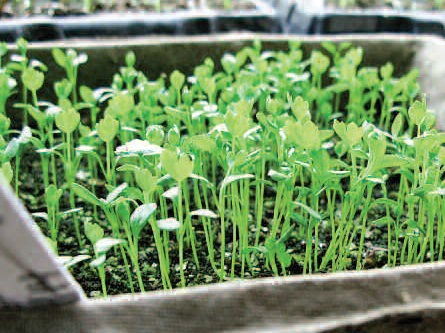 Now let’s look at is what to plant. Long-season seedlings that take a long time to get to a plant-able size from seed are happiest and most productive when started early. If these seeds were sown directly in our gardens here in Central Maine, they likely would not have time to reach their full potential. That’s why we start them early indoors. The cast of characters starring in your grow system could include leeks, onions, peppers, tomatoes, eggplant, artichoke, long-season herbs, and perennial flowers. Most likely it will state in the seed catalog or on the seed packet whether or not the seed needs to be started early. Since here in Maine we can get anywhere from 90 to 140 frost-free days, it is important to pay attention to the days needed until harvest that is listed with the seed. Timing is everything, which goes along with our next point:
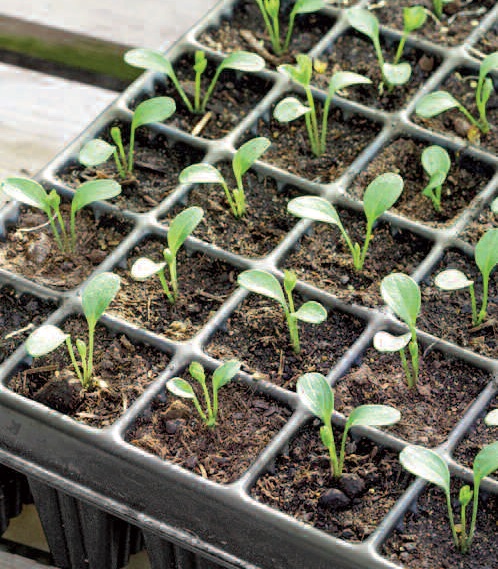 A second ingredient to successful seedlings is the substrate. Always remember to use organically-produced, fresh, pest and disease-free planting medium, whether purchased or homemade. Products that support germination are fine-textured and oftentimes do not contain soil. (These are especially helpful for starting small seeds.) Examples are peat, coir, vermiculite, etc. When purchasing bags of medium, look for those specifically formulated for germination. (Later on, when transplanting, we’ll use a coarser mix with organic matter to provide nutrition for the growing plants- but for now we’re just interested in germination.)