Up and Down the Kennebec Valley: Women’s role – Part 1

by Mary Grow

After weeks of articles about men, your writer is ready to start trying to answer a reader’s occasional question: how did women in the Kennebec Valley in the 1700s and 1800s manage, with the large families many had and without modern conveniences and social services?

Answers are not easy (except in fiction), because, as professional historians realize, information comes from written records, and written records are mostly by and about men – primarily men who were leaders, making their actions seem important and allowing them to keep records or employ others to keep records.

The late British-American historian Bernard Lewis summarized the issue in his 1995 The Middle East: A Brief History of the Last 2,000 Years. Historians, he wrote, may claim to write the history of a country; actually they write about “a few thousand privileged persons…disregarding the great mass of the people.”

Mostly true, he admitted, but not the historians’ fault: they are “limited by the evidence.” For most of the past, this evidence has been written by people with “power, wealth and learning” consequently, they have provided most of the information historians use.

Occasionally, however, a woman gets a chance to speak up about women’s lives. One example in the Kennebec Valley was midwife Martha Ballard, who has been cited before in this series.

Palermo historian Milton Dowe found another, the unknown (but probably female) author of the undated poem he included in his 1997 Palermo Maine Things That I Remember in 1996.

The poem, reproduced here by permission of the Palermo Historical Society, is titled Mama’s Mama. It reads:

Mama’s Mama, on a winter day
Milked the cows and fed them hay.
Slopped the hogs, saddled the mule
And got the children off to school.
Did a washing, mopped the floors,
Washed the windows and did some chores,
Cooked a dish of home-dried fruit
Pressed her husband’s Sunday suit.
Swept the parlor, made the bed,
Baked a dozen loaves of bread.
Split some wood and lugged it in,
Enough to fill the kitchen bin,
Cleaned the lamps and put in oil,
Stewed some apples she thought might spoil,
Churned the butter, baked a cake,
Then exclaimed, “For goodness sake!
The calves have got out of the pen!”
Went out and chased them in again.
Gathered the eggs and locked the stable,
Returned to the house and set the table.
Cooked a supper that was delicious,
And afterward washed all the dishes,
Fed the cat, sprinkled the clothes,
Mended a basket full of hose.
Then opened the organ and began to play,
“When you come to the end of a perfect day.”

(A version of the poem posted on line by a female blogger changes a few words, including specifying seven children who were gotten off to school.)

* * * * * *

Martha (Moore) Ballard was born in 1735 in Oxford, Massachusetts, and died in late May 1812, in Augusta, Maine. For most of her adult life she served as a midwife in the central Kennebec Valley, delivering more than 800 babies. Between January, 1785, and May, 1812, she kept a diary describing her daily life.

At least two Augusta historians were aware of her diary. James W. North occasionally quoted from it in his 1870 history. Charles E. Nash reprinted extensive, edited samples in his 1904 history.

Neither man thought its contents important. North’s verdict was “not of general interest,” Nash’s “trivial and unimportant.”

Laurel Thatcher Ulrich

Contemporary American historian Laurel Thatcher Ulrich disagreed. Seeing it as an unusually comprehensive description of social and economic life, she quoted from and expanded on the diary in her 1990 history, A Midwife’s Tale. Fellow historians thought her effort worthwhile; the book received numerous prestigious awards and prizes.

In her introduction, Ulrich wrote that in New England in the late 18th and early 19th centuries, there were two forms of day-to-day record-keeping “the daybook and the interleaved almanac.”

The former was primarily a business journal, sometimes with added information on family life, kept primarily by “farmers, craftsmen, shopkeepers, ship’s captains, and perhaps a very few housewives.” The latter involved people using blank pages of printed almanacs to add notes about the weather, the gardens, the neighborhood and public events.

Some of Martha Moore’s family were educated, Ulrich found: her Uncle Abijah graduated from Yale in 1726, and her younger brother Jonathan from Harvard in 1761. Martha’s grandmother could sign her name; her mother “signed with a mark.”

Ulrich did not know how or why Martha learned to write. She surmised that “someone in Oxford in the 1740s was interested in educating girls.”

Martha married surveyor Ephraim Ballard (1725 – 1821) on Dec. 19, 1754, in Oxford. They had nine children; three of their first four daughters died in a diphtheria epidemic in the early summer of 1769, aged eight, four and two years.

Sons Cyrus, born Sept. 11, 1756, and Jonathan, born March 4, 1763, and daughter Lucy, born August 28, 1758, survived; and on Aug. 6, 1769, daughter Hannah was born. Daughter Dorothy (Dolly) was born September 2, 1772, youngest son Ephraim, Jr., not until March 30, 1779 (the only child born in Maine).

Ephraim Ballard first explored moving to the Kennebec Valley in the spring of 1775 – bad timing, Ulrich pointed out, because most of his new neighbors were revolutionary sympathizers and he was not. Martha (and presumably the children) joined him in October 1777. In addition to surveying, Ballard owned and ran mills; the family ended up in the northern part of Hallowell, which became Augusta in 1797.

Martha made her first diary entry on Jan. 1, 1785. By then, Ulrich wrote, oldest daughter Lucy was married and living in Winslow. Martha and Ephraim had five children at home: Cyrus, 28 (Ulrich wrote that he never married, and wondered if he “was impaired in some way”); Jonathan, almost 22 (a short-tempered trouble-maker); Hannah, 15 and a half; Dolly, who would turn 13 in September; and Ephraim, three months short of his sixth birthday.

Their house at that time had two rooms downstairs, the east and the west room in Martha’s words; two unfinished rooms upstairs; a barn and a cellar. Ephraim’s sawmill and gristmill were nearby, plainly audible.

Ephraim Sr., was frequently away for days or weeks on his surveying work, and sometimes one or more of the children would stay elsewhere. In return, Martha often had one or two unrelated young women as household help, especially after her daughters married and moved out.

The earliest continuous diary excerpts Ulrich copied were from early August 1787, and the last series from May 1809. She used random individual entries to support her comments and analysis.

Judging by the diary excerpts, the bulk of Martha’s household work fell roughly into four categories: washing and cleaning; working with cloth; cooking; and farm work, tending animals and gardening. Other things to do included caring for her children until they left home (and sometimes when they came back for a while, or during her daughters’ pregnancies), helping her husband (and vice versa) and other miscellaneous chores.

* * * * * *

Ulrich wrote that Martha disliked washing and whenever possible delegated it, first to her daughters and then to other young women who became her household helpers. She quotes a Jan. 4, 1793, entry, after both daughter Hannah and a neighbor’s girl had moved to their new husbands’ homes: “I have washt the first washing I have done without help this several years.”

Nonetheless, the word “washt” – Martha’s spelling of “washed” – appears intermittently in the diary. Sometimes she washt; sometimes “the girls” washt. These references seem to have been to washing clothes; occasionally she specified what else was washt.

On Jan. 1, 1796, Martha wrote that she “washt and washt my kitchen.” On Jan. 5, she “washt the west room.”

On the 6th, four visitors came for tea and interrupted her: “I laid my Washing aside when my Company Came and finisht it after they went away Except rinsing.” Then she was called away to pregnant patients; it was not until Jan. 9 that she recorded, “I finisht my washing and did my other work.”

Later that year, Ephraim was away surveying from Sept. 5 to Oct. 14. Martha, coming home after spending the night delivering a baby, was pleased to find her husband home and well, but dismayed by the filthy “clothes, bags and blankets” he brought with him. Ulrich said it took three days to wash them.

Ulrich quoted another entry, from 1795: “My Girls have made me 2 Barrils of Soap this weak.”

Otherwise, neither Martha, at least in entries Ulrich chose, nor Ulrich herself talked about the work underlying that word “washt.”

The water would come by the heavy wooden pailful from the well or spring. It would be heated on the wood stove – welcome in winter, less so in summer – and poured into some sort of washtub. Clothing was washed by hand; floors and furnishings presumably with cloths or brushes or both.

Drying laundry could be a problem, too. Ulrich quoted an early (probably 1785) diary entry in which Martha wrote that Hannah hung a newly washed blanket on a fence outdoors and “our swine tore it into strips.”

The reference above to two barrels of home-made soap conceals more work

An on-line summary (by a contemporary soap company) explains that families like the Ballards would save wood ashes (for potash) and tallow from butchering and cooking grease (for animal fat).

The wood ash was collected in a barrel or trough lined with hay. Pouring water through the ashes leached out the potash. After reducing the water enough, the fat was melted and added. Mixing potash and fat thoroughly produced soap, the on-line site says.

* * * * * *

Here is Ulrich’s summary of how the Ballard women got a piece of cloth, based on the diary.

Ephraim planted flax seed in their garden; Martha and her daughters weeded and harvested it. Harvesting required pulling it by the roots. In August 1787, Martha recorded that she pulled flax on Aug. 3, until noon Aug. 4; and again, after several days tending sick neighbors, the morning of Aug. 15.

Male helpers then “turned and broke it.” Female neighbors helped “with the combing, spinning, reeling, boiling, spooling, warping, quilling, weaving, bucking, and bleaching that transformed the ripe plant into finished cloth.”

Combing the flax was an early-fall activity in 1789; on Oct. 5 and 6, while rain fell, Martha was at home combing flax. The first day she did seven pounds for herself and four for Cyrus; the next day, she didn’t record the output. She finished the job on Oct. 7, though it was a clear day (and “My girls washt.”).

Turning flax into cloth required a flax wheel – Ulrich wrote that by 1785, “Hannah and Dolly already knew how to operate the great woolen wheel and the smaller flax wheel that the family owned.” They produced “hundreds of skeins of cotton, wool, linen and tow thread, most of which their mother carried to others to weave.”

In the spring of 1787, Ulrich said, the menfolk put together a loom so the women could do their own weaving. Two neighbors helped set it up and showed Hannah how to use it; Hannah produced forty yards of cloth on July 4.

Thereafter, the women produced most of their needs, from sheets and blankets to handkerchiefs. Sometimes, Martha recorded, other women came and used their loom.

Martha’s diary sometimes mentions her knitting. One instance: she spent the first five days of December 1791, waiting for a Mrs. Parker to give birth, and while she was there knitted “2 pair gloves and 5 pair & ½ mitts.” (The Parkers’ daughter was born Dec. 7.)

To be continued.

Main sources

Ulrich, Laurel Thatcher, A Midwife’s Tale The Life of Martha Ballard, Based on Her Diary, 1785-1812 1990

Websites, miscellaneous.

Vassalboro voting results (November 2025)

by Mary Grow

At the polls Nov. 4, Vassalboro voters approved all three local referendum questions and re-elected Frank Richards to the Kennebec Water District board of trustees.

Town Clerk Cathy Coyne reported the following referendum results:

Amending Vassalboro’s Tax Increment Financing (TIF) document, 704 yes to 679 no, with 120 ballots left blank.
Appropriating up to $19,220 from surplus to pay the auditor’s bills, 1,057 yes to 403 no, with 43 blank ballots.
Increasing the number of select board members from three to five, 1,046 yes to 422 no, with 35 blank ballots.

For the KWD board position, incumbent Richards got 1,352 votes. There were 27 write-in votes and 137 blank ballots.

The main effect of the change to the TIF document will be to allow TIF money to be used for environmental improvement projects in town.

Majorities of Vassalboro voters who came to the polls voted against both state referendum questions. Proposed changes to voting regulations got 789 “no” votes to 722 “yes” votes. Adding a red flag law to Maine’s current yellow flag law was rejected by 800 voters, approved by 706.

Coyne said a total of 1,514 ballots were cast.

VASSALBORO: Control work needed to protect water quality at three central Maine lakes

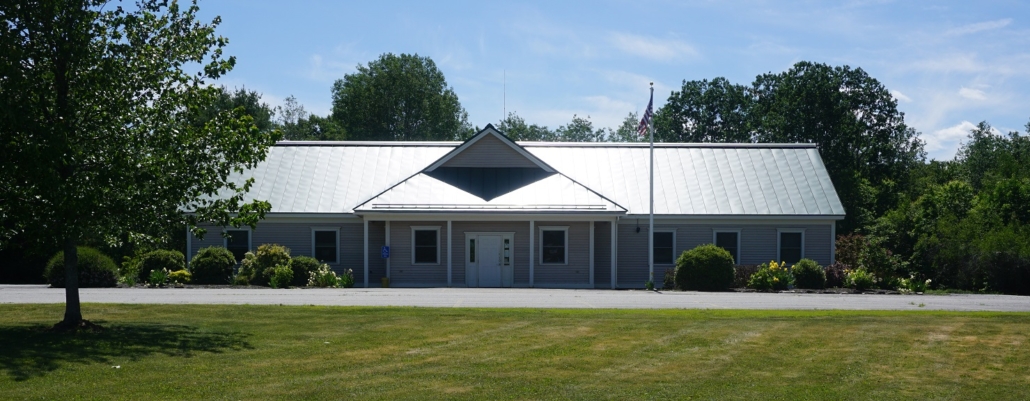
Vassalboro Town Officeby Mary Grow

The Oct. 30 Vassalboro Select Board meeting began with a presentation on run-off control work needed to protect quality in Webber Pond, Threemile Pond and Threecornered Pond (see box).

Earlier in October, Town Manager Aaron Miller received and shared with board members draft water quality reports from the three watersheds. The multi-page reports were prepared by Ecological Instincts, of Manchester, with funding and assistance from federal, state and local governments, numerous organizations and local volunteers.

Mary Schwanke, from the Webber Pond Association, shared with select board members a single-page document listing sites for which the Town of Vassalboro is responsible that are contributing pollution to Threecornered and Webber ponds. Most are culverts that need better run-off control.

Two culverts on Cross Hill Road and two on Stone Road affect Three-cornered Pond. Five more, on Cross Hill, Seaward Mills and Crowell Hill roads and Quaker Lane, and a stream crossing and culvert on Whitehouse Road, affect Webber Pond.

Schwanke explained that the lakes already have a lot of phosphorus in their bottom soils, from years of agricultural run-off. When warmer water reaches the bottom of the lake, phosphorus is released, feeding algae and phytoplankton blooms.

The first step in improving water quality is to reduce new phosphorus inflows. Then, Schwanke said, the focus can shift to getting rid of existing phosphorus.

Drainage chain

Three-cornered Pond is at the top of a drainage chain that runs via Barton Brook into Three-mile Pond and via Seaward Mills Stream into Webber Pond. Webber Pond drains via Seven-mile Brook into the Kennebec River.

Three-cornered Pond is in Augusta; Threemile pond is shared among China, Vassalboro and Windsor; and Webber Pond is in Vassalboro.

Once the watershed reports are in final form, including action plans, they will be widely publicized.

Most of the new phosphorus comes from residential development around the lakes – individual homeowners’ gravel or paved driveways and other features that don’t absorb rainwater. Schwanke said homeowners will receive individual letters about their properties.

Miller recommended a series of town actions, in addition to road work.

He advised starting with better enforcement of local water quality ordinances. The codes officer and the planning board would play leading roles. The town could help get grants for watershed work and could support local education and training, which he and Schwanke think are important.

“It has to be people understanding that their property has an impact on water quality,” Schwanke said.

Schwanke and Miller agreed that the recommended improvements to Vassalboro culverts are probably “not out of reach, dollarwise.” Rough cost estimates are mostly under $5,000 per site.

Select board members want to find out whether photos of properties around lakes and streams could be added to tax records, to document conditions as they change.

In other business, board members decided that on Nov. 11, Veterans Day, the transfer station will be closed, along with other town services.

They approved the Vassalboro Sanitary District’s board of trustees meeting in the town office meeting room and recording their meetings with town equipment until they have their own equipment.

They accepted a bid of slightly over $3,100 to replace the sand and salt shed door, as recommended by Public Works Director Brian Lajoie.

They discussed several ongoing issues, including the 2025-26 meeting calendar for the select board and budget and school committees, which is almost in final form; the town’s personnel policy, also very close to its final form; and funding to replace the Mill Hill Road bridge.

The meeting included a lengthy executive session, after which no action was taken.

The next Vassalboro select board meeting is scheduled for 6:30 p.m., Thursday, Nov. 13. Miller expects the agenda will include a review of the audit for the fiscal year that ended June 30, with auditor Ron Smith present.

Vassalboro Sanitary District board finally has quorum

photo: vsdistrict.com

by Mary Grow

Now that the Vassalboro Sanitary District’s board of trustees has a quorum – three of the required five members – they held a meeting, on Oct. 29 in the Vassalboro town office meeting room.

Lauchlin Titus volunteered to chair the board and was elected. Raymond Breton is vice-president and Jenna Davies, treasurer.

The board still needs two more members, who must be residents of Vassalboro but must live outside the areas served by the VSD.

The trustees had not met since January, according to records on the VSD website. Since then, Rebecca Goodrich, the only office employee, had run business operations on her own. A threat to default on a loan put pressure on select board members and residents to find at least three trustees (see the Sept. 25 issue of The Town Line, p. 2).

Anonymous donor gives to help customers pay bills

Vassalboro Sanitary District trustee Jenna Davies said an anonymous donor sent $5,000 to be used to help VSD customers pay their sewer bills, requesting preference be given to elderly women. Trustees accepted the donation with appreciation and agreed to develop an application form and distribute copies to district customers.

“Hopefully other people will see this and contribute. Vassalboro is a very giving town,” board chairman Lauchlin Titus said.

When VSD connected to Winslow in 2020, that was the least expensive way to meet new clean water requirements. It still left the district owing several large loan repayments.

Trying to meet expenses, previous boards raised sewer rates, to the point where users are hit hard and some are in default.

Davies asked about encouraging VSD customers who don’t send all their water into the sewer – because they irrigate extensive gardens, for instance – to install meters, so they can pay VSD only for their contributions to it. Trustees plan to inform customers of the option.

District finances, understandably, were a major topic at the Oct. 29 meeting. Davies and Titus presented ideas for improving them.

One possibility is renegotiating the agreement with Winslow, through which Vassalboro’s wastewater flows on its way to the Waterville treatment plant. Vassalboro’s rate is based on Winslow’s largest commercial client; Titus said Vassalboro now sends four or five times as much water as that entity.

The VSD owns five pieces of land in town, Titus said; how about trying to sell some? Breton and Davies agreed by consensus that Titus should consult with a local realtor.

Titus wondered if one parcel might be suitable for a solar array that would provide electricity for the VSD.

Board members decided they need to keep the headquarters building on Cemetery Street, in North Vassalboro, as an office and for storage. Goodrich told them it has no internet connection.

For future income, Titus suggested, when an alewife harvest starts on Outlet Stream, VSD officials should ask the select board to assign the income to them, on the ground that their water quality improvements made the harvest possible.

He said a Department of Marine Resources salmon study, now in the third year of a planned 10 years, is delaying alewife harvesting. Perhaps, he said, the VSD trustees should ask select board members to ask DMR staff to speed up their work.

Titus further suggested VSD again request money from Vassalboro’s TIF (Tax Increment Financing) fund. TIF contributions helped with the connection to Winslow.

Another suggestion was that the board periodically ask for new bids for services. Charles “Chuck” Applebee, from the current consultant, Wiscasset-based Water Quality and Compliance Services, endorsed the idea.

Applebee recommended trustees develop a realistic list of services to ask for, not just the minimum affordable. He repeatedly talked about deferred maintenance due to lack of funds; board members proposed ways to deal with several issues.

Trustees reaffirmed a previous board’s decision to sell a truck and a tractor that are no longer used. Bids will be due by Dec. 1, to be opened at the December board meeting.

In the Oct. 29 audience was Laurie Stevens, regional director (Maine, New Hampshire and Vermont) for RCAP (Rural Community Assistance Partnership) Solutions. She explained several ways her organization can assist VSD, at no charge because RCAP is federally funded. Trustees approved working with RCAP.

Vassalboro select board member Frederick “Rick” Denico urged trustees to update the VSD website, so it will be a source of accurate and reliable information.

Trustees agreed they will schedule monthly meetings for 2:30 p.m., the third Wednesday of each month (subject to change), with their next meeting Wednesday afternoon, Nov. 19.

However, on Nov. 5 the town website said the next meeting would be at 2:30 p.m. Monday, Nov. 17.

They asked if they could continue to use the town office meeting room and its recording system, for a while at least. Denico said select board members would discuss the request at their Oct. 30 meeting

Three dozen attend Vassalboro school board workshop

Vassalboro Community School

Vassalboro Community School (contributed photo)

by Mary Grow

Three dozen Vassalboro residents turned out for their school board’s Oct. 28 public workshop meeting, on school safety and other topics. Board members welcomed them and invited them to come back again – and again.

Please come to our monthly board meetings, they said. Please come to our meetings with the budget committee that will start early in 2026. Want to be a substitute teacher? Please apply; we’ll do our best to accommodate your skills and schedule. Want to be a bus driver? Please apply; we’ll train you.

Board members organized the meeting after they cut off a discussion of school safety at their Oct. 14 regular meeting, a discussion sparked by a September incident at Vassalboro Community School and reports on social media (see the Oct. 23 issue of The Town Line, p. 3).

Oct. 28 audience members got a two-page single-spaced list of responses to questions asked at and after the Oct. 14 meeting. During the Oct. 28 discussion, Superintendent Alan Pfeiffer explained that because of privacy laws, many things cannot be made public.

He repeatedly emphasized the importance of students’ safety to every adult in the school; the adults are responsible for the students, and many, like him, are themselves parents.

“Our duty is to care, guard and protect your kids every day,” he said, a duty that begins when the first bus arrives and ends only when everyone is home safely.

Only applause of the night

The only applause during the Oct. 28, Vassalboro School Board workshop came when a speaker identified herself as the mother of a member of the boys’ soccer team. The team won the 2025 Sheepscot Valley Athletic Conference championship.

The response sheet said that every day, school personnel face troubling situations involving students, of varying degrees of severity, including some that might have serious consequences. Pfeiffer said teachers and educational technicians are trained to deal with them; every allegation of inappropriate words or actions is investigated. It is up to staff to judge what safety measures, if any, are needed, with the superintendent having the final say.

Pfeiffer said there is a difference between a threat and a credible threat. When there is a credible threat, responses might include notifying involved parents or all parents; locking down the school; and/or notifying law enforcement or the fire department.

VCS does lockdown drills, Pfeiffer said. The response sheet said there hasn’t yet been one this year, but one will be held soon.

“If there is a high and credible risk, we’ll let you know,” he promised; but he does not intend to create unnecessary anxiety by sharing every minor incident. He advised parents to rely on three reliable sources – a robocall from the school, the school website, vcsvikings, or the Vassalboro Community School Facebook page – and not to trust rumors or on-line comments.

The superintendent reminded the audience that students are on buses or in school only about seven hours a day; for the other 17 hours, school personnel have “no control over students or their environment.”

Audience members challenged the superintendent when he said no student ever brought a gun or a knife into VCS. They asked how he could be sure, without inspecting backpacks and students’ pockets daily.

People suggested installing metal detectors at school doors and wanding backpacks.

Another suggestion was having adults as bus monitors, to make rides to and from school quieter. When an educational technician in the audience said there are not enough staff members available, a man suggested older students might serve as monitors.

One comment on the response sheet was that although the entrance doors are locked, “it appears anyone can be let in by ringing the buzzer.” The reply was that the buzzer “is connected to a monitor screen” in the office. Office staff admit people they recognize; they ask a stranger who he or she is and why he or she is there.

Pfeiffer called mental health “a huge issue” in public schools nation-wide. On the school board’s recommendations and with taxpayers’ support, VCS has two full-time school counselors, Gina Davis and Jamie Routhier, who each spoke briefly about what they do; a full-time social worker; and a full-time nurse.

A suggestion on the response sheet was that each student be screened by the counselors. The answer was, “Staff is constantly conducting informal screening”; a staff member who becomes concerned about a student investigates and involves other people as appropriate.

An on-going issue is safety as parents drop off and pick up students. The response sheet explained the procedures, which involve having staff on duty indoors and outdoors, with radio communication among them. Any time a student rides with someone different or takes a different bus, the office is informed.

Pfeiffer and board members thanked people who made suggestions. Pfeiffer listed some of the changes made since he became superintendent in 2018, including installing more than three dozen additional security cameras; redesigning the office so people working there can see the front doors; and the ongoing building update, designed to increase safety and comfort.

On a different topic, a parent questioned gaps in the middle school curriculum, like no foreign language and no social studies. School board chairman Jolene Gamage said when the last foreign-language teacher retired, the board could not find a successor. Pfeiffer plans to look into virtual programs, which he said are often shared among several schools.

Pfeiffer invited people who want a social studies teacher to attend budget meetings.

Overall, he, Principal Ira Michaud and Assistant Principal Tabitha Brewer said, VCS is well staffed: there is one vacant educational technician position. Substitutes would serve short-term only, during a staff member’s illness or other emergency. Brewer added that half a dozen people have applied to become substitutes.

The Vassalboro School Board usually meets the evening of the second Tuesday of each month, with a July recess. Because the second Tuesday in November is the Veterans Day holiday, the meeting will be held Wednesday, Nov. 12, at 6 p.m., at Vassalboro Community School.

Up and Down the Kennebec Valley: Revolutionary War Veterans Windsor, Palermo, China

Gen. Burgoyne’s surrender at Saratoga, October 1777.

by Mary Grow

This article is the last – for now – about the Revolutionary War’s effects on central Kennebec Valley towns. It again covers towns not on the river.

As previously mentioned, one effect was a post-war population increase throughout the valley, including veterans, most with families. Some of these men and their descendants became prominent in their new towns, shaping growth and development.

Missing from the historical record, at least as your writer has found so far, is all but bits and pieces of information on how the war affected its veterans. Occasionally there is a reference to a physical disability that could have been war-related.

Surely men in the 1780s suffered the equivalent of PTSD; how was it manifested, and what if anything was done about it?

When a group of veterans gathered on the porch of the general store on a warm summer day, did they one-up each other with war stories? Or was the subject forbidden?

Did a Maine veteran enjoy hunting, because he’d become an expert shot? Or was firing a gun to be avoided, because it brought back unpleasant memories?

* * * * * *

Revolutionary veteran William Halloway or Holloway is buried in Windsor, where he lived for at least some of his last 40-plus years. He was born June 18, 1747, in Bridgewater, Massachusetts; there he married Mary Molly Trask (born May 1, 1756) on June 23, 1773.

An on-line Daughters of the American Revolution site says in 1775, he bought land on a lake in Hallowell, “perhaps intending to trade in furs and timber.”

The DAR writer surmised that he changed his plans in reaction to the beginning of the war in April 1775. Another site says he enlisted in Bridgewater; the DAR writer said he sold his Hallowell land “in January 1777, while on furlough from the army.”

The website shows his hand-written pension application, in which he says he enlisted in the Massachusetts line as a private for a year in January 1776, and again for three years in the Continental service beginning in January 1777. The DAR record says he was promoted to corporal and sergeant in the Massachusetts line.

Just before his second term ended, Halloway enlisted yet again for the duration of the war. In 1782, he fell ill and was hospitalized for almost a year; then he was furloughed and sent home.

Halloway wrote that he served in “the taking of Burgoyne” at Saratoga, New York, in October 1777, and in the Battle of Monmouth, New Jersey, in June 1778, and wintered at Valley Forge.

The application is undated, but Halloway wrote that he was 71 years old, making it around 1818. He was then living in Malta, Windsor’s name from 1809 to 1820.

The DAR site says the Halloways had four sons and three daughters. The writer added that oldest son, Seth, was born “the year he left for war” (another site says 1773) and the second son, John, seven years later (Oct. 1, 1780), “bespeaking the long absence he endured from his wife and home.”

Three of the last four children were reportedly born in Maine, two in Hallowell and the last-born, Lydia, in Windsor in 1789.

Halloway died April 17, 1831, and Mary died August 11, 1844, both in Windsor.

* * * * * *

Oliver Pullen, born Oct. 17, 1759, in Attleborough, Massachusetts, was living in Palermo in 1836 (or 1835; the documents on line seem inconsistent, with a decision dated before the application was filed), when he applied for a land grant under the 1835 state law intended to benefit Revolutionary War veterans.

In his application, he said he enlisted from Attleborough in January, 1776, in a Rhode Island regiment in the continental army. He was honorably discharged in Fishkill, New York, at the end of December 1776.

In June 1777, he said, he re-enlisted as a private in the same regiment, for three years. Again, he wrote, he served the full term and took his “final and honorable discharge” July 24, 1780, near Morristown, New Jersey.

Summarizing his military service, Pullen wrote that he “was at the retreat under General [John] Sullivan from Long Island and at the battles at Long Island [August 1776] and White Plains [October 1776].” The inscription on his gravestone in Palermo’s Greeley Corner Cemetery Old says he served in Colonel Henry Sherman’s regiment.

(Palermo has two Greeley Corner cemeteries close together on Route 3, opposite the Second Baptist Church, where on-line maps show the intersection of Route 3 and Sidney Road. Find a Grave calls them “Old” and “New” with the adjective at the end of the name.

(Millard Howard wrote in his Palermo history that the town bought the land for the first cemetery in 1807. An on-line photo of its sign dates New Greeley Cemetery 1901.)

Pullen’s petition was rejected. A note says he “Did not serve three years”: under it is another note, “35 m 20 d.”

FamilySearch says Pullen married Abigail Page (born in 1761, per WikiTree, or 1767, per FamilySearch) in July 1782, in Vassalboro. They had at least four sons, this source says.

Sargent Sr., was born Jan. 9, 1784, in Winthrop, when – by FamilySearch’s dates and math – his father was 24 and his mother was 17. Gilbert was also born in 1784, apparently later, as his father’s age is listed as 25 and his mother’s as 17; his birthplace was Palermo. Stephen Sr., was born in 1786, in Palermo. Montgomery A. was born in 1794, no birthplace given.

Howard listed Gilbert Pullen as one of the privates in the Palermo militia unit that marched to Belfast in September 1814 to meet a threatened British attack during the War of 1812.

FamilySearch says Oliver Pullen was in Winslow in 1800 and in Waterville in 1810 (the part of Winslow that was on the west bank of the Kennebec River became Waterville in June 1802, so he probably changed towns without moving).

Abigail Pullen died in 1803, aged 36, FamilySearch says; WikiTree says she lived until Jan. 2, 1857, and died in Attleboro, Massachusetts. FamilySearch’s report that she is buried in Readfield, Maine, almost certainly confuses her with another woman.

Oliver Pullen died Dec. 8, 1840, according to his gravestone. Abigail is not among the 10 other Pullens buried in Palermo’s Greeley Corner Cemetery Old. Gilbert and his wife, Nancy (Worthing) Pullen seem to be the only members of the second generation.

* * * * * *

In addition to Abraham Talbot, profiled last week, two more black Revolutionary veterans are reportedly buried in China, Luther Jotham and his younger brother, Calvin Jotham.

An interesting on-line National Park Service article, in the form of a story map titled “Luther Jotham: A Journey for Country and Community” summarizes Luther’s life, including his Revolutionary service. The author began by saying that his record sounds like that of a typical Massachusetts militia man, who trained regularly to be ready for an emergency – except that before the Revolution, Massachusetts law prohibited Blacks from training in peacetime.

The writer said Jotham was born about 1759, in Middleborough, Massachusetts. His parents moved the family to Bridgewater, Massachusetts, before the Revolution, perhaps for better job opportunities.

After the December 1773 Boston Tea Party and the British occupation of the city, Bridgewater, like many other towns, organized a volunteer Minute Man company. Free Blacks were allowed to join, and Jotham did.

The writer pointed out that his motives might have included the stipend (one shilling for each half day of training) or the hope of improving his “social standing” in the mostly-white town.

The Bridgewater troops’ first quasi-military experience was in April 1775, when British forces moved from Boston to Lexington and Concord and met American resistance. The writer explained that in January 1775, British General Thomas Gage had sent troops to Marshfield, a Loyalist town about 30 miles southeast of Boston and about 20 miles northeast of Bridgewater. Militia units, including Bridgewater’s, marched to Marshfield, but did not attack.

On Aug. 1, 1775, Jotham enlisted in the Plymouth County militia and served for five months, stationed in Roxbury, Massachusetts, near Boston. He enlisted again as a militia man in January 1776; came home briefly in April; and re-enlisted in the summer of 1776.

During this period, he was for the first time involved in fighting. The website writer said his unit was in the Battle of Harlem Heights in September and the Battle of White Plains in October. When his enlistment expired Dec. 1, 1776, he again returned to Bridgewater.

Jotham enlisted for the fourth and apparently last time in October 1777. He served only briefly, because, the writer said, militia units were sent home after General Burgoyne’s surrender at Saratoga on October 17.

Back in Bridgewater, Jotham married for what the writer said was the first time and WikiTree says was the second time. WikiTree names his first wife as Elizabeth Cordner, whom he married Sept. 24, 1774, and who died in or around 1777.

The sources agree he married Mary Mitchel, born about 1755; WikiTree says the wedding was April 8, 1778, in Brockton. According to the National Park Service writer, the couple had three children, Lorania, Lucy, and Nathan.

In January 1779, this source says, Jotham bought 15 acres of land, thereby changing his status (in town records, apparently) from “labourer” to “yeoman,” that is, a “man who farmed his own land” instead of working for other people.

The writer found that Jotham’s life was not easy, at least partly because of his race. In November 1789, he and his family, and his brother Calvin, were among “scores of… working class families” whom the town selectmen ordered to leave town – a practice called “warning out,” used to get rid of residents seen as likely to become paupers in need of town support.

In the early 1800s, Jotham did leave town, moving his family to Vassalboro, Maine, for unknown reasons. There he bought 20 acres of land.

By 1818, when he applied for a pension as a Revolutionary veteran, his resources had dwindled. He wrote that his possessions included “a house, small hut, a few tools and household items.” He had “one cow, three sheep, and one pig.”

He claimed an annual income of less than five dollars, and added: “I am by occupation a labouring man but from age and infirmity unable to do but little.” An annual pension of $96 was approved in 1820.

The National Park Service writer said that Jotham’s wife Mary and all three children died in Vassalboro. In 1816, he married Reliance Squibbs (his second wife in this account, not mentioned by WikiTree), by whom he had two more children, Mary Anne and Orlando. Reliance died before Jotham got his pension in May 1820, and a witness to his application said the two children had also died.

On Dec. 20, 1821, in Vassalboro, Jotham married a woman named Rhoda Parker. Rhoda, listed as a mulatto in the 1850 census, was born in 1787 in Georgetown.

Find a Grave says she and Jotham had at least one son, born in Vassalboro in 1829 and named Calvin (after his uncle). The Park Service writer said there were at least three children of this marriage.

(The younger Calvin Jotham died Dec. 17, 1883, in Sherbrooke, Québec, where he and his white wife had a daughter and three sons between 1863 and 1880.)

By August 1827, Jotham was considered to need a guardian to manage his affairs, and a man named Abijah Newhall was appointed. Not long afterwards, the family moved to China, where Jotham died June 2, 1832, aged 81.

Rhoda applied for a widow’s pension in 1860. She died in October 1869, in China. Find a Grave says by then her last name was Watson; apparently she remarried after Jotham’s death.

Your writer found much less information about Luther Jotham’s brother, Calvin, and no details about his military service.

Find a Grave says he was born in 1759 in Middleborough, Massachusetts. He died in March 1841 in China and is buried in the town’s Talbot Cemetery. This site says he fathered a daughter and a child who died in infancy, both in Brockton, Massachusetts; it names no wife.

Main sources

Howard, Millard, An Introduction to the Early History of Palermo, Maine (second edition, December 2015)

Websites, miscellaneous.

EVENTS: All Saints Sunday in Vassalboro

Vassalboro United Methodist Church at 614 Main Street/Route 32. (contributed photo)

A special service will be held at Vassalboro United Methodist Church on All Saints Sunday, November 2, at 10 a.m., when those in attendance will be given opportunities to remember those loved ones they have loved and lost. Folks are invited to bring their loved ones pictures to share and to write the names of those loved ones in a book of remembrance upon entering the sanctuary. Following the reading of a poem, names will be read and a gentle chime will sound as each name is spoken. A time of fellowship will follow the service.

Pastor Karen Merrill will be returning to the pulpit for the first time after several weeks’ absence on medical leave. Dale Potter-Clark will assist with the service. FMI phone, text or email Dale at (207) 441-9184 or crossings4u@gmail.com.

All are welcome to the All Saints Sunday service or anytime at the Vassalboro United Methodist Church, which is located at 614 Main Street/Route 32.

Cemetery committee begins 2026-27 budget requests

by Mary Grow

The three Vassalboro Cemetery Committee members at the Oct. 20 meeting started considering their 2026-27 budget request, without making any decisions.

Remembering suggestions from audience members during this year’s discussions of tree trimming and tree removal, they talked about adding decorative shrubs – lilacs, for example – around cemetery borders.

New plantings would require maintenance, perhaps a new category in the annual cemetery budget. This realization led to a discussion of current maintenance responsibilities, specifically what the public works department is expected to do inside cemeteries.

Board members decided they should consult with Town Manager Aaron Miller and Public Works Director Brian Lajoie; and they should finish dealing with trees before adding new plantings.

Committee chairman Savannah Clark said Miller is talking with several arborists about evaluating trees for trimming or removal, after an initial RFP (request for proposals) earlier this month brought no formal replies. She could not predict how soon an arborist would be chosen.

Jody Kundreskas reported on stonework done over the summer, mostly by herself, fellow committee member David Jenney and volunteer Bruce Lancaster. She is pleased with improvements at the cemetery on Bog Road; although, she said, one stone is so damaged it cannot be repaired.

Kundreskas and Jenney estimated they have enough tools and supplies for repairs so they don’t need to ask for major spending in that category in next year’s budget. They probably will ask again for funds to hire Joseph Ferraninni, of Grave Stone Matters in Hoosick Falls, New York, to provide expert help.

Clark plans to have a draft budget request ready for review at the next committee meeting, scheduled for 6 p.m., Monday, Nov. 17, in the town office meeting room.

Jenney, having recently reviewed his files from his years on the cemetery committee, commented that he was impressed with how much the committee has done, especially in making information available to the public through computerized records.

He praised Lancaster for his help, and resident Donald Breton for taking responsibility for putting flags on veterans’ graves for Memorial Day.

Kundreskas said she had directed an out-of-towner to the computerized records to help him find family graves.

White Ridge Road to keep its name, pending appeal

Vassalboro Town Officeby Mary Grow

At a second Vassalboro Board of Appeals hearing on his request to change the name of his road, resident Silas Cain lost on a 2-1 vote.

The dead-end road off Oak Grove Road is currently named White Ridge Road. Barring further action, it will keep the name.

When board members first heard the appeal on Oct. 9, they postponed a decision for more information (see the Oct. 16 issue of The Town Line, p. 2).

At the Oct. 23 meeting, Cain and Jeff White, who lives at the end of the road and who applied for the road name last spring, provided more of the history of the issue.

The original right-of-way across Cain’s land to White’s was also Cain’s driveway, built around 1940. Because Cain did not want traffic past his house, he created a new right-of-way, in 1989. White said he paid to have power run along it to his house – with Cain’s approval, Cain interjected – and to add gravel and have the road plowed – as specified in the right-of-way agreement, Cain added.

About 10 years later, Cain moved to a new house on the new right-of-way, creating two separate dwellings on the road and making it, under Vassalboro’s E911 Ordinance, a road that needed a name.

Last spring, White applied to Vassalboro codes officer Eric Currie for the name White Ridge Road. Currie told the board he talked with the road commissioner, as required, to check the sight distance on Oak Grove Road. It was satisfactory, and he approved the name.

White had told Cain the naming process had been started. Cain, as owner of the land over which the right-of-way runs, expected to choose the name. After the White Ridge Road sign appeared, he appealed.

Board chairman John Reuthe and member Lauchlin Titus voted to deny the appeal, saying Currie had acted according to the town ordinance. Rebecca Lamey dissented, saying Cain, as the landowner, should have chosen the name, or at least been consulted.

Reuthe told Cain the next step is an appeal to Superior Court. Or, he said, if Cain and White want to negotiate, they could work with Currie.

Board members agreed some of the reason for the conflict was that parts of the 1996 E911 ordinance need to be clearer. Reuthe suggested Currie draft amendments, if he has time.

Three local referendum questions on Vassalboro ballot

Vassalboro Town Officeby Mary Grow

Vassalboro voters have local questions to answer at the polls on Nov. 4, in addition to the state referendum questions.

Voting will be at Vassalboro Community School (VCS), with polls open from 8 a.m. to 8 p.m.

In the only election this fall, incumbent Frank Richards is running unopposed for another three-year term representing the town on the Kennebec Water District board.

Three referendum questions ask if voters want to:

Authorize using up to $19,220 from surplus to pay auditing bills for fiscal years 2024 and 2025;
Increase the number of select board members from three to five;
Approve amendments to the town’s Tax Increment Financing (TIF) document.

Select board members and Town Manager Aaron Miller have talked with the auditor several times in recent months. Miller blames the unpaid bills mostly on the turnover in town office staff, which led to delays in organizing financial information so the auditor could work efficiently.

Select board members have repeatedly discussed having a larger board. Main arguments in favor are that more views would be represented, and if two people were absent there would still be a quorum. The main argument against is the difficulty of finding volunteers for town boards and committees.

The proposed amendments to the TIF document, if approved, will let town officials use TIF funds for specified environmental projects in town. A copy of the document, with changes highlighted, is available for review at the town office.

In addition to the formal decisions Nov. 4, voters will find at the polls an opinion survey asking which type of town meeting they prefer, an open meeting (like the current June annual meeting, where voters assemble to discuss and vote, mostly by show of hands) or a referendum meeting (like Nov. 4, voting in individual voting booths by written ballot).

For more detailed information, see the front page of the Town of Vassalboro’s website, vassalboro.net.