Remembering a member of the Army Air Corps

Warner Howard

Veterans Day special

by Danny Howard

For the record I cannot confirm nor can I deny any of this – I am not sure if I myself remember any of this as fact/facts, however I shall do my best – you see, when I requested by father’s military records, they wrote back saying my father’s military records were burned in a massive fire that burned most of those records.

I have heard these stories, as told by my father, as far back as I can remember, and probably ever before that.

Now, before I embark on his military career, I thought you might like to know about his early years, that he told me about his family, how they were so poor.

How poor were they?

Now cut that out!

They were so poor they had to save up to be poor, as proof they were living at the Union Fairgrounds. Now, I don’t know why they were living at the fairgrounds. I never thought to ask. Maybe it was because they were poor.

One of my favorite stories my father told me was that he (my father) was having supper of baked beans. My father dropped this plate of beans on the floor of the old Secretary Office at the fairgrounds.

Grandpa had my father scoop the beans off the well-traveled floor, in fact, some of the floor had been worn down to the subfloor, put the beans back on the plate and eat it. The beans, not the plate.

Dad would tell about how his father would hit him when he did bad – and hearing about those hitting.

I don’t think he had to have a reason. I think my sister cleaned that up years later. “Grandfather just liked to hit his children.” Looking back now, I think she was right.

Well, back to the story.

Dad was a farmer from way back, probably right after he learned to crawl. His dad had him out in the barn cleaning it with his older brother who, according to my father,,didn’t seem to want his help. I think he told my father, “I don’t want your help, get lost, get out of my way,” or something like that.

One day it got really heated. My uncle told my father, “I’ll throw you right out that door if you so much as breathe.”

My dad said, “I’d like to see you try,” or something like that.

(Sometimes I don’t think my father would be any good at playing cards, as he didn’t always have a full deck to play with.)

My uncle grabbed my father by the neck and the seat of his pants and dad went flying through the big roll doors. That might have been painful if the door hadn’t given way the way it did. Dad just rolled under the door and into my grandfather, who was going to milk room with two buckets of milk.

Now grandfather, being the understanding parent he was (not), grabbed my father by the neck and the seat of his pants and threw my father back into the barn and into his brother.

There was a trip to the wood shed for the both of them.

Now don’t get me wrong, it wasn’t all fun and games. No sir, dad worked in a casket factory as a store clerk, and delivered ice for those ice boxes which weighed up to 40 pounds. And let’s not forget the weight of the ice tongs.

Now, with all of that stuff to keep him busy, one day he got a letter from the president of the United States of America. Yes, the president, good ol’ FDR took the time out of his busy schedule just to write a letter to my dad.

It said, “Greetings.”

He was off to boot camp. Now, boot camp was almost like the Boy Scouts, camping out in tents, hiking, doing all types of exercises, jumping through tires, etc. Why sometimes you even got to scrub a garbage can or two. He was assigned to the Medical Corp. Dad didn’t want to be in the Medical Corp, so he told the sergeant, “I don’t want to be in the Medical Corps.”

“Oh, I see,” said the sergeant, “and just what do you want to be?”

“I want to be a pilot.”

“Why don’t you go and tell that to the captain? You’re in the Medical Corps and you will like it.”

After almost no training they gave my father a syringe and was told to give shots to the men standing in line. The first guy comes up and dad gives him a shot, then asked for another syringe. “What? There was enough for five guys” (it might have been for more but like I said it has been years). They quickly got the guy and gave him some medications to counteract the medication dad gave him.

The stories my dad told me were stories right out of a Stephen King novel. Like this one guy who is brought in with stones and dirt embedded in one side of his head.

OK, what happened? “I got run over by a truck, well, my head, anyway.”

“I was on guard duty last night and I thought I could get in a nap so I laid down and this fuel truck runs over my head.”

We really didn’t believe him, so we went out by the runway and there was an imprint of a man’s face in the ground. The only thing that saved him was the fact that in England, where it rains 356 days a year, made the ground so soft that a fuel truck could run over a guy’s head without hurting the guy.

Then there was this guy who came in. to get a shot. “Hey, I don’t like needles.” Now this guy would make Mr. Universe look like an 85-pound weakling. We gave him the shot and turn away. Then Bang, the guy hit the floor. But before he hit the floor he hit the desk, cutting his lip which took eight to 10 stitches to close the wound. So, instead of one shot of needles, he had to have 16 to 20 stitches.

Another time, they brought in a guy all busted. We knew he was on the ground crew, so what happened?

“I fell off a plane,” So, we asked how he fell off a plane when he was on the ground crew. “I was refuelijg a. plane when some fuel spilled onto the wing, and I slipped off the wing. All fall of about 10 feet.”

Then there was another guy they brought in by ambulance. His head, well, it wasn’t there. Most of it wasn’t. It seemed that a cap on each of the propeller blaeds had broken loose and hit him in the head. Now I know it doesn’t make snese to me why they would make cap that could come off a propeller blade, but they did. The only thing they could do at that time was to get a stocking from a nurse, and put what was left of his head into it, and hung him up in his bed. He died shortly there after.

Then there was the call to come to the end of the runway. It seemed a guy just walked into a propeller blade. They didn’t know what happened. Was it suicide, or was he not paying attention. All we could do is to hose him off the runway.

The planes would sometimes make a three point landing, and sometimes they didn’t. Some would land with their wings hitting the ground and spin the whole plane around. Sometimes they would lane nose first and flip over. Sometimes they just crashed. Sometimes they made it out and sometimes they didn’t.

Sometimes they didn’t even try, they just jumped out. One time a pilot radioed the crew to jump.Everyone did except the tail gunner who had not heard the order to jump. When he saw the parachutes of the others, he jumped. All while the pilot was fighting to keep the plane in the air long enough for all the crew to get out. They he turned the plane away from any buildings and jumped himself. But it was too late. By the time we got there, the tail gunner who landed near the crash site, was holding the pilot, and saying over and over, “He died for me. He died for me. He died for me.”

Dad used that more than once in his pastor times – oh, did I mention he became a pastor?

One day they came to dad and asked him if he be willing to give rub downs on black people, as there was a lack of personnel who were willing to work with African Americans. Now, when dad had gotten in the Army it was the first time he even saw a black person. So, dad had an almost steady job giving rub downs to African Americans.

Then he told me about his treatment of a foot disease. The treatment was to put an acid on the skin. But it had very bad side effects, so they banned the use of it. Dad thought it was foolish so he mixed up a diluted form of the acid. I believe it was one-eighth percent of acid to the rubbing oil. It worked, so soon he had another steady job.

Then came D-Day. He drove an ambulance down those skinny ramps onto the beach. Every time they would show a scene of the landing on TV, he would say, “I remember that building.”

He never told me his rank. Just that before the was was over, he was in charge of the Medical Corp. The only thing he made clear was that he didn’t want to be in the Medical Corp. But when he couldn’t get out of it, he became the best he could be. It was only after his death that I learned he was a staff sergeant when I read his obituary.

He told me all about the training he got, but it seemed to me that all of the training was on the job.

Like the time he was in a plane, and they were flying low to avoid radar. They would fly over a house and go back down then again, then down, then up, down, up, down. Dad got sick and threw up. The vomit went allover the inside of the plane and baked itself to almost every inch of the inside of the plane. I will let you guess who cleaned that up.

It seems at first he enjoyed telling me those stories, but as the years went by, the stories were told less and less until they seemed to have lost their glory. I think as he got older the stories got more painful and to avoid the pain, he stopped telling them. Forget them, never, he just stopped telling them.

For a man born in1922 he was not actually a “cowboy”, but almost. He lived through the Great Depression, delivered ice for those ice boxes, drove a Model T, and a Model A, fought in World War II, saw man walk on the moon, and was down in Florida, to watch the launch of the Space Shuttle Challenger; it was a long trip home. Not bad for a boy born in the small town of Union, Maine.

Then, one day I went to see him at the Veterans Home, in Augusta. He looked so very tired, I wanted to tell him, that it was OK for him to go. Mom is waiting for you. Don’t worry about Barbara and me, we will be all right. But I didn’t, I wanted to have him a little while longer. I gave him a sip of water. I didn’t ask if it was all right, just a cup of water. I thought dad would like that.

I walked home. By the time I got there, my sister had called. I said, “Is this about dad?”

“Yes, he’s gone.”

I always knew the man could read minds.

CNA students graduate from Northern Light Continuing Care, Lakewood’s program

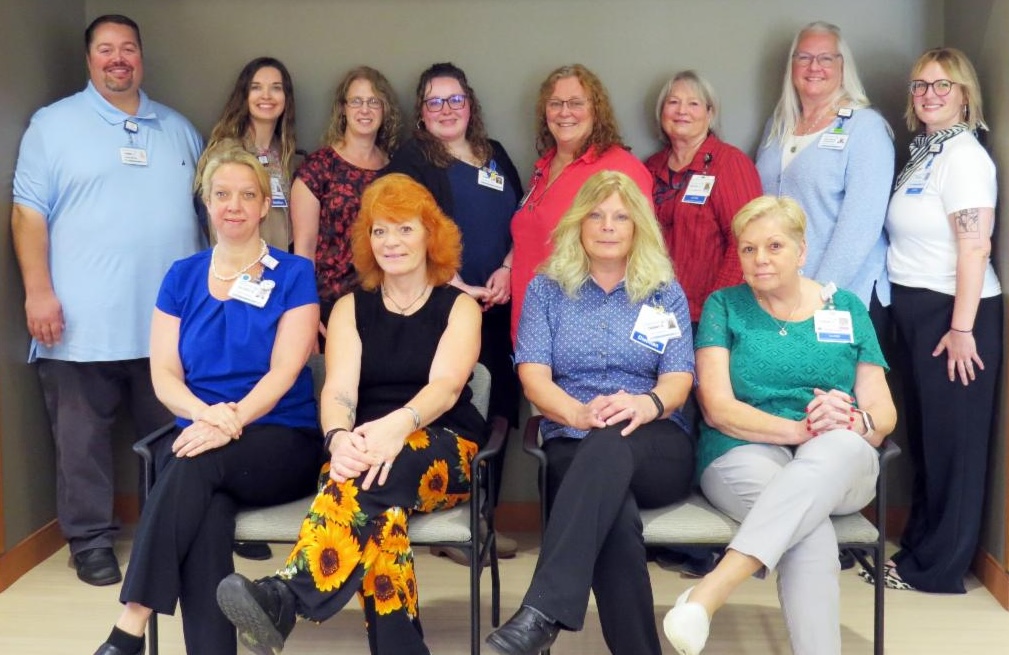
CNA Graduates: Keirra Romero, center, Summer Nesbit, left, and Faith Giles, right. Middle, From left to right, Lindsey Moody, RN, Administrator, Brenda Pryor, RN, Nurse Educator, (Students), Laila Rowe, LPN, Nurse Manager, Diana Mckeen, RN Infection Prevention, April Burke, LPN, Quality (in back). (contributed photo)

Northern Light Continuing Care, Lakewood is pleased to announce that Faith Giles, Summer Nesbit, and Keirra Romero recently graduated from the Continuing Care, Lakewood’s certified nursing assistant training program. Additionally, all three students passed the Maine State CNA exam with high scores. Continuing Care, Lakewood is grateful to have had the opportunity to enhance their knowledge and skills to becoming the next generation of top-notch CNA professionals, employed by Continuing Care, Lakewood.

If you are interested in being notified of an upcoming certified nursing assistant program session through Northern Light Continuing Care, Lakewood, please call Brenda Pryor, RN, or Lindsey Moody, RN, at 207-873-5125.

AARP releases state-level data detailing caregiving prevalence in Maine

New AARP caregiving data released today, Caregiving in the U.S. 2025: Caring Across States, finds that 28 percent of adults in Maine – approximately 324,000 people –are family caregivers, providing largely unpaid and unsupported care to older parents, spouses, and other loved ones.

“When a loved one needs help, family members, friends, and neighbors step up, that’s what we do,” said Noël Bonam, AARP Maine State Director. “But too often, caregivers carry this responsibility alone, often putting their finances, health and jobs at risk. As our state population ages, the demand for care will only grow. With the release of this new data and ahead of the 2026 legislative session, AARP Maine is urging policymakers at every level to act now to help family caregivers save money, time and get the support they need.”

Family caregivers provide $2.9 billion in unpaid care each year in Maine, helping family members live independently at home and in their communities—where they want to be. Their caregiving responsibilities range from bathing and meal prep to managing medications, arranging transportation and handling medical tasks, with little or no training.

But the toll on our family caregivers is great – financially, physically, and emotionally.

Eighty percent of caregivers pay out of their own pockets to help meet their loved ones’ needs, averaging $7,200 each year, or 25 percent of their income.

In Maine, 44 percent of family caregivers report financial setbacks – taking on debt, draining savings, or struggling to afford basics like food and medicine.

Seventy percent of our state’s caregivers are also juggling full- or part-time jobs. Many must reduce work hours or leave the workforce entirely due to caregiving responsibilities, jeopardizing their own long-term financial security.

AARP Maine is fighting for commonsense solutions to save caregivers money and time and provide greater support:

AARP Maine is fighting to support Maine’s family caregivers who help make it possible for older adults and other loved ones to live independently at home – where they want to be. In 2023, Governor Mills signed a historic budget that includes the creation of a Paid Family and Medical Leave program (PFML), making Maine the 13th state at that time to establish this important measure. AARP Maine strongly supported the legislation to advance PFML in the state.

AARP Maine continues to work with family caregivers, many of whom contact our local office to share their stories and seek additional assistance such as our free Family Caregiver Resource Guide which offers state-specific resources.

With its far-flung population, family caregivers in Maine often struggle to secure the local services they need for their loved ones, and for themselves. Many experience loneliness and depression as a result which is why our office also created a free resource to address social isolation.

And at the federal level, AARP is working to save caregivers money through the Credit for Caring Act, a proposed federal tax credit of up to $5,000 for working caregivers, and the Lowering Costs for Caregivers Act, which would expand flexible spending and health savings account uses.

This National Family Caregivers Month, AARP Maine encourages everyone to show support for caregivers and to join the growing movement of Americans raising their voices for change. Join AARP’s I Am A Caregiver movement and tell lawmakers it’s time to support those who care.

To access free caregiver tools and local resource guides, visit:

AARP’s state-by-state Family Caregiver Resource Guides to help family caregivers access key programs, services, and agencies right in their community.

AARP’s online Caregiving Hub with tools and information available in English and Spanish.

AARP and United Way Worldwide’ s 211 program connects family caregivers to essential local services for themselves and their loved ones via the 211 helpline.

AARP’s official caregiving Facebook group serves as a place for family caregivers nationwide to connect, share practical tips, offer support, and discuss their shared experiences.

China Community Garden’s first year a success

Barry MacmIllan and Marie Michaud planting tomatoes for the China Food Pantry. (photo by Jude Hsiang)

by Jude Hsiang

Last October China resident James Hsiang met with Town Manager Becky Hapgood to propose a community garden. Her response was enthusiastic, and Hsiang wrote up a plan based on his experience at a community garden in a small Connecticut town. The garden would be built and managed by volunteers with support from the town government. Hapgood suggested that the garden, if approved by the Select Board, would become a project of the China For a Lifetime Committee which relies entirely on volunteers to improve quality of life for community members of all ages. The garden would be built on town property, and a fee of $25, $15 for seniors, would cover the season’s rental of each four-foot x eight-foot bed . A raised bed in a community garden can provide a surprising amount of vegetables, herbs, and flowers and is also a source of exercise, education, and camaraderie for people who may not have growing space, sufficient sunlight, or ability to garden without assistance.

Ed Hasselman pouring dirt into the raised beds. (photo by Jude Hsiang)

When the select board approved Hsiang’s plan in January 2025, planning and fundraising began. Several people immediately joined the effort, including Jean Marquis, a select board member and advisor to the China for a Lifetime Committee, along with committee members Marie Michaud, Sandra Isaac, and Eric Austin. The committee provided seed money to begin the building process. Tom Michaud offered space in his farm’s workshop for volunteers to build 36 raised beds which were moved to the garden’s location for temporary storage. The location just south of the Town Office included a disused well and a barn used by the Public Works Department and was also the site of a skating rink during the winter of 2025.

When spring arrived, the garden was laid out with help from Mark Hasselman whose brother Ed brought a tractor to fill the beds. Scott Brown brought his tractor and auger to set the fence posts, encountering some challenges with the ledges in the area. Local folks had begun reserving garden beds and helped with the fencing and preparing the beds. By late May, planting had begun even though the gardeners had to wait a couple of weeks for the old well to be revived and a pump installed in the barn. Several members transported large water jugs to fill the gardener’s watering cans. Soon the Public Works Department had finished digging a trench from the well and the water was turned on.

Sherry Spaulding, Marion Chasteen, and James Hsiang applying a coat of paint to the storage shed. (photo by Jude Hsiang)

Twenty-eight raised beds were rented and the remaining eight were reserved for growing food for the China Food Pantry with seedlings and seeds provided by Bill Powell and others. The tomatoes, broccoli, zucchini, sweet and hot peppers, and string beans were grown for the food pantry by the member gardeners. A three-foot by 16-foot bed was planted with herbs and flowers for all to use and enjoy.

As summer weather arrived, passersby saw the gardeners tending their beds. Week by week, the gardens became more colorful as marigolds, nasturtiums, cosmos, bachelor’s buttons, and zinnias appeared here and there among many varieties of lettuces, peppers, tomatoes, and squashes. When the dreaded Japanese beetles made their early July appearance they were attracted to the zinnias and easily caught. One gardener took some home as a snack for their ducks.

Scott Brown, with the challenging job of digging post holes. (photo by Jude Hsiang)

July 25 marked the first small delivery of vegetables to the China Food Pantry. The increasingly dry weather was a challenge, but by the season’s end, 147 pounds, 10 ounces of very fresh, very local, food was donated. The garden participated in the China Days celebration in early August with an informational display about this new community project. On August 18, the garden hosted University of Maine Cooperative Extension’s Deborah Barnett for a talk on Quick & Easy Food Preservation. Her presentation was encouraging for those newer to canning and freezing and included tips for those who have been doing it for years.

As the first season of the China Community Garden drew to a close many gardeners enthusiastically made reservations for 2026 – some adding an additional bed. Garden members Marion Chasteen, Luther King, Susan Reilly, Sherry Spaulding, and Carol Thibodeau formed a committee to plan for the future. The plans include inviting new members in the spring as well as continuing to grow for the China Food Pantry.

Thanks to the support of the Town of China and the contributions of materials, money, and labor by local businesses and individuals, the China Community Garden celebrates its first year.

By July, things were growing well. (photo by Jude Hsiang)

Palermo residents should expect surveys in mail

The Conservation Committee will soon be mailing out a survey to Palermo residents to gather input on commercial solar arrays and commercial wind farms. Copies of the survey will also be available at the town office, and accessible online via a link on the Town’s website. Please watch for this survey, fill it out and return it so we can know the opinions of Palermo citizens on these issues. For more information, contact Chairman Gordon Hunt at 207-993-2005.

HealthReach announces new board member

Dr. Paul Forman

Connie Coggins, President & CEO of HealthReach Community Health Centers, announces that Dr. Paul Forman has joined the organization’s Governing Board of Directors.

Dr. Paul Forman, of Albion, is a retired medical clinician. After graduating with his Doctor of Medicine degree and completing his residency as Chief Resident at Central Maine Family Practice Residency (now Maine-Dartmouth Family Medicine Residency), Dr. Forman worked as one of the founders and as a staff member of the Lovejoy Health Center.

He continued serving at Lovejoy from its opening in 1978 until 2007.

Additionally, Dr. Forman served as Chairman of the Department of Family Medicine, Chief of Medical Staff, and At-Large Director on the Board of Directors all at the Mid-Maine Medical Center (now MaineGeneral). Cur­rently, he is a member of the MaineGeneral Medical Center Honorary Medical Staff. The HealthReach team is grateful to have Dr. Forman back as a member of the HealthReach Board of Directors, and looks forward to all that we can accomplish with his support.

Dr. Forman will join Board officers: Jim Higgins, Chairman; Jack Ducharme, Vice Chairman; and John Opperman, Secretary & Treasurer; as well as Board members: Jenny Boyden, Paula Callan, Buffy Higgins, Michelle Kelley, Juliana Richard, Susan Tedrick, and Allen Wicken.

HealthReach appreciates the volunteer efforts of its Board members, who contribute to the leadership, direction, and success of the nonprofit. Without them,

HealthReach would not be able to serve the people of rural Maine as effectively as it does with local, high quality, and affordable healthcare.

Local scouts attend international camporee

Youth from Troop #433, Winslow, Parker Small, Instructor Amber Chesley, Ashish Debas, Russell Lawler, doing the lab rats maze. Below, Fallyn Soucy, of Troop #433, Winslow, and instructor Jeff “Turtle” DeHart, at the tomahawk range. (photo by Chuck Mahaleris)

by Chuck Mahaleris

The date was September 26 when several cars and trucks rolled into Moosehorn Wildlife Refuge, in Baring. The vehicles were filled with 150 youth and leaders of Scouting America ready to take on the challenges that lay ahead in the 63rd annual Moosehorn/Cobscook International Camporee. The theme of the camporee was Zombie Apocalypse.

That evening Scouts from all over Maine set up their campsites and made it home for the night. The following day scouts roamed the refuge field near the YCC building going from station to station completing various skills including first aid, archery, tomahawk throwing, citizenship, and emergency preparedness. The fan favorite for the weekend was the obstacle course where each patrol had to rescue a victim of a zombie attack who was hurt and in a cave. At the starting point, the team would have to carry supplies needed to assemble a makeshift stretcher, through the obstacle course. Once inside the pretend cave, assemble the stretcher at which point they had to carefully place the victim on the stretcher, in this case, the victim being a 2×4 constructed dummy with full articulating limbs and a Styrofoam head with wig for dramatic effect. At this point the team would have to work together to carry the dummy/victim back through the obstacle course to the start point. The youth attending rapidly nicknamed the victim “Franky” for looking like something that might have come out of Frankenstein.

Other stations included “pathogen identification” where youth learned about pathogens that affect wildlife. “Build a bug out bag” which teaches youth how to build an emergency preparedness bag. In the “cross the river station” youth learn how to build a bridge using minimal supplies. “Early warning” was a station where youth used random items commonly found in a campsite to build a makeshift trap style alarm just in case a zombie wanders in their campsite in the middle of the night. “Feed the Zombie” was a station where youth tossed fake brains into a zombie mouth for accuracy and points. “Primitive fire building” taught youth old style flint and steel fire building. “Zombie-a-pult” allowed youth to launch golf balls at empty water bottles. The “zombie blockade” taught youth how to build a makeshift real fence using their lashing skills. “Move the zombie head” was a station where youth had to move a tenpin bowling ball (the zombie head) approximately 20 feet with rope, bungee straps and what they could find in their bug out bag all while not touching the ball. Teamwork rules the day in all of these events.

Park ranger Maurice Mills and the local HAM amateur radio club supplied a station where youth learned Morse code and how to talk on a HAM radio to individuals all around the world.

Every scout and scout unit participated in a service project for the Moosehorn Refuge. This was a maintenance project on the handicap fishing pier, where the scouts scrapped the old paint from the pier and painted it with a new coat of brown paint. The project was completed in good time and helps to preserve the pier for future use. According to the refuge the pier is used quite often.

In the evening, all of the participants gathered for a common closing campfire where the youth performed skits, dances, cheers and songs. A few of the performances included “The world’s biggest conga line”, “Augh! Zombies! Skit”, “Jet to holiday skit”, “Zombie invisible bench skit” and “3-legged pig skit” just to name a few. The campfire was closed out with a song from Camporee Campmaster (self-proclaimed “Head Beagle) Chris “Montawagon” Bernier, of Winslow, called Fade Away on his 12- string guitar, a long tradition at this event, and a ceremony of ashes lead by long time staffer Mike “Ranger ML” Locke. “In the Ashes” ceremony a container of campfire ashes are added to the fire. These ashes are from many previous campfires from all over the world as well as several national and international jamborees. Scouts are encouraged to take the ashes the next morning and mix them with ashes of campfires in the future. Thus, carrying the legacy of Scouting through their journey through the program and life.

Scouts from the following units were in attendance: Troop #433, Winslow, Pack #2123, Holden, Troop #2019, Ellsworth, Troop #139, Cherryfield, Troop #72, Old Town, Troop #125, Machias, Troop #102, Bucksport, Troop #482, Pittsfield, Troop #86, Ellsworth, Troop #1, Eddington, Troop #213B, Damariscotta, Troop #41, Hampden and Pack #454, Oakland. Unfortunately, this year no Canadian Scouts were in attendance of the camporee. However, we did have two Canadians in camp during the weekend who helped keep the tradition of the international event.

On Sunday the September 28, there was a closing ceremony and then prizes were handed out for the various competitions over the weekend. Troop #125, Machias, received the Bob McVicor Award for best exemplifying the Scout Oath and Law during the weekend.

The following youth received the Mike Bonvie Honor Scout Awards during the weekend:

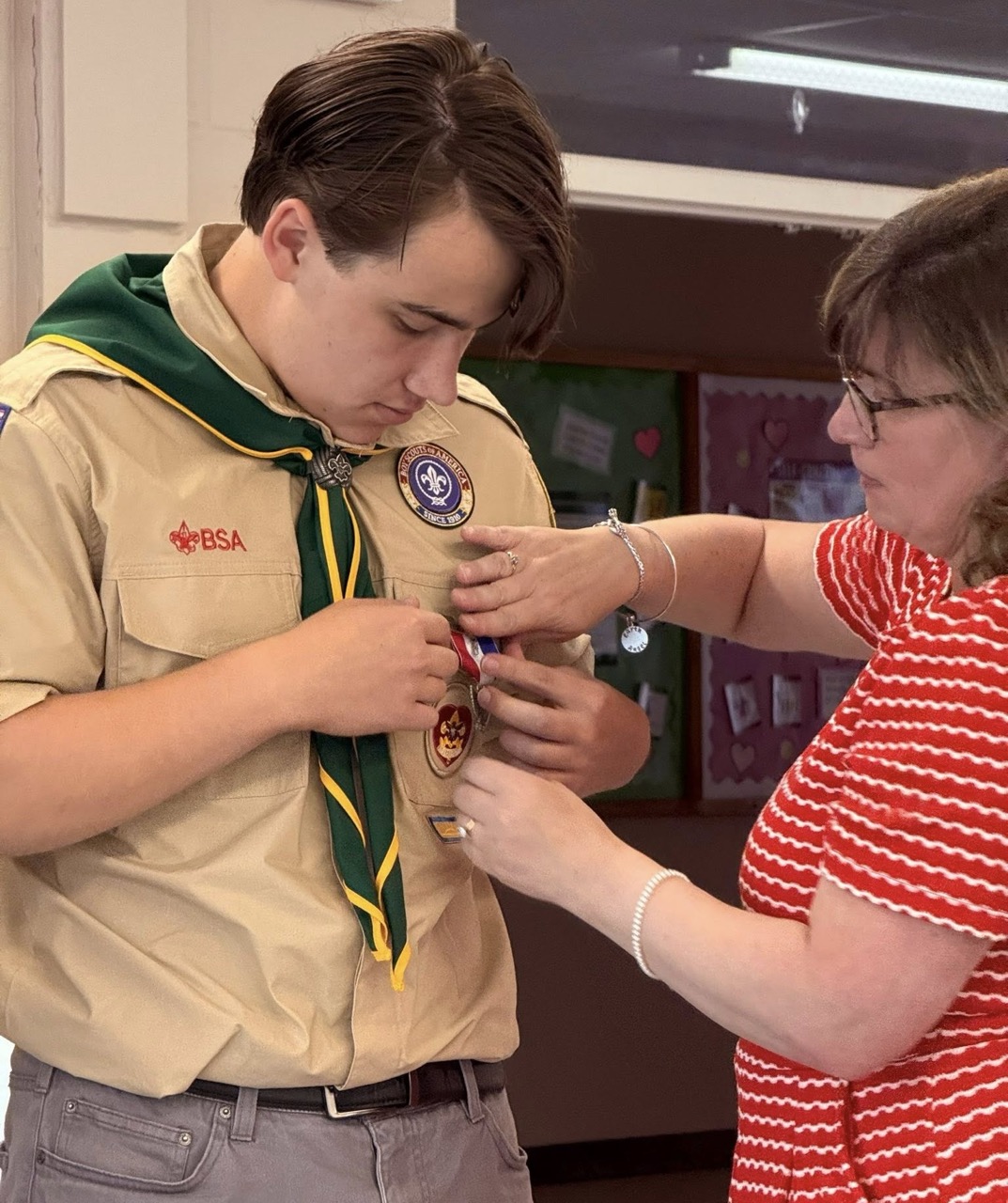
Ella Rhyne, of Troop #433, Winslow, accepting this year’s 2025 Mike Bonvie Award. (photo by Chuck Mahaleris)

Jace Patterson, of Troop #76, Ella Rhyne, of Troop #433, Ian Aldrich, of Troop #76, and Anika Varnum, of Troop #2019. This award is given to individual Scouts who most exemplify the Scout oath and Law at the event.

Best overall for competitive events, first place was awarded to Troop #254 and Troop #1, who worked together through the weekend to earn first place. Second place went to Troop #2019, third place went to Troop #125 “Pick up patrol”, and a tie for fourth place went to Troop #76 and Troop #428.

A gateway competition was also held. Troop #433 took first place in the gateway competition with Troop #125 taking second and Troop #86 taking third.

After the closing ceremony and awards, the camporee ended with a statement from Campmaster Chris saying, “Safe journey home to all of you and may the great scoutmaster be with all of you until we meet again” and the attendees replied in kind “Until we meet again”. The crowd slowly made its way back to their vehicles and left the refuge better than they found it, all the while excited to return in a year for the 64th annual Moosehorn/Cobscook International Camporee in 2026.

(photo by Chuck Mahaleris)

EVENTS: Golden Agers plan trip

The China Area Golden Agers are arranging a trip to the Gardens Aglow on Friday, December 12, 2025. You do not have to be a member of Golden Agers to join on this exciting, colorful experience to a venue right here in the great state of Maine.

The bus will leave China Hannaford at 3 p.m. and arrive at the Gardens at 4:30 p.m. Leaves the Garden at 6:30 p.m. and back at China Hannaford at 8 p.m. with colorful lifetime memories. The cost of the trip is $35 per person with a $19 entrance fee. Make checks payable to town of China. They need to fill the bus! Capacity is 50 to afford this price. A sign up sheet is at the China Town Office, 207-445-2014 ext. 3, and one with Karen Stankis, tour director, and her cell number is 207-592-3095. Other folks to contact are Jo Orlando, sign up coordinator, 207-242-1675 and Sheldon Goodine, Instigator, 207-215-9780.

Sign up with total payment is due by November 27, 2025.

Madison school supplies distributed

American Legion Auxiliary Unit #39, Madison, members, from left to right, Robin Turek, Val Coulombe and Geraldine Jenks. (contributed photo)

Over the years, the American Legion Auxiliary Unit #39, Madison, has supported community programs such as Children and Youth. Over several years, the organization has sponsored a school supplies collection which included backpacks, pens, pencils, markers, notebooks, binders, crayons, colored pencils, and so much more. The generous donations of supplies and money from the local communities and members allowed the American Legion Auxiliary Unit #39, in Madison, to donate over $1,200 worth of school supplies to seven schools in the MSAD #59 (Madison) and RSU #74 (Anson) Districts!!

American Legion Auxiliary members have dedicated themselves for over a century to meeting the needs of our nation’s veterans, military and their families both here and abroad. To learn more about the Auxiliary’s mission or to volunteer, donate or join, visit www ALAfotveterans.org or http://www.mainelegionpost39.org or contact Robin Turek, President – American Legion Auxiliary Tardiff-Belanger Unit 39 – PO Box 325 – Madison, ME 04950; robinturek@gmail.com; or 696-8289.

Hamel presented with teacher of the year award

Marissa Hamel

On Wed­nesday, October 15, Kennebec Valley Federal Credit Union, proudly presented the first 2025 Dis­tinguished Teacher of the Year Awards.

The award was presented to Marissa Hamel, fifth grade teacher at China Middle School, for her outstanding kindness, dedication, and excellence in teaching.

As part of this honor, Marissa received $1,000 to support classroom supplies and essentials, helping her continue to make a difference in the lives of her students.

The community is asked to join in congratulating Marissa and thanking her for the incredible impact she has on her students and the community.