PHOTOS: Birds of a feather: Surviving the winter

Joan Chaffee, of Clinton, photographed this blue jay.

Jayne Winters, of China, snapped this male cardinal.

China select board postpones action on cemetery mowing, kayak kiosk

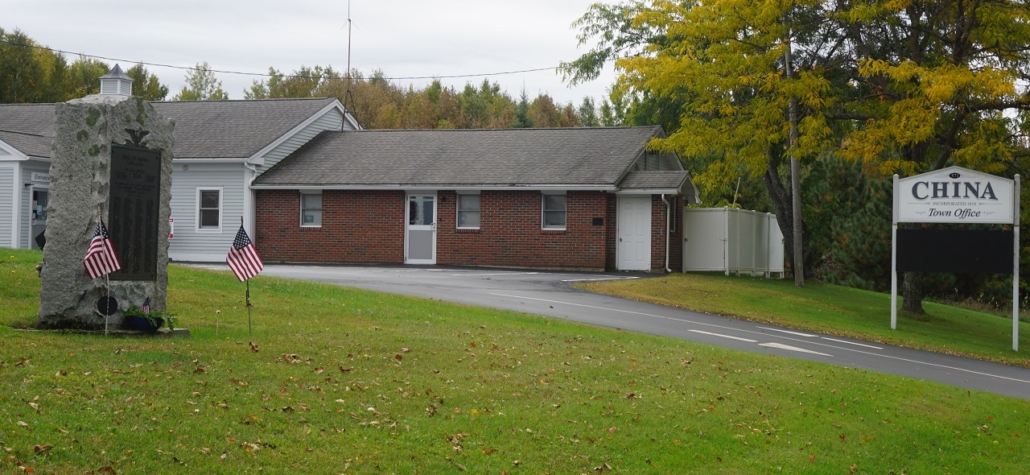
China Town Officeby Mary Grow

China select board members began their Jan. 12 meeting with a moment of silence in honor of the late Donald Pauley, whose many contributions to the town included service on what was then called the board of selectmen.

Almost every agenda item they discussed in the next hour and a half involved considering spending money – on the former Weeks Mills schoolhouse; on a consultant to work with the future emergency services committee; on bids for assessing services and for mowing town cemeteries and other properties. The exception was an offer from the company that sold the kayak rental kiosk near the boat landing at the head of China Lake’s east basin.

Board members postponed decisions on all but one of those topics.

Town Manager Rebecca Hapgood said no one uses the old schoolhouse any more, though she and board members remembered when it was used occasionally for special events and local groups’ meetings. The building has heat, Hapgood said, but neither water nor a septic system.

Board members agreed the China Historical Society should be involved in future discussions. They would like to tour the schoolhouse – in warmer weather – before continuing discussion, and deferred the subject to a spring meeting.

Consultant Paul Froman and board members discussed options for Froman helping the new China Emergency Services Assessment Committee: doing a study of current conditions, or moderating committee meetings, or both, on a town or regional basis.

Most board members expressed support for an informed and impartial outsider to play some role. They made no decision on what they should ask the outsider to do.

Hapgood said she had been asked to look into alternatives for assessing services. She contacted four firms and got two replies, from current assessor William Van Tuinen, of Madison, and former assessor Robert Duplisea Jr., of RJD Appraisal, of Pittsfield. Hapgood commended both firms as highly competent and easy to work with.

Van Tuinen estimated the cost of continuing with his firm for the next year at around $56,400, based on a planned increase in his daily rate and his current mileage rate. Duplisea proposed $44,250 for the fiscal year beginning July 1, 2026, with the option of starting earlier at the same monthly rate.

After discussing when a change-over could happen, board members made their only decision on the series of issues: they voted 4-0 (chairman Brent Chesley was absent) to contract with RJD Appraisal.

With nine mowing bids, Hapgood and board members focused on the four lower. Thomas Rumpf was most vocal in questioning the wisdom of choosing the lowest; such decisions have not always benefited the town in the past, he said. Two bidders are one-man operations, he pointed out, and one man cannot easily take care of all China’s mowing needs, especially its 33 (by his count) cemeteries.

Cemeteries, he and others agreed, need a lot of time and care, as mowers protect gravestones and move flowers and other temporary memorials; and some of China’s older cemeteries are hard to get to.

Board members postponed a decision for more information on several of the bidders.

Recreation committee chairman Martha Wentworth said Rent.Fun, the company that provided the kayak kiosk, admitted installation had been faulty, and the inability to use the facility had cost the town what should have been last summer’s revenue.

She said a company representative offered China $3,000 in compensation, in one of two forms: free memberships for local residents, or a separate kiosk for rental supplies for some other sport, like pickleball or cornhole – “practically anything that fits into a 12 by 12 [foot]” space.

Wentworth said memberships could be used at out-of-town kayak kiosks and therefore would not necessarily benefit China, which gets half the revenue from in-town rentals. Board members asked for more information before considering what else they might ask for, and where they might put it.

In other business, Hapgood said the Town Landing Road, in South China, should not be blocked by parked vehicles. She plans to put signs up.

The manager reminded those present that town services will be closed Monday, Jan. 19, for the Martin Luther King Jr. holiday.

The next regular China select board meeting is scheduled for 6 p.m. Monday, Jan. 26.

Up and Down the Kennebec Valley: China town reports – Part 4

by Mary Grow

Just one more article from those old China town reports before your writer forwards them toward a permanent home. It’s about time other towns had a few paragraphs, don’t you think?

* * * * * *

The warrant for the March 19, 1900, China town meeting, printed at the end of the 1899-1900 town report, had 27 articles. The first 14 were elections of town officials (done in a single article in March 1897, readers may remember from last week). Selectmen, town clerk, treasurer and others were unquestioned, but voters decided whether to elect a superintendent of schools or a road commissioner before choosing someone for either position. One or both of these positions remained optional for a few more years.

Another half-dozen articles began “To see what sum of money” voters would raise and appropriate for town functions, like road and bridge maintenance, support of the poor and schools. (This wording, in 2025, gives voters total freedom to raise any amount a majority agrees on.)

In a copy of the town report for the year ending Feb. 20, 1906, someone had penciled in amounts raised under appropriations articles. He wrote: $2,500, for road repairs and “breaking down of snow”; another $400 for state roads, with the state to refund half; $500 to support the poor; $700 for miscellaneous expenses.

There is no amount written for support of schools. In four subsequent articles, the anonymous recorder said voters approved $250 for “maintaining a free High School” (same amount as in the just-ended 1905-1906 year, when the state matched it); $150 to buy textbooks (in 1905-1906, a $200 appropriation was overdrawn by $126.02); $150 to repair school buildings (1905-1906’s $50 had not covered either that year’s expenditures or a prior deficit, and the account was overdrawn by $159.06, or more than the appropriation); and $25 for “writing books and other necessary school supplies” (1905-1906’s $25 was overspent by $14.87).

* * * * * *

Back to the March 19, 1900, warrant: the last article asked if voters would accept a $500 gift from Thomas Dinsmore, “the interest of said fund to be used yearly for the benefit of deserving poor.” There is no evidence of the fund in the town report for the 1900-1901 fiscal year.

However, in the report for the year ending Feb. 27, 1911, China’s resources include $500 in the Dinsmore Fund for Indigent Persons. This fund, at $500 or more, appears in reports your writer has through 1941.

(Thomas Dinsmore [1824 – 1916] was a leading citizen of Branch Mills [the village divided between eastern China and western Palermo], a noted philanthropist, founder of Palermo’s Dinsmore Library, donor of small bank accounts to local babies. See below for another gift.)

* * * * * *

By March 17, 1902, voters were presented with 30 articles. The first 14 let them choose town officers, starting with the meeting moderator; others asked for money for town functions.

Art. 25 asked if voters would give each of China’s G.A.R. (Grand Army of the Republic) posts $10, “to help pay memorial expenses.” The China bicentennial history says the posts were James P. Jones, No. 106, in South China, and Amos J. Billings, No. 112, in China Village.

The China town report for the 1905-1906 year has two new headings in the financial section. The first is labeled “G.A.R.,” and represents a town appropriation of $25 (an amount that remained unchanged into at least the 1920s), divided equally between the two posts.

The second new 1905-06 financial account is for the Dinsmore Norton Cemetery Fund, showing a $91 bank deposit, to which was added $1.59 in interest on Jan. 6, 1906, and from which was subtracted a $1.50 payment to E. W. Haskell (no reason given).

The selectmen’s report for the previous year, ending March 10, 1905, said, “The Thomas Dinsmore ‘Norton Cemetery Fund’ has been received by the town and a small percent. expended, the remainder placed on interest.”

This fund started with voters’ approval at the March 14, 1904, annual town meeting of an article asking them to accept $100 from Dinsmore; for the selectmen to spend half of it “in repairing the burying ground on the margin of China Lake at Norton’s Corner, so-called, the coming season”; and for the rest to remain in a fund to be used to repair the cemetery “at the end of each succeeding decade.”

No Norton Cemetery is listed in the China bicentennial history index, or in either China or Palermo on relevant websites. Gregory Parker, of Albion-based Set in Stone, maintains many of Palermo’s cemeteries, and Palermo Historical Society President Will Armstrong asked him about it.

Parker found early 1800s Norton headstones in China’s Lakeshore Cemetery, which is between Lakeview Drive and the east shore of China Lake, almost opposite the west end of Alder Park Road. Moreover, he found a reference to the Alder Park Road intersection with Lakeview Drive being called Norton’s Corner.

The China bicentennial history lists Norton family members in Lakeshore Cemetery and confirms Dinsmore’s connection, without mentioning a name change or explaining why Dinsmore was interested. It adds: “Years ago cows grazed among the graves and kept the bushes down, but people thought this was disrespectful and the cemetery was fenced.”

The cemetery fund stood at $186.17 on Feb. 14, 1931, and was down to $57.81 by Feb. 16, 1932, after the decennial maintenance work was done.

* * * * * *

For years, town reports’ highway accounts listed by name people paid for work, supplies or both. For example, in 1883-84 the selectmen named 22 men paid for road work and/or supplies, some for building bridges and causeways, one for “blasting powder,” one for “breaking snow winter 1882-83” ($49.42).

The 31 men named in the 1886-1887 list each had his contribution described: “labor with road machine,” “rebuilding bridge,” “bridge plank,” “snow scraper” (three men earned a total of $6.86) and, most commonly, “labor on road.”

The report for the year ending March 7, 1901, had a total bill of $1,950.34 for road work and supplies in the summer of 1900, distributed among nine pages of payees’ names, totaling about 300 (with duplicates).

The names are not in alphabetical order; some seem to be grouped together in families. The lowest payments were 50 cents, and at least three-quarters were under $10. The highest was $81.30 to E. A. Dudley, for an unspecified contribution.

Frank Sproul got $22.98 for “plank and material” and another $30, unspecified; Leon Herbert received $52.62 for “plank.” Two men provided a “watering place”; A. R. Ward’s cost the town $1.50, H. L. Pinkham’s $3.

By the summer of 1903, the number of names was down to seven pages, around 235 names. The 1905-1906 report listed only about 85 names, covering three pages. The lowest payments were 35 cents to W. F. Hawes, for freight, and 60 cents to Arnold Small, reason unspecified.

In 1910-1911, the list was again seven pages, and the smallest payments were still under a dollar.

Some of the people paid for road work were women. None of their contributions was described. In 1899-1900, Lora E. Kellar was paid $1.55 and Mrs. Farnsworth $3.50; in 1900-1901, Eula Worthing got two separate payments of 50 cents each and Sarah Cotton was paid $2.00; in 1904-1905, Mrs. F. D. Robbins earned $1.25 and Mrs. E. M. Dowe $10.12.

A $400 state contribution to road work was mentioned for the first time in the report for the year ending March 4, 1904. The selectmen used it for “permanent roads,” apparently for short major reconstruction projects. The work needed to be approved by the county commissioners.

In 1903-1904 the selectmen described four projects in detail, starting with “The hill at Reed Farris’ on the Lake road was opened and filled with rock, a distance of thirty rods [less than one-tenth of a mile] long with a broad stone culvert at the foot….” By Feb. 20, 1906, the report was more summary: 55 rods [less than two-tenths of a mile] in northern China and 80 rods [a quarter-mile] in southern China had been treated similarly.

For a couple years early in the 20th century, weather was hard on roads, and on the road budget.

In March, 1903, the selectmen said a freshet in December, 1901, damaged hills and bridges, including destroying the Weeks Mills bridge; it had been rebuilt the summer of 1902. Other bridges needed work that the selectmen couldn’t order done “owing to our appropriation.”

The selectmen’s report for the year ending March 4, 1904, explained that the road appropriation was overspent because of “high water in the spring” (presumably the spring of 1903). “The bridge at China village was rebuilt new; the two bridges at Branch Mills replanked and railed, and the bridge at Sproul’s Mill repaired.”

* * * * * *

A question not explored last week was who funded China’s town government. Local taxpayers, of course; and state contributions to schools appear in the 1860s town reports and thereafter. There are occasionally interesting other contributors, mostly minor.

In the 1860-61 report, the list of resources includes “Cash of J. McCorrison,” in the amount of $198.40. The selectmen noted they had filed suit against him and his bondsmen.

The China bicentennial history expands on the story, starting with the selectmen’s concern about unpaid bills, some dating back a decade; and unpaid taxes; and especially about former tax collector Joseph McCorrison, who owed $2,792.41 in taxes collected and not turned over to the town.

Hence the lawsuit. By the spring of 1862, the amount was down to $2,594.01; March 1862 town meeting voters agreed to accept $1,200, plus interest, to be paid by September, 1863.

The 1863-1864 report says McCorrison had paid $250 in cash and he and his bondsmen owed $1,130. By March 10, 1865, he had paid another $617, and owed $333. The March 8, 1866, list of resources includes “Cash in hand of J. McCorrison, 333.00.”

Also on the list of China’s 1860-1861 resources was $70 from “Profits on Liquor.” A similar item in the 1862-1863 accounts read $47 from “Profits on liquors sold by Agent.” Liquor sales provided $40 in 1863-1864; after that, they are not listed in the town’s resources.

China collected fees for dog licenses, in the incomplete series of reports your writer has, in 1877-1878: $69.00, with no record of what the fee was or how many dogs were licensed. The item disappeared for some years; in the 1899-1900 report, however, “Refunded dog licenses” brought in $43.44, again without explanation. Dog license refunds continued to be recorded as income in future reports.

The selectmen’s report for 1882 lists $2 from John Taylor “for license,” unspecified. In 1884, D. (Dana) C. Hanson (a selectman in 1881 and 1882) paid the same amount for another “license.”

A “Telegraph tax” is listed in 1887’s resources. It brought in $3.65 that year; in 1890, $2.48.

Selectmen sometimes sold old schoolhouses. In 1900 or early 1901, Levi Hallowell bought one for $8, and D. (David?) LeMere bought another for $12.

In School Superintendent Gustavus J. Nelson’s March 6, 1901, report, he called for school consolidation in response to a steady decline in the number of students. (The topic of China’s 18th and early 19th century schools deserves further exploration.)

In 1904-1905, the town got $25 for the Dutton schoolhouse and $30 for the Chadwick Hill building.

The first recorded payment from the State of Maine for “damage to sheep” is in the 1901-1902 report – the town got $20. The next year, it was $74; in 1903-1904, $91; in 1904-1905, only $20; no record for the year that ended Feb. 20, 1906. The item reappears in the 1911 report, $5 from 1909.

The state porcupine bounty brought in $14 in 1904 (recorded in the 1905-1906 report).

Neither sheep nor porcupines appear in the lists of town resources in the next few years. But the report for 1907-1908 records $31 from the state for “damage by dogs” and the next year shows $252.60 “Received from State dog damage” – before that item disappears.

John Libbey

In the Dec. 18, 2025, article in this series, your writer noted that three China selectmen elected in March, 1864, did not list their names in the town report for the year 1864-1865. She found information elsewhere on Ambrose Abbott and Nathan Redlon, but none on John Libbey or Libby, and so reported.

Fortunately, Joyce and Maurice Anderson, from Oakland, saw the incomplete story and realized they, as descendants of the Libby/Libbey family, had records that helped fill the gap. In their collection is an 1882 book by Charles T. Libby, titled “The Libby Family In America (1602 – 1881)”; and from it, they copied:

“John Libby, born in Albion, 17 Sept. 1806; married 26 Nov. 1835 Hannah Libby…. He was a farmer and lumberman. Immediately after his marriage he moved to Houlton, where he lived until March 1849, when he moved back to Albion and after seven years settled in China Me. In March 1865 he sold his farm there and bought the Capt. John Winslow farm, in Albion, where he now resides.”

The Andersons concluded that this John Libby lived on a China farm from 1856 to 1865, and could plausibly have been elected a selectman in 1864.

The Find a Grave website provides additional information about the John Libbey (this source shows grave markers with the Libbey spelling, in Albion’s Maple Grove cemetery) who was born in 1806 in Albion. It says he was the son of Ebenezer Libby Libbey (1779 – 1857) and Hannah Stevens Smiley Libby (1784 – 1863); names his five brothers and three sisters, born between 1805 and 1830 (the youngest sister was named Hannah); lists the three sons and three daughters he and his wife Hannah had between 1838 and 1849; and says he died March 10, 1883, and his widow, who was born Dec. 26, 1817, died July 7, 1889.

Main sources

China town reports
Grow, Mary M., China Maine Bicentennial History including 1984 revisions (1984)

Websites, miscellaneous.

Erskine Academy first trimester honor roll (2025)

Erskine Academy

Grade 12

High honors: Connor Alcott, Emily Almeida, Linda Bergholz, Addyson Briggs, London Castle, Nathan Choate, William Choate, Lillian Clark, Madeline Clement-Cargill, Sylvia Davis, Joshua Denis, Charles DeSchamp, Lauren Dufour, William Ellsey Jr., Ethan Frost, Stephen Gould, Madison Griffiths, Aiden Hamlin, Evan Heron, Mia Hersom, Aidan Huff, Alexus Jackson, Halle Jones, Kasen Kelley, Kayle Lappin, Jacob Lavallee, Ava Lemelin, Paige McNeff, Parker Minzy, Jaden Mizera, Jack Murray, Elijah Nelson, Bayley Nickles, Jordyn Parise, Gwendolyn Parker, Ruby Pearson, Abigail Peil, Elijah Pelkey, Isabelle Pelotte, Jackson Pelotte, Emily Piecewicz, Taisen Pilotte, Hannah Polley, Desirae Proctor, Hannah Ratcliff, Brynna Rodrigue, Jackie Sasse, Autumn Sawyer, Edward Schmidt, Jaelyn Seamon, Kathryn Shaw, Trenton Smith, Madelynn Spencer, Justice Stevens, Kayla Stred, Abigail Studholme, Phoebe Taylor, Clara Theberge, Donovan Thompson, Kammie Thompson, Mahe Trannois, Addison Turner, Oryanna Winchenbach, Brody Worth, and Maddilyn York.

Honors: Savannah Baker, Gavin Bartlett, Lucas Berto, Brock Bowden, Logan Breton, Addyson Burns, Benjamin Carle, MacKenzie Chase, Drew Clark, Timothy Clavette, Audryanna DeRaps, Riley Dixon, Jacob Faucher, Solomon Fortier, Madison Gagnon, Willow Haschalk, Easton Houghton, Talula Kimball, Timothy Kiralis, Kloie Magoon, Brayden McLean, Phoebe Padgett, Jacoby Peaslee, Logan Poulin, Alexander Reitchel, Owen Robichaud, Leahna Rocque, Kameron Rossignol, Briella Scanavino, Benjamin Severy, Eva Simmons, Blake Smith, Benjamin Sullivan, Leah Targett, Kamryn Turner, Ella Winn, and Addison Witham.

Grade 11

High Honors: William Adamson IV, Isaac Audette, Olivia Austin, Jeremiah Bailey, Luke Blair, Jackson Blake, Silas Bolitho, Hailey Boone, Madeline Boynton, Cassidy Brann, Liam Burgess, Emma Casey, Olivia Childs, Hunter Christiansen, Khloe Clark, Landon Clements, Collin Clifford, Robin Dmitrieff, Logan Dow, Bella Dutilly, Isabella Farrington, Gianna Figucia, Adalyn Glidden, Cody Grondin, Madison Harris, Katheryn Holden, Lilly Hutchinson, Reid Jackson, Ivy Johns, Callianne Jordan, Maverick Knapp, Annie Miragliuolo, Alexis Mitton, Kienna-May Morse, Jacoby Mort, Bryson Pettengill, Anna Popelkova, Sovie Rau, Tayden Richards, Lailah Sher, Bryson Stratton, Gabriel Studholme, Sabrina Studholme, Kaleb Tolentino, Carter Ulmer, and Eryn Young.

Honors: Owen Abram, Ariana Armstrong, Ashton Bailey, Delia Bailey, Linnea Bassett, Benjamin Beale, Seth Bridgforth, Delaney Brown, Connor Crommett, Jilian Desjardins, Ryley Desmond, Nolan Dow, Kelsie Dunn, Wyatt Ellis, Danica Ferris, Audrey Fortin, Colby Frith, Nicholas Gould, Kaylee Grierson, Addison Hall, Eva Hayden, Auburn Horn, Johanna Jacobs, Evan James, Mason Lagasse, Bryson Lanphier, Matthew Lincoln, Jack Malcolm, Jasai Marable, Gage Miller, Lauryn Northrup, Madeline Oxley, Molly Oxley, Teagan Pilsbury, Kristianna Porter, Dylan Proctor, Caylee Putek, Samuel Richardson, Tyler Robbins, Lucas Short, Ian Smith, Colby Spry, Hellena Swift, Malaya Tagalicud, Braeden Temple, Mackullen Tolentino, Caleb Waldrop, Tyler Waldrop, and Isabella Winchenbach

Grade 10

High Honors: Joshua Bailey, Madeline Berry, Ella Beyea, Brooke Borja, Dominic Brann, Nicholas Carle, Ryan Carle, Lily Chamberlain, Ryleigh French, Shelby Gidney, Christina Haskell, Bristol Jewett, Josephine Kelly, Marlin Lawrence, Bella Lefferts, Colbie Littlefield, Dylan Maguire, Stella Martinelli, Mason Mattingly, Skyler McCollett, Lainey McFarland, Ava Miragliuolo, Brandon Piper, Angelina Puiia, Jacob Rogers Jr, Jakobe Sandoval, Parker Smith, Maxine Spencer, Leigha Sullivan, Reid Sutter, Benjamin Theberge, Audrey Tibbetts, Hannah Tobey, Kinsey Ulmer, Sorrel Vinci, and Leah Watson.

Honors: Clifton Adams IV, Landon Alexander, Megan Bailey, Hunter Baird, Mackenzie Bowden, Benjamin Bragg, Jackson Bryant, Daegan Creamer, Zoey Demerchant, Dante Farrell, Jeffrey Feyler III, Trevor French, Tyler Gagnon, Riley Gould, Myla Gower, Rachel Grant, Amiah Graves, Naomi Harwath, Griffin Hayden, Baylee Jackson, Landon Larochelle, Dorothy Leeman, Madison Levesque, Faith MacMaster, Isabella Magioncalda, Mason Marable, Ayla McCurdy, Annabella Morris, Grant Munsey, Grace Oxley, Lexi Pettengill, Camryn Prosper, Kevin Robinson, Thomas Roe, Jacob Shanholtzer, Hunter Small, Khloe Soucy, Ethan Studholme, Kayleigh Trask, Kallie Turner, Annezamay Veilleux, and Reid Willett.

Grade 9

High Honors: Ryker Adams, Holden Altenburg, Cheyenne Arbour, Jacob Blais, Emma Bragg, Addison Brann, Josephine Carr, Avery Childs, Keegan Clark, Clara Cole, Riley Coleman, Adriana Collins, Benjamin D’Alfonso, Aurora Durgin, Ryan Edwards, Zoie Elliott, Lilith Every-Blanchard, Riley Flagg, Baylee Fuchswanz, Zoe Gaffney, Mylie Geroux, Allyson Gilman, Kendra Grierson, Layla Gunnison, Emma Hunt, Brennan Joslyn, Athaya Lessard, Annah MacPhee, Mia McLean, Liam McNaughton, Zoe Nadeau, Elijah Norton, Christopher Ontiveros, Silas Parlin, Camille Pearson, Gideon Pelkey, Rosaria Puiia, Lauren Reay, Emilee Saucier, Brody Sevey, Jude Sheehan, Jaycee Smith, Bryce St. Onge, Emery St. Onge, Dylan Theberge, Theodore Thompson, Grace Tobey, Jadynn Wilkins, Ava Woods, and Emma Wooley.

Honors: Emelia Bartlett, Brian Bates, Samuel Bechard, Haydin Bolduc, Kiley Brann, Eva Brunelle, Wyatt Chase, Emily Clark, Carter Cooper, Finnegan Cotter-Hayes, Ilyda Dyer, Kelcie Flannery, Ava Fortin, Fury Frappier, Anthony Gagnon, Jaike Gagnon, Connor Glidden, Emmalyn Godbout, Abbigail Goodwin, Amelia Goodwin, Kairi Hart, Alexander Kopilevich, Nolan Landry, Kaitlyn Lavallee, Olivia Libby, Chase Macioch II, Owen Maranda, Caroline Mathews, Talan Mayo, Elliot McQuarrie, Bella Millay, Amelia Mitchell, Samuel Nelson, Max Nessmith, Norah Oakes, Scarlett Pollard, Jayden Portillo, Noah Rau, Owen Seamon, Maxwell Trussell, Dominic Tudela, Makenzie Turner, Henry Uleau, Carter Vigue, Rylee Ware, and Charles Winchenbach.

China select board moves through light agenda

China Town Officeby Mary Grow

China select board members had a light agenda for their final 2025 meeting, held Monday evening, Dec. 29, and even with a lively discussion of chairman Brent Chesley’s added topic, headed home before rain-slicked roads turned icy.

Deputy Jacob Poulin, from the Kennebec Sheriff’s Office, said there had been traffic accidents all day, despite fewer people speeding than usual.

Agenda items included paying the usual bills and discussing Town Manager Rebecca Hapgood’s reports and updates. Board members took two actions:

They confirmed that the annual town business meeting in June 2026, will again be by written ballot, not an open town meeting. Hapgood has tentatively scheduled the first discussion of the 2026-27 budget with budget committee members for Monday evening, Feb. 2.
They appointed Christopher Hahn a member of China’s TIF (Tax Increment Financing) Committee. The committee still has two or three vacant seats.

Chesley said since the Transfer Station Committee’s Dec. 9 discussion of considering a pay-as-you-throw plan (PAYT; also called PPB, for pay-per-bag, or PPT, for pay-per-throw; see the Dec. 11 issue of The Town Line, p. 2) for China was publicized, he has received only negative comments. Does the select board want the committee to continue investigating? he asked.

Board members said no. On a 4-1 vote, with Natasha Littlefield opposed because of inadequate information, they approved Edwin Bailey’s motion to direct the transfer station committee to abandon the idea.

Bailey said most residents who have spoken to him oppose PAYT. Board members considered who would benefit from a change – seasonal residents who use the facility only a few months each year, while their taxes support it year-round – and who would lose – people with lots of trash.

Littlefield said without a study, they have no definite information on potential financial effects.

Thomas Rumpf said because something is in the newspaper does not mean it will happen. He urged people to attend meetings and be fully informed instead of “running with incomplete information.”

Former select board chairman Wayne Chadwick commented from the audience that in other towns with PAYT programs, more people get dumpsters.

Hapgood said three more residents, including Chadwick, have volunteered for the newly-created Emergency Services Assessment Committee (see the Dec. 4, 2025, issue of The Town Line, p. 2, and the Jan. 1, 2026, issue, p. 2). If all three are appointed, the committee will have nine members; Hapgood foresees a total of 11 or 13.

Paul Froman, a consultant on emergency services from southern Maine, is scheduled to attend the select board’s Jan. 12, 2026, meeting, Hapgood said.

Paul Froman, a consultant on emergency services from southern Maine, is scheduled to attend the select board’s Jan. 12, 2026, meeting, Hapgood said.

Hapgood was unable to provide a scheduled update on Rent.Fun, the company the town paid for the kayak rental station near the causeway at the head of China Lake’s east basin. She said recreation committee chairman Martha Wentworth had not yet connected with anyone at the Michigan-based company.

The manager said nominations for the Spirit of America award should be submitted to the town office by March 31, for discussion at the April 6 select board meeting. Nomination forms are on the town website, chinamaine.org. The award honors volunteers, individuals or groups.

Hapgood said she is trying to provide more information on China’s Facebook page, as well as on the website.

The select board’s January, 2026, meetings are currently scheduled for 6 p.m. Monday, Jan. 12, and Monday, Jan. 26, in the town office meeting room.

Two CMS sixth graders mobilize to aid fellow student

Finn Henderson and Spencer Stephenson with the many baked goods they assembled for a sale to help a fellow student. (contributed photo)

by Aimée N. Lanteigne

If you’re from Maine, you know that we are just one big small town. Everyone knows everyone, and if you don’t, it’s a safe bet that five minutes of conversation will lead to a name that you both recognize. As a teacher, I am blessed to work in a small rural community where neighbors help neighbors. China Middle School has less than 200 students in grades 5-8. The student to teacher ratio affords us many opportunities to get to know our students better and build strong bonds and relationships. It’s a wonderful little school community where people truly care about one another not just as learners and educators, but as human beings.

Sixth graders Finn Henderson and Spencer Stephenson witnessed a situation in which a classmate was in need of assistance shortly before Thanksgiving break.

This is perhaps best illustrated by two young men at our school who recently noticed a student who was struggling and set out to do whatever they could to help. Sixth graders Finn Henderson and Spencer Stephenson witnessed a situation in which a classmate was in need of assistance shortly before Thanksgiving break, but the pair didn’t know exactly what they could do to help or, more importantly, if anyone would help at all.

Later that week, Spencer texted Finn hoping he might be on board with helping him figure out a way to help their peer. When Spencer didn’t hear back right away, he thought Finn wasn’t interested and that he’d be doing this alone. Turns out, Finn simply hadn’t checked his phone in a couple of days, but the moment he did, he loved the idea and replied to Spencer that he was totally on board.

Finn and Spencer approached our administrators, Principal Lacey Studholme and Assistant Principal Rob Moody, about their idea. They weren’t exactly sure what to do or how to go about it, but they quickly brainstormed some ideas. One of them was to hold a 50/50 raffle at a home basketball game. Another thought was that they would
hold a bake sale at school. The pair put in about six to seven hours (you’re welcome, middle schoolers) to hash out logistics and prepare a presentation, then the two young men stayed after school one day in early December to present their idea to the CMS staff.

They were very nervous about how their idea would be received. “We weren’t sure what to do. Will it be a bug bust? Will the student and the student’s family be OK with this? What if the kids forget to bring money for the bake sale? What if the teachers don’t like the idea and it’s a failure?” Spencer later told me. He needn’t have worried.

The teachers immediately embraced their passion project to help a classmate in need and jumped in, all hands on deck. Staff donated baked goods, pretzels, plastic baggies, cups, hot cocoa, marshmallows, popcorn, and their time to help the boys in any way they could. They had a goal of $500. They weren’t sure how long it would take to reach that figure, or even if they could.

Announcements went out each morning for a week letting students know that the first of two holiday bake sales would take place on the second Friday in December so they could be prepared with cash on the day of the sale. When the big day finally arrived, Finn and Spencer took turns going from classroom to classroom during period two to call students down to buy their snacks. The response was overwhelming. They had so many hot cocoa orders they couldn’t keep up with business! They had to take orders and send kids back to class and then hand deliver their beverages when they were ready.

The boys were busy the entire period. It was an overwhelming success. In one hour they had not only reached their goal, they had exceeded it, garnering $578 to help their classmate in need. The boys were very pleasantly surprised to learn that word had gotten out about their fundraising efforts and some folks were even sending in cash donations! They got $30 from a fellow student, $20 from one of the boy’s grandmother, and another $100 donation from a parent’s co-workers.

The following Friday, the boys were at it again. More donations of pretzels and baked goods and cocoa came pouring in, and at the second bake sale, things went much smoother. The boys were prepared to go big or go home! This time they raised $350.

For two hours worth of work, the boys were closing in on double what they set out to do to help their classmate. That’s pretty special. They are not sure if they will continue the bake sales after Christmas break, but if they do, Finn says, they want to start an ongoing fund to help anyone at China Middle School in need, kids or adults.

The boys both said they were friends before this project, but actually seeing it through together has brought them closer. Finn and Spencer gave me some helpful tips for any student out there who has an idea or wants to help someone, but doesn’t know how to get started. “Go home and talk to your parents, “ Spencer said. “Go to the principal or a teacher you can trust.” That will certainly set the wheels in motion. But perhaps Finn nailed it on the head when he advised, “Talk to a friend with a really big voice. They will help you spread the word and get things going.”

Today, I’m going to be that friend with a really big voice. Kudos to you, Spencer and Finn, for stepping up to help a classmate in need. Most kids, maybe even most adults, would see the problem and feel badly, but do nothing about it. You two had the gumption to speak up, to put in the work, get your hands dirty, and lend a hand when it was needed most. Rest assured, you have been an example and a bright light to all those who watched you put this together. You have spread hope and cheer at a time when our days are their bleakest and darkest of the year. Thank you for lighting the path and teaching us how to do good in this world. Afterall, isn’t that what the Christmas season is really all about?

Up and Down the Kennebec Valley: China town reports – 1854 – 1906 (Part 3)

by Mary Grow

Following are more excerpts from an incomplete collection of China’s town reports, dating from the mid-1850s through most of the 20th century. This week’s selections will illustrate more of the changes in the 1800s and early 1900s.

Thanks to John Glowa, of China, and Phil Dow, of Albion, for providing these sources of information.

* * * * * *

A separate account for “Militia” appears in the financial sections of the 1863 and 1864 town reports. The cost reported March 10, 1863, was $14,556.64, almost twice the town’s available resources. The selectmen borrowed money.

As of March, 1864, the selectmen had borrowed more money to fill China’s volunteer quota per President Abraham Lincoln’s Oct. 17, 1863, call, a total of $11, 252.57.

Most of this money, the bicentennial history says, paid bounties to men who enlisted. Voters at several special town meetings argued over details. Ultimately, the history says, China paid $47,735.34 “to provide Civil War soldiers.” After the state began repaying towns in 1868, China got $12,708.33 back.

The militia account disappeared as of the 1864-1865 report. As summarized previously (see the Dec. 11 issue of “The Town Line”), the debt did not disappear for more than a decade.

* * * * * *

China’s Board of Health appears in the 1889-1890 report, costing $25.25 for Chairman E. M. Dowe, Secretary G. J. (Dr. Gustavus Judson) Nelson and member C. E. Dunton. The board’s report is on the very last page of the town report, dated – your writer hopes misdated – Feb. 27, 1880 (not 1890).

The China bicentennial history says the board was created two years earlier (see box). The 1890 report is identified as the third annual, and reports the greatest “prevalence of infectious diseases” since the board was organized. Turns out there were two diseases: the diphtheria at the Maine Insane Hospital in Augusta never spread into China, but a Branch Mills family had two cases of typhoid fever and early in February (1890, presumably, since it was on-going when the report was written) another family had at least one case of scarlet fever.

The report explained that since typhoid fever isn’t air-borne, that house was not quarantined. The other house was, and the school in that district was closed.

The report ended optimistically: medicine was progressing, and “it does not seem impossible to conceive that the time may come when the cause of every contagious disease may be known, and with this knowledge may come absolute protection from every infectious disease.”

Nelson’s report for 1894-1895, submitted March 2, 1895, describes a year with four “outbreaks of infectious diseases,” each “confined to the house in which it originated.” None was fatal.

The first was in mid-June, 1894, scarlet fever (“one of the most dangerous and one of the most contagious” diseases with which the board dealt) on Stanley Hill, in northwestern China. The house was immediately quarantined, and no one else was infected.

In October, in Dr. Nelson’s practice (probably in the China Village area in northern China), two people in one household got diphtheria. In November, there was another case in Dr. B. N. Johnstone’s practice, in extreme southern China.

In January, 1895, there was a third diphtheria outbreak in Dr. D. A. Ridley’s practice in Branch Mills, in eastern China. Nelson reported the disease took hold “in a large family in indigent circumstances,” and since segregating the sick people was impossible, nine people caught it; only two “nursing infants” didn’t.

Nelson called diphtheria “one of the most dreaded diseases of modern times.” He commented that although it is transmitted directly between people and can be carried on infected clothing, it also is generated by “refuse matter, damp, foul air and decaying vegetable and animal matter.”

(Contemporary on-line sources primarily discuss transmission from an infected person to others, and emphasize that diphtheria is almost non-existent in countries where vaccination is common. Your writer found one implied reference to Nelson’s list of causes: the Cleveland Clinic’s website says: “Diphtheria is very rare in the U.S. because of widespread use of the diphtheria (Tdap) vaccine and cleaner living conditions.”)

In 1899-1900, the board’s three members – Nelson, J. E. Crossman and C. J. Lincoln – were paid only $20.25, but expenses for vaccinations brought the total cost to $115.25.

In 1900-1901, the Board of Health cost China $151.70, after Palermo reimbursed the town $136.62 for one family (including medical attendance, supplies and digging a grave and burying a child; it sounds as though some of these expenses could have been listed under care of the poor).

The selectmen explained that the increased cost was due to a diphtheria epidemic, adding, “we have to rejoice that the results have not been more fatal than they were.”

There was a separate two-item Town Physician Account: China received $79.50 “from other towns for med. att.” and paid town physician C. J. Lincoln $50 for services to April 5, 1901.

The March 4, 1901, Board of Health report said the diphtheria epidemic started in May, 1900, and made that year the most demanding board members had experienced. The first case was a Windsor girl who attended Erskine Academy and boarded in South China. The second was a girl in the Hanson neighborhood, who died; she had attended Erskine and then the Lakeside school (other Erskine students had moved to other town schools by May, the report says).

Ultimately there were 22 cases in the spring outbreak and two more, unrelated, later in the year. Five were fatal. Nelson’s report said he and another doctor used Mulford’s glycerinated antitoxin “with excellent success”; whenever it “was used in the first stages of the disease,” the patient survived.

Nelson was also the 1900-1901 school superintendent. He reported that he promptly closed the first two schools where diphtheria cases were reported. Soon, nine of the 13 schools holding spring sessions were either ordered suspended or suspended themselves “from the attendant fright.”

At a special meeting May 26, the school committee closed all but the four operating schools until fall, canceling any planned summer sessions. Classes resumed the last Monday in August.

The next year’s reports from health and school officials indicated a normal 1901-1902 year. Nelson left the board of health that year, but he continued to earn town payments for “reporting births and deaths” and other medical activities through 1914.

(Nelson was on the school committee in 1912-1913, 1913-1914 and 1914-1915. Only the other two members signed the committee’s Feb. 13, 1915, report. Nelson died Feb. 17, 1915, aged 68 years, eight months and four days. He is buried in the China Village cemetery, with other family members.)

In their March 2, 1903, report, board of health members said the town had experienced three cases of typhoid fever, with no deaths; a fatal case of tuberculosis; one case of measles; and 22 cases of whooping cough. The board’s secretary added a rebuke: “I find physicians and householders in the east and southeast parts of the town have failed to report many cases of whooping cough as the law requires them to do.”

For the year that ended March 10, 1905, Board of Health expenses totaled $28.98, paid to the three members: one earned $15.48, the second $11.00, the third $2.50. In 1905-1906, members earned $30.35 and others were paid $73.35 for caring for two families; listed expenditures included $4.10 for “pillows and blankets” for one of the families.

* * * * * *

The initial collection of town reports that started this series has a gap from the year ending March 7, 1890, to the year ending March 10, 1900. Phil Dow’s contributions included 1894-1895 and 1896-1897. (The missing issues are no doubt available elsewhere; but when your writer started these history pages, at the beginning of the pandemic in March 2020, her rule was to work from home.)

By the 1894-1895 issue, and in the ones that follow, pages of vital statistics were added. By 1897 and in following years, the reports ended with the annual town meeting warrants.

The 1894-1895 issue lists the numbers of marriage intentions (20) and marriages (24), the number of births (27) and the number of deaths (also 27). It records names of residents who died between March 7, 1894, and Feb. 15, 1895, and (where information is available) adds age, marital status, place of birth, place of death and place of burial. The following years’ reports use the same format, of course with varying numbers.

Beginning with the report for 1901-1902, names of couples marrying and of babies born were also printed. Babies’ names were not always available; between March 27, 1901, and Feb. 5, 1902, for instance, 24 births were recorded, but only 19 names.

* * * * * *

The Monday, March 15, 1897, town meeting was summoned for 9 a.m. at the town house The selectmen were to be there at 8 a.m. to make any needed corrections to voter lists.

The warrant has only 11 articles. The first is to elect a moderator, the second to “choose all necessary town officers for the ensuing year.”

Art. 3 asks to raise funds – no figures are included – for supporting the poor, schools, road and bridge maintenance and “all other necessary town charges.”

Arts. 4, 5 and 6 ask voters’ decisions on how to maintain roads and bridges and “break down the snow”; to work the road machine; and to collect taxes. Presumably, the selectmen and other town officials proposed methods.

Art. 7 asks for money to buy town bonds or establish a sinking fund to liquidate them, “and if any, how much.” Again, there is no suggested amount in writing.

Art. 8 asks for $100 to repair a schoolhouse. (Under current town meeting rules, when an amount is in the article, voters may approve it or any lesser amount, but not a higher amount.)

Art. 9 asks if voters want to buy a lot and build a schoolhouse “on the pond road,” and if so, how much they’ll appropriate. Art. 10 requests another $100 to repair another existing schoolhouse.

Art. 11 asks voters to accept a relocated road through Weeks Mills “laid out by the selectmen” and to appropriate money to pay for the change.

The China Board of Health

The China bicentennial history says before China had a board of health, town officials sometimes dealt with severe and contagious diseases. The book cites two examples of instances in which residents apparently thought their elected leaders acted unwisely.

In March 1848, town meeting voters told selectmen “to pay Ambrose Sewall, a reasonable compensation for Furniture burnt, in consequence of being infected with the Small Pox – also to pay the expense of cleansing his house &c….”

Voters at the March 1851, meeting told those selectmen to “settle with” William Fairbrother for housing smallpox patients in his house. At a special meeting in May, they raised $25 to pay Fairbrother “for loss sustained by the burning of his house” (because it was infected?).

(No one on the 1848 select board was still serving in 1851, but the change was gradual. Voters were not upset enough to throw out either board wholesale.)

The first China Board of Health was appointed in 1887, as required by a new state law. Its members created bylaws and rules for dealing with contagious diseases and adopted them on Aug. 26, 1887. The history says they were “approved by a justice of the supreme judicial court” and published in the Waterville “Sentinel,” and an attested copy went into town records.

“The regulations prescribed measures to prevent the spread of scarlet fever, typhoid fever, smallpox, cholera, typhus, and diphtheria, including detailed instructions for disinfecting clothing, bedding, blankets, and mattresses and for fumigating rooms,” the history says. Fumigating a room required setting on fire sulfur (three pounds for each thousand cubic feet) in an iron kettle and keeping the room closed for 24 hours before airing it for several days.

Main sources

China town reports
Grow, Mary M., China Maine Bicentennial History including 1984 revisions (1984)

Websites, miscellaneous.

China select board discusses role of new committee

China Town Officeby Mary Grow

China select board members spent almost half of their short Dec. 15 meeting discussing the role of the new committee they created on Dec. 1 (see the Dec. 4 issue of The Town Line, p. 2).

Its name is now the China Emergency Services Assessment Committee (CESAC). Two weeks earlier, select board members appointed six members: fire chiefs Richard Morse, Joel Nelson and William Van Wickler, rescue chief Benjamin Loubier and select board members Edwin Bailey and Blaine Casey.

They now seek an undefined number of other residents with relevant expertise or interests – people from health care professions, for example, Bailey suggested. Town Manager Rebecca Hapgood said several people have expressed interest in serving; others interested are invited to contact the town office.

Hapgood shared draft documents outlining the committee’s duties, with a six-month time-line that Bailey and board chairman Brent Chesley considered too short. Collecting information about current conditions, learning about alternatives and improvements, deciding what changes, if any, to recommend and explaining recommendations to voters would take longer, they opined.

Hapgood said setting a January 2027 due date for a committee report could lead to action at the June 2027 town business meeting.

In other business, board members unanimously approved a transfer station committee recommendation to increase the fee charged Palermo residents who do not use the required blue bags from $4 to $5, and to double it for persistent offenders. Hapgood said transfer station staff keep records and can determine how often an individual ignores the policy.

The selectmen filled half a dozen positions on town boards and committees, appointing Cathy Bourque an alternate on the board of assessment review; Richard Boudreau to the budget and transfer station committees and Janet Preston to the budget committee; and Bruce Fitzgerald and Peter Nelson to the planning board.

Hapgood shared a notice from the state Department of Transportation about almost three miles of planned work on Route 32 North, scheduled for next summer.

The manager said town departments will be closed for Christmas and New Year’s holidays from noon on Dec. 24 through Dec. 25, and from 2 p.m., on Dec. 31 through Jan. 1, 2026.

The next regular select board meeting is scheduled for 6 p.m., Monday, Dec. 29.

Mowing bids for the summer of 2026 are due at the town office by Jan. 9, 2026, to be reviewed at the Jan. 12 select board meeting.

Erskine presents Renaissance awards (2025)

Seniors of the Trimester, from left to right, Kammie Thompson, William “Billy” Ellsey Jr., Nathan Choate, and William Choate. (contributed photo)

On Friday, December 12, 2025, Erskine Academy students and staff attended a Renaissance Assembly to honor their peers with Renaissance Awards.

Tenure awards were presented to five faculty members: Jessica Haskell and Scott Minzy for 20 years of service; Gilberto Ortiz and Michael Soule for 25 years of service; and Heather Shute for 30 years of service.

Renaissance Recognition Awards were presented to the following students: Jaycee Smith, Ryker Adams, Emma Wooley, Hunter Baird, Ben Theberge, Maddie Oxley, Addison Witham, Brynna Rodrigue, and Owen Robichaud.

In addition to Recognition Awards, Senior of the Trimester Awards were also presented to four members of the senior class: William Choate, son of Elizabeth Choate, of Windsor, and Mike Choate, of Liberty; Nathan Choate, son of Stephanie and Mike Choate, of China; Kammie Thompson, daughter of Laura Thompson, of Jefferson; and William “Billy” Ellsey Jr., son of Jennifer Ellsey and Phil Smith, of Windsor, and William Ellsey Sr., of Deerfield, New Hampshire. Seniors of the Trimester are recognized as individuals who have gone above and beyond in all aspects of their high school careers.

In appreciation of his dedication and service to Erskine Academy, a Faculty of the Trimester award was presented to Michael Soule, Science Instructor and Dean of Students.

Faculty of the Trimester Michael Soule. (contributed photo)

Up and Down the Kennebec Valley: China town reports – 1861-1906 (Part 2)

by Mary Grow

Care of Paupers

The China reports between 1861 and 1906 that John Glowa donated and that started this subseries include more than the selectmen’s financial summaries described last week. There is also financial and other information from and about the town poor farm and other town boards.

After the first article based on these reports ran in the Dec. 11 issue of The Town Line, Albion historian Phil Dow was inspired to donate his collection, which starts in 1855, fills in some of the gaps in the earlier donation and continues through much more of the 20th century. Many thanks, Phil!

Since more information is available, this subseries will be extended. Your writer hopes readers will be as intrigued by these historical records as she is.

* * * * * *

Financial transactions concerning indigents in China’s town reports included supporting the poor farm; supporting paupers off the farm; and paying or receiving payment from other towns as people moved.

After two decades of discussion, in 1845 China voters bought a farm on the east shore of China Lake where some paupers lived, with a resident couple superintending. It was known as the town farm, poor farm or almshouse. The China bicentennial history summarizes its use until March 1911, when voters gave selectmen discretion to close it and they chose to do so.

In the year 1854-1855 (now the earliest report your writer has), the selectmen divided the cost of caring for the poor into four sections, totaling $462.13. About half, $231.54, was for supporting paupers on the town farm, including the superintendent’s (unspecified) pay and $20 for two men for “medical attendance.” In addition, the selectmen spent $78.27 to buy the farm a cow ($20), a cart and wheels ($18), a plow ($8) and materials for a hog-house ($32.27).

Another $118.50 was paid to the towns of Rockland, Richmond and Pittston as reimbursement for their support of paupers who were legally China residents.

The costs incurred under “support of poor in town off farm” included supplies for named recipients, two coffins and the cost of digging a grave (apparently $1.25, because one coffin cost $4 and the coffin plus grave-digging cost $5.25).

In their report, the three selectmen wrote that the number of poor on the farm (not given) and the cost were about the same as in past years, “notwithstanding the high price of provisions.” They commended Superintendent Parmeter and his wife for their management.

In 1860, supporting paupers cost taxpayers $729.36. The average population on the poor farm was “about” 16, “most of them old and decrepid [sic] and not able to render any service on the farm.”

The selectmen valued the farm’s “stock, hay and provisions,” as of March 1, 1861, at $736.57. Fifteen tons of hay were worth $216; six cows were valued at $140 and two oxen at $80. The least valuable item they noted was 25 pounds of candles, worth $3.

In 1862-1863, farm costs totaled $796.46, including three funerals and two coffins (selectman Thomas B. Lincoln charged $11 for the coffins). The farm inventory as of Feb. 28, 1863, was worth $740.88, including 17 tons of hay valued at only $170. Candles were not mentioned.

The next year, paupers on the farm cost $306.93, out of $882.26 pauper expenses. That year, 17 tons of hay were worth $289, and the selectmen valued the total inventory (again without counting candles) at $1,031.12. They added that “there is a large amount of provisions on hand,” which they hoped would “lessen the expenses for the family on the farm” for the 1864-1865 year.

In 1864-1865, the farm expenses were up slightly, at $317.85, while the total for caring for the poor was down significantly, at $728.75. In March 1864 China voters had elected three new selectmen, who are not named in the list of town officials receiving reimbursements, wrote no summary and did not sign their financial report; so there is no explanation of anything.

The China bicentennial history names these selectmen as Ambrose H. Abbot (or Abbott), Nathan Redlon and John Libbey (see box). In the report copy your writer has are the three men’s faded signatures, in ink. They did get paid for serving: “First Selectman, Assessor and Highway Surveyor, $100.00″; Second Selectman, for same, $78.50”: “Third Selectman, for same, $55.”

None of the three had previously been a selectman. Abbott and Libbey did not serve again after the one year; Redlon stayed on the board for two more years.

The reports your writer has through the rest of the 19th century show expenses for the poor staying under $1,000 most years, and varying numbers of paupers living on the farm. The selectmen write favorable comments on the management of the farm by a series of superintendents.

In the 1869-1870 report, farm superintendent Henry C. Hamilton’s annual salary was listed as $250. In 1874-1875, J. F. Plummer got $325; in 1879-1880, L. A. Jackson $300.

In 1880-1881, the Jacksons retired and were replaced by Mr. and Mrs. H. H. Freeman. They earned only $200 – and praise in the selectmen’s report.

“We think Mr. Freeman has cared well for the farm, and that the poor have been kindly treated by him. We wish to give special recommendation to Mrs. Freeman. Although occupying one of the most difficult and arduous positions, she has filled it to our entire satisfaction, her management has been firm, her treatment kind and she has left nothing undone which could secure comfort and peace among her unfortunate charges.”

By the early 1870s, expenses off the farm began including payments to the “insane hospital” in Augusta. They continued to be listed in future reports, often running over $200 annually.

The selectmen’s report of March 14, 1879, recommended the town “dispose of” the poor farm and buy another, more suitable one. The next year, two of the same board members and one new one wrote that it was their policy to “bring all paupers belonging to the town to the town farm,” so there was a need for “larger and better accommodations.”

In that year’s report, the average number of paupers on the farm was 18. Six people supported off the farm were named. China paid the cities of Augusta and Bangor and the towns of Athens, Clinton, Lexington and Palermo for others (including moving costs paid to Lexington [$23.99] and Athens [for a family, $8.01]; each town is about 50 miles from China).

In the 1881-1882 year, the cost of caring for the poor rose to almost $1,600, one of several accounts overexpended that year — unavoidably, selectmen D. (Dana) C. Hanson, F. (Freeman) H. Crowell and S. (Samuel) C. Starrett wrote. Two major expenditures were to Augusta for the Moor family ($154.03) and for G. W. or J. W. Lord ($165.87; Lord’s first initial is different on two different pages), for “long and severe” sicknesses.

Two years later, the 1883-1884 report calculated the cost at a little over $730. Three of 10 resident paupers had died, leaving seven as the fiscal year closed March 5, 1884. The selectmen commented that the farm had “contributed largely towards the support of the poor,” and the superintendent had been thrifty but had provided all necessities.

In the 1886-1887 report, $251.97 for expenses for the insane, plus other expenses on and off the farm, minus payments from Fairfield and Vassalboro for support of the York family, brought the year’s total to $712.10. One of the seven people on the farm died during the year.

In 1894-1895, farm superintendent John N. Hall was paid $225 for his services, plus $160 for a horse (your writer assumes a horse the town bought for him, but perhaps it was a horse the town bought from him). The selectmen wrote (March 9, 1895) that he and his wife had “performed their duties in a very satisfactory manner.” A coffin cost $6.50 that year; the bill for caring for two insane people was $212.02.

In 1897, Hall’s annual salary was up to $250. As of March 6, 1897, there were six “inmates.” But, the selectmen added, during the year almost 100 tramps had been given supper, a night’s lodging and breakfast, “adding materially to the expense and labor of the farm.”

By March 7, 1901, only five people lived on China’s poor farm. Pauper expenses, on and off the farm, for 1900-1901, totaled about $1,540, an amount that included repairing the barn.

(The selectmen named Mr. and Mrs. E. W. Haskell as the poor farm’s live-in superintendent and wife that year. The men paid for labor on the barn were Everett J. Haskell, $5; H. B. Haskell, $5; and J. H. Haskell, $4.)

The report for the year ending Feb. 20, 1906, showed four paupers living on the farm, up from three at the end of the prior year (which started with six; three died during the year). Superintendent Wilbur H. Taylor and his wife were paid $225. The farm’s stock and produce were valued at $681.65, including 20 tons of hay worth $140, a $100 horse, $1.25 worth of baskets and a chain and an iron bar valued at $1 each.

Those bashful 1864-1865 selectmen

Ambrose H. Abbott or Abbot (1813 – March 9, 1882) was a respected resident of South China. A footnote in the China bicentennial history says his name is spelled Abbott in town records, but when he was town clerk and record-keeper, “he spelled his name Abbot.”

Abbott served as selectman only the one year, but held other local, state and federal offices. From Jan. 22, 1842, to June 21, 1853, he was South China’s postmaster. He was China town clerk from 1851 through 1864, and town treasurer for four years (1866, 1868 through 1870). Wikipedia says he was a member of the Maine Governor’s Council in 1870 and 1873 and a state senator in the spring of 1874.

The history says he served for 30 years as South China’s second librarian, starting in 1836 (the library was founded in 1830). The library was on the second floor of Abbott’s grocery store in April 1872, when most of the village burned down; it reopened in 1873, housed in Abbott’s and other people’s homes until a new building was provided in 1900.

*****

Nathan Redlon’s on-line information is confusing. Find a Grave says Redlon was born in 1812 (FamilySearch says Jan. 3, 1813), died Aug. 10, 1892 (FamilySearch agrees and adds “in Vassalboro”) and is buried in China’s Dudley Cemetery.

Also in that cemetery is Mary Redlon, whose gravestone says she was born in 1778 and died Aug. 5, 1866, aged 88. Find a Grave says this Mary was Nathan Redlon’s wife, and gave birth to his son George in 1863 (when she was 85). Your writer was highly skeptical, and was relieved to learn from FamilySearch that Nathan Redlon’s mother was named Mary (Hall) Redlon, born Dec. 12, 1777, in Waldoboro.

Mary Hall married John Redlon (1772 – 1854) on Nov. 14, 1791, in Newcastle. FamilySearch lists six sons and five daughters born between 1795 and 1815; Nathan was the next youngest. Mary (Hall) Redlon lived in China in 1860, FamilySearch says.

Find a Grave gives Nathan Redlon one daughter, Frances, and one son, George. Daughter Frances A. was born in 1841; the photo of her gravestone in Dudley Cemetery says her parents were Nathan and Elizabeth Redlon, and she died April 10, 1870, aged 29.

FamilySearch says Redlon married Elizabeth Brown about 1836, and they had at least three sons and two daughters. However, the site gives no information about Elizabeth or their children, skipping instead to what appears to be Redlon’s second family by his second wife, Mary Eleanor Martin.

She was born Nov. 25, 1831, in Thomaston; married Nathan Redlon on Sept. 7, 1851, in Union; lived in China for about 20 years; and died in Bath on Aug. 26, 1921.

FamilySearch names Nathan and Mary’s seven sons and four daughters, born between 1852 (a son who died within a year) and 1882 (when Nathan was 70). George M. is listed as the third son and sixth child of this marriage: born Oct. 31 (or Nov. 1), 1863, in China, died Dec. 2, 1882, aged 19. He, too, is buried in Dudley Cemetery.

* * * * * *

Your writer failed to find any information about China’s third selectman in 1864, John Libbey. (Information about John Libbey can be found in Part 4 of this series, available here.)

Main sources

China town reports
Grow, Mary M., China Maine Bicentennial History including 1984 revisions (1984)

Websites, miscellaneous.