
FINANCIAL FOCUS: The right emotions can be useful in investing

by Sasha Fitzpatrick

You may have heard that it’s important to take the emotions out of investing. But is this true for all emotions?

Certainly, some emotions can potentially harm your investment success. Consider fear. If the financial markets are going through a down period – which is actually a normal part of the investment landscape – you might be so afraid of sustaining losses that you sell even the investments that have good prospects and are suitable for your needs.

Greed is another negative emotion. When the financial markets are rising, you might be so motivated to “cash in” on some big gains that you will keep purchasing investments that might already be overpriced – and since these investments are already expensive, your dollars will buy fewer shares.
In short, the combination of fear and greed could cause you trouble.

But other emotions may prove useful. For example, if you can channel the joy you’ll feel upon achieving your investment goals, you may be more motivated to stay on track toward achieving them. To illustrate: You may want to see your children graduate from college someday. Can you visualize them walking across the stage, diplomas in hand? If so, to help realize this goal, you might find yourself ready and willing to contribute to a college savings vehicle, such as a 529 plan. Or consider your own retirement: Can you see yourself traveling or pursuing your hobbies or taking part in whatever activities you’ve envisioned for your retirement lifestyle? If you can keep this happy picture in mind, you may find it easier to maintain the discipline needed to consistently invest in your IRA, 401(k) or other investment accounts.

Another motivating force is the most powerful emotion of all – love. If you have loved ones who depend on you, such as a spouse and children, you need to protect their future. One key element of this protection is the life insurance necessary to take care of your family’s needs – housing, education and so on – should something happen to you. Your employer may offer group life insurance coverage, but it might not be sufficient, so you may want to supplement it with your own policy.

Furthermore, you may need to protect your loved ones from another threat – your own vulnerability to the need for long-term care. Someone turning age 65 today has almost a 70 percent chance of eventually needing some type of long-term care, according to the U.S. Department of Health and Human Services. This type of care, such as an extended nursing home stay or the help of a home health aide, is extremely expensive, and, for the most part, is outside the reach of Medicare. So, to pay for long-term care, you might have to drain a good part of your resources – or depend on your grown children for financial help.

To keep your financial independence and avoid possibly burdening your family, you may want to consult with a financial professional who can recommend a strategy and appropriate solutions to cover long-term care costs.

By drawing on positive emotions, you can empower yourself to make the right financial moves throughout your life.

This article was written by Edward Jones for use by your local Edward Jones Financial Advisor. Edward Jones, Member SIPC. Sasha Fitzpatrick can be contacted at EdwardJones Financial Advisor, 22 Common St., Waterville, ME 04901, or at sasha.fitzpatrick@edwardjones.com.

Submitted by Sasha Fitzpatrick
Edward Jones Financial Advisor

SOLON & BEYOND: Four candles burned constantly

Marilyn Rogers-Bull & Percyby Marilyn Rogers-Bull & Percy
grams29@tds.net
Solon, Maine 04979

The following is from an old 1995 column that I wrote in the Somerset Gazette: It starts, Good morning my friends, don’t worry, be happy!

Shouldn’t do this after those words but I’m frustrated. So have to admit that monster (computer ) got the best of me this morning, well it really started last week when I pushed that print button and this column kept coming out and I couldn’t get it to stop until I pulled the plug. On a good day I cringe at the paper the thing wastes, it amazes me how people talk about saving the trees and then in the next breath say how wonderful computers are. Anyway, this morning the “Thing” wouldn’t let me in so I’m typing it! – Peter, I need your HELP! I still get frustrated with this computer, but Peter is still helping me, and I thank him very much.

This week I’m going to put in a letter that was in that 1995 paper, and its title was Four Candles Burned Constantly, by Ethel Bowen. When I look back on World War II, I think of the day when we were all let out of school so we could see our National Guard off to what we thought would be a training session. Little did we know that a few short months later the United States would be in the middle of a war, and they would be participating in it. The Skowhegan High School band escorted the “Guard” to the train station, with us lining Water Street, cheering them on.

This journey for most would end up being a horrible experience, costing some of them their lives, bringing sorrow to their families and the whole town. I can remember Aunt Bernice and Uncle Bill sending their four sons and two sons-in-law off to foreign lands to fight for their country. I lived next door to them. Aunt Beatrice burned four candles continuously, one for each one of her boys. She also had a flag in the window with four stars surrounding it. One son who was wounded three times in Germany, was sent back after recuperating from his injuries twice. The third time he was to have been sent back in a few days, but the war was declared over in the European Theatre, so he was sent home instead.

Another son contracted malaria while in the Pacific and was a long time recovering. One son-in-law lost a finger during a raid in Germany, and the other was injured in the Pacific. Of the two remaining sons, one was in the Signal Corp in the Pacific. I can still picture Aunt Bernice watching for the mail and rushing out to the mailbox hoping that she would get a letter from one of them. When she did she shared them with the rest of the family.

I can tell you, there was delight and celebration in that family when the war was declared over and they returned home. This family was very fortunate. Other families were not. The first time I saw my mother cry was when my brother left home for basic training. He came home on leave, then was sent to Germany He was fortunate as six months after he got there he stayed in the Army of Occupation until he was discharged.

And now for some good advice called The Way to Be a Friend. The way to be a friend is just To strive each day to be A firm believer in the strength Of human dignity.To teach each fellowman the way That you would like to be, With deep respect for each man’s worth And his integrity. The way to be a friend is just To keep a smiling face, To realize that laughter adds A special note of grace. The way to be a friend is just To give and give and give Of help and care and kindly words Each day that you shall live, To shun away each petty doubt And open up the heart, To let in the thoughts of love and trust, Which is how friendships start.

Sorry that this is a rather short one but we have to go to Skowhegan in the morning so Lief can get his LAST SHOT……… and we will probably celebrate big time!

SCORES & OUTDOORS: Why are those trees dripping on me?

Roland D. Halleeby Roland D. Hallee

Have you ever noticed during the summer, especially when we head into the more humid days, that trees begin to drip on you? It isn’t sap, just water.

Well, the simple answer is the tree is “sweating.”

Now, for the more scientific explanation.

According to the United States Geological Survey, the process is actually called transpiration, and it is the process of water movement through a plant and its evaporation from aerial parts, such as from leaves but also from stems and flowers. Leaf surfaces are dotted with pores, similar to our skin, which are called stomata, and in most plants they are more numerous on the undersides of the foliage. The stomata are bordered by guard cells and their accessory cells that open and close the pore. Transpiration occurs through the stomatal apertures, and can be thought of as a necessary cost associated with the opening of the stomata to allow the diffusion of carbon dioxide gas from the air for photosynthesis. Transpiration also cools plants – again similar to our sweating – changes the pressure of cells, and enables mass flow of mineral nutrients and water from roots to shoots.

Mass flow of liquid water from the roots to the leaves is driven in part by capillary action, but primarily driven by water potential differences. In taller plants and trees, the force of gravity can only be overcome by the decrease in water pressure in the upper parts of the plants due to the diffusion of water out of stomata into the atmosphere. Water is absorbed at the roots by osmosis, and any dissolved mineral nutrients travel with it through the xylem (the woody portion of the plant).

Plant transpiration is pretty much an invisible process, since the water is evaporating from the leaf surfaces, you don’t just go out and see the leaves “sweating.” Just because you can’t see the water doesn’t mean it is not being put into the air, though. During a growing season, a leaf will transpire many times more water than its own weight. An acre of corn gives off about 3,000-4,000 gallons of water each day, and a large oak tree can transpire 40,000 gallons per year.

The rate of transpiration is also influenced by the evaporative demand of the atmosphere surrounding the leaf such as humidity, change in temperature, wind and incident sunlight.

Soil water supply and soil temperature can influence stomatal opening, and thus transpiration rate. The amount of water lost by a plant also depends on its size and the amount of water absorbed at the roots. Transpiration accounts for most of the water loss by a plant, but some direct evaporation also takes place through the cuticle of the leaves and young stems. Transpiration serves to evaporatively cool plants as the escaping water vapor carries away heat energy.

Transpiration rates go up as the temperature goes up, especially during the growing season, when the air is warmer due to stronger sunlight and warmer air masses. Higher temperatures cause the plant cells which control the openings (stoma) where water is released to the atmosphere to open, whereas colder temperatures cause the openings to close.

As the relative humidity of the air surrounding the plant rises the transpiration rate falls. It is easier for water to evaporate into dryer air than into more saturated air.

Increased movement of the air around a plant will result in a higher transpiration rate. This is somewhat related to the relative humidity of the air, in that as water transpires from a leaf, the water saturates the air surrounding the leaf. If there is no wind, the air around the leaf may not move very much, raising the humidity of the air around the leaf. Wind will move the air around, with the result that the more saturated air close to the leaf is replaced by drier air.

When moisture is lacking, plants can begin premature aging, which can result in leaf loss, and transpire less water.

So, if anyone asks you why the trees are dripping, you can go into the long, scientific explanation, or you just simply say, “the tree is sweating,” and watch for the looks you will get.

Roland’s trivia question of the week:

Who played for both the Boston Red Sox and the Boston Celtics?

Answer can be found here.

Give Us Your Best Shot! for Thursday, July 15, 2021

To submit a photo for this section, please visit our contact page or email us at townline@townline.org!

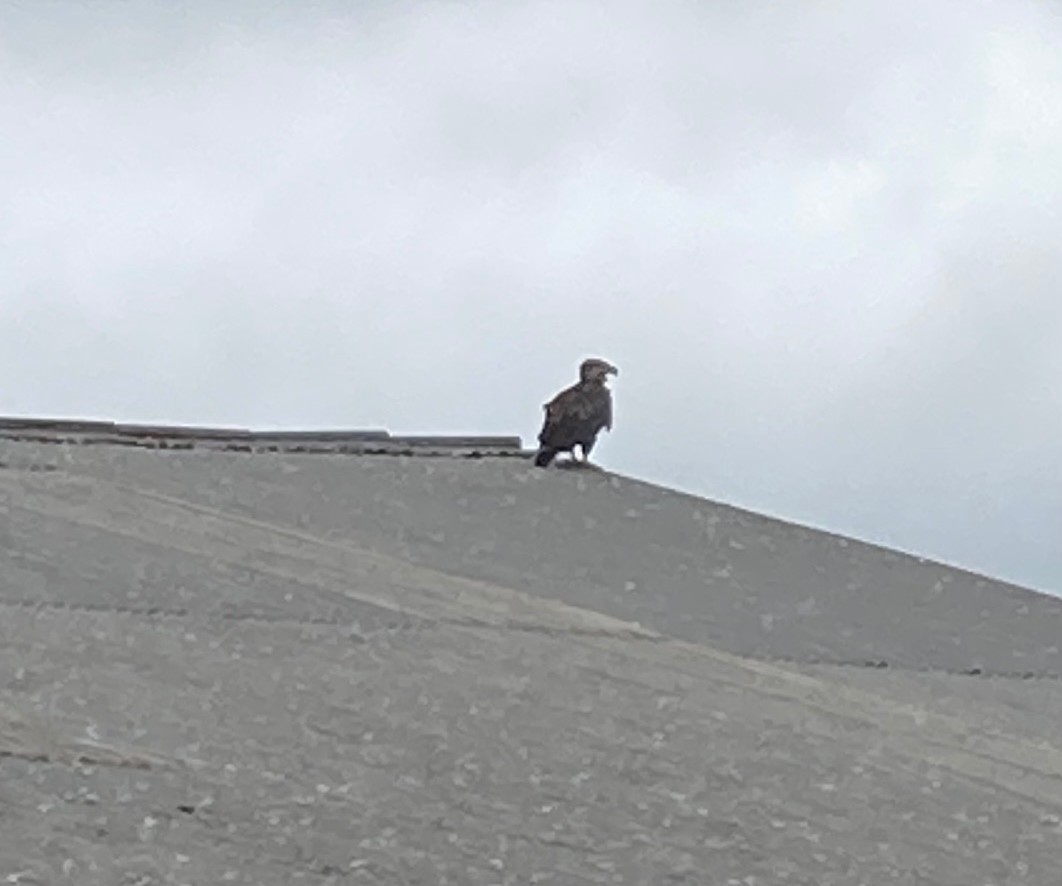
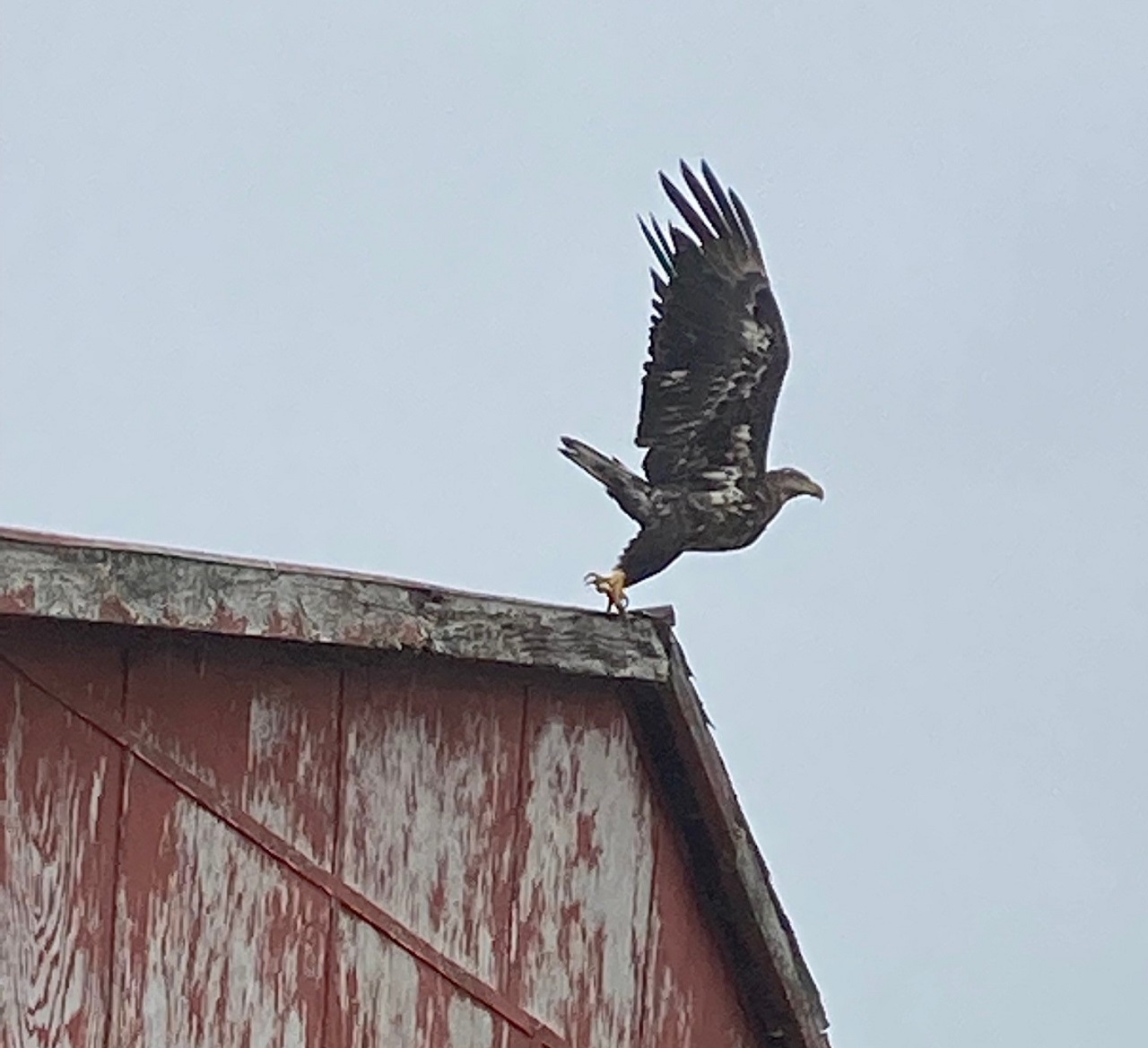
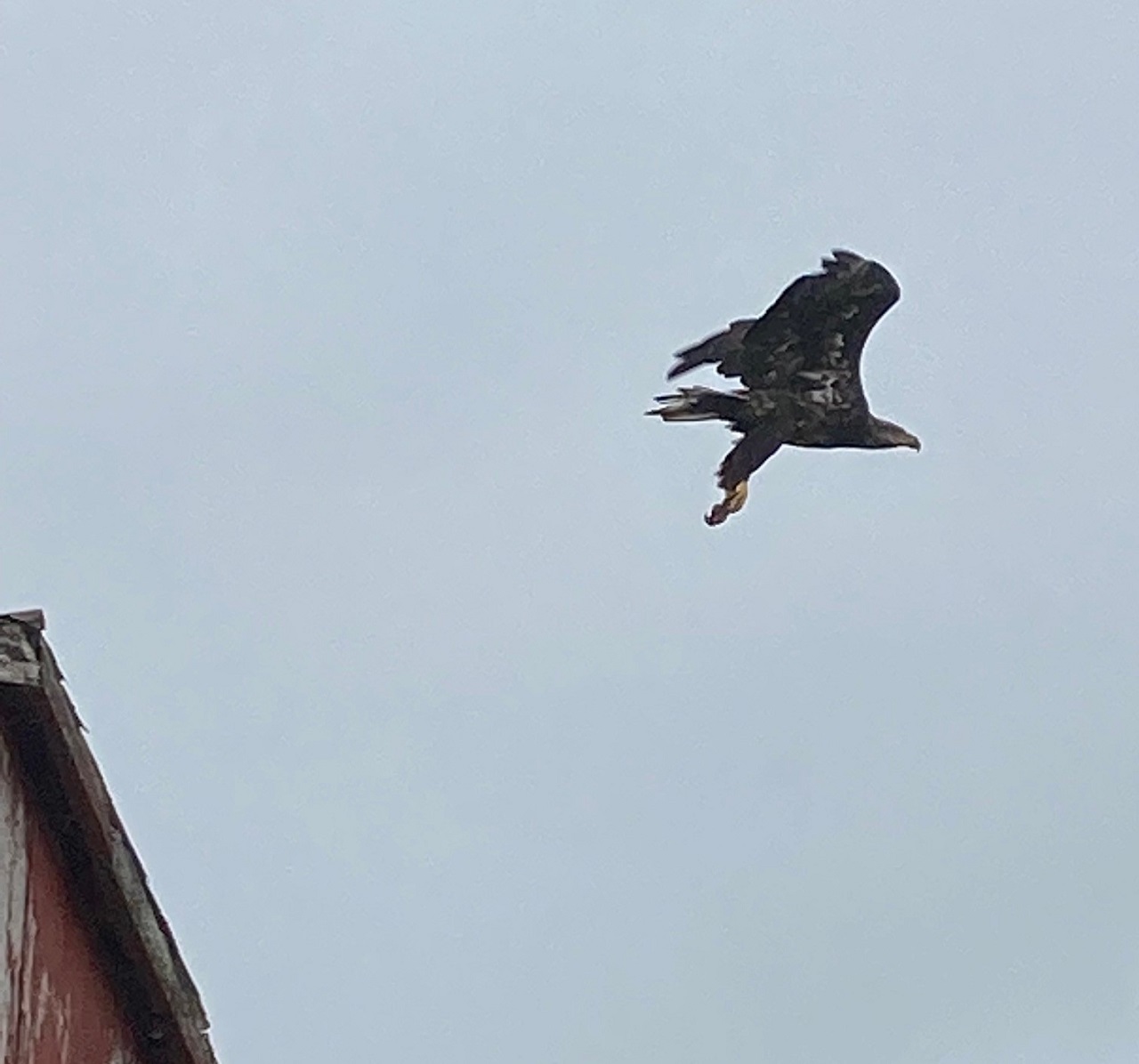
READY…SET…GO!: These photos were taken by Gary Mazoki, of Palermo, at Kinney’s compost, in Knox. The immature bald eagle sat perched, then launched into full flight.

Photo by Gary Mazoki, of Palermo

Photo by Gary Mazoki, of Palermo

Photo by Gary Mazoki, of Palermo

I’M JUST CURIOUS: Did you know…

by Debbie Walker

Did you know that our appliances have secrets? Yes, they do. I am sharing the information from Reader’s Digest, by Marissa Laliberte (July/August ’19).

MICROWAVE: (my favorite) I did not know the shape of the dish you use in reheating or cooking, makes all the difference in a microwave. A rectangular container attracts more energy and the corners may be over cooked, not heated as much in center. A round container allows more uniformed heating. Did you know? Here is a tip Nana Dee gave me: A whole cauliflower, remove the core. Wrap the entire head with a wet paper towel and microwave until done enough for your taste. I haven’t tried it yet but I will.

The same article tells me not to season my food until it’s done. Microwave energy is drawn to salt. The seasoned top leaves a dryness you don’t want. Did you know?

OVEN BROILER: Have you ever heard of leaving the oven door open a bit when broiling? Marissa wrote that the closed oven door is likened to baking. Venting the oven lets the steam out; the steam prevents the crustiness you hope for in broiling. Check your ovens manual first, you wouldn’t want to melt knobs. Did you know?

SLOW COOKER: Trapped heat is what does the cooking in a slow cooker. Unless, you keep lifting the lid, then the cooking takes longer. Wait until there is about an hour left of cooking before you lift the lid. Slow cookers are wonderful to make the most of your time. Did you know? You can dye yarn in it. Not something I will try but I am wondering what else I could do, maybe a T-shirt for one of the kids. You know I must try that one day.

DISHWASHER: Obviously, the area above the rotating arms gets the strongest spray. I learned that’s what starch foods need to eliminate their mess. It needs the force of the spray rather than the chemical clean.

The other side of the coin is dishes holding protein leftovers need the chemical clean, so the lower rack is better. It allows the soap to stay on longer for its cleaning. Did you know? Wash the baseball type hat in dishwasher. You just want to be sure to turn it off before it starts the heat and dry process.

BLENDER: If your blender stalls every few seconds, it is the layering of your ingredients that’s probably the cause. Start with a soft base ingredient (ex: yogurt) Then layer smallest to largest, ice and tough stuff on top. They will get “blended” in. Did you know? Bisquick Coconut Pie can be mixed in a blender, if you need directions, I can get them and pass on in email. Can also blend butter and graham crackers for a crust right in a blender.

STAND MIXER: Blades sometimes need to be aligned. You want them adjusted so blades can reach ingredients but not hit or scratch the bottom or sides. Find your adjusting screw by referring to your owner’s manual. Did you know?

Since I have devoted most of my life to avoiding kitchens whenever possible I did not know most of this information. The microwave information was the most important tidbit for me, and I am very well acquainted with the dishwasher as well.

I am just curious how many of these you know and how many you may have questions about. Contact me at dwdaffy@yahoo.com. I’ll be waiting. Have a great weekend.

REVIEW POTPOURRI – Singer: Connie Francis

Connie Francis

Peter Catesby Peter Cates

Connie Francis

Now 83 years old but still active, Connie Francis is a living legend in pop music. Her 1957 megahit, the lovely Bert Kalmar/Harry Ruby Who’s Sorry Now, was one truly fine song, made extra special by CF’s totally sincere rendition, even if a tad smothered by sentimentality. That year, American Bandstand featured her lip-singing it and, as a six year old, I remember wishing, just momentarily, that she would adopt me as her little boy on a single Mom basis – LOL !!!

BTW, with respect to Kalmar and Ruby, the 1950 Fred Astaire and Red Skelton musical biopic, Three Little Words, also from MGM (Hmm, interesting coincidence), and about the two songwriters, had a very stirring and expressively different performance of WSN by Gloria De Haven, very much in the Peggy Lee/Julie London tradition.

Exciting is a set of 12 very classic pop standards – Time After Time; Johnny Mercer and Harold Arlen’s Come Rain/Come Shine; a very personal favorite, There Will Never Be Another You; Hold Me, Thrill Me, Kiss Me, of which my copy of the late Karen Chandler’s early ‘50s Coral 45 is the gold standard; That’s All; All By Myself, etc. She performs with heartfelt expression but her timing and phrasing is sometimes leaving me wanting something more, an elusive nuance and magic that such balladeers as Frank Sinatra, Perry Como, Ella Fitzgerald, Mel Torme and Doris Day had aplenty. But I really liked her singing of Time After Time. And the arrangements of the gifted Ray Ellis, like those beautiful ones for many of the Johnny Mathis late ‘50s hits, enhanced the album.

For me personally, the worst record she may have released – and one of the top ten worst in recording history, was the 1963 Brylcream Sing Along with Connie. First, it was an insult to the finest Sing Along group then popular, namely Mitch Miller’s. Secondly, the arrangements were hokey, cornballish and, most obviously, a rush job of rush jobs, much like most Christmas albums and TV specials. Thirdly, the Brylcream commercials flooded the American Bandstand. And finally, those little dabs made men’s hair greasier and grosser – forget pursue, the gals would all avoid ya!

The album would also impact the 1963 Christmas of the greater Cates family groups in the vicinity – the price for the record, when first released, was $1 when one purchased a tube of the ointment. Within a week, the price was down to ten cents without the required extortion.

A most “thrifty,’ well-to-do relative whose anonymity shall be honored in this instance, like the other sleeping dogs, bought a pile of the 10 centers and flooded every household with a copy as his way of good will to all men and women. Even after 30 years, no other copies of a record flooding the rubbish sales and Goodwills would be in such mint plus condition.

However, the story doesn’t end there. Rare record shops had their copies priced at 20 bucks and more by the mid ‘80s.

The singer’s life would be shattered by two horrific events. In 1974, a rapist would bust into her room at a New Jersey motel and brutally assault her, never to be found to this day. In 1981, her brother was murdered by two Mafia hitmen.

But her ability to move on and bless so many both here and abroad is only one of the reasons she is so worthy of honor for her life’s work.

Several selections, maybe the whole album, can be heard on YouTube, while prices on the Amazon page start at $4.39 for LP and $6.80 for CD.

FOR YOUR HEALTH: Six Questions To Ask Your Doctor About COVID-19 Vaccines

Talk to your doctor if you have questions about COVID-19 vaccines.

(NAPSI)—While most American adults have already received at least one dose of a COVID-19 vaccine, a lot of people still have questions. Everyone deserves to have access to factual information to make a decision about getting vaccinated. But many people don’t know where to go to get their questions answered.

For most people who want more information, talking to their personal doctor is the best place to start. Your doctor or health team will know you and your medical situation better than anyone. They can help you make an informed decision that’s right for you.
When talking with your doctor, there are a few key questions you may want to consider:

Vaccine Questions:

1. Why did your doctor choose to get vaccinated? Over 90 percent of doctors have decided to get vaccinated against COVID-19. You may want to hear more about why they chose to get vaccinated as a healthcare provider.
2. Why should you get vaccinated? Your doctor can make a recommendation based on your unique medical situation. The vaccines provide substantial protection from serious illness and hospitalization.
3. Are the vaccines safe? These vaccines are undergoing the most intensive safety monitoring in U.S. history. Clinical trials began over a year ago with more participants than most other vaccines. Your doctor can help determine safety based on your personal medical history.
4. Do the vaccines impact fertility? This myth has been appearing online but there is no evidence that COVID-19 vaccines cause fertility problems. Ask your doctor if you have concerns around fertility or pregnancy.
5. Are the vaccines free? Yes, the vaccines are provided by the federal government at no cost to recipients.
6. Can you get a vaccine from your primary care doctor? Your primary care doctor may have COVID-19 vaccines available in their office. If not, they can help direct you to the closest location where you can receive a vaccine. You can also visit Vaccines.gov to find a location near you.

Learn More

Visit www.GetVaccineAnswers.org for the latest facts about COVID-19 vaccines.

GROWING YOUR BUSINESS: Be careful what you say

Growing your businessby Dan Beaulieu
Business consultant

A true story. One of our relatives in a nearby town was having trouble with her furnace and needed a repair person. She called the man that had been taking care of her furnace for years. He came over and found that all he had to do was reset the furnace and everything would be fine. He said that there would be no charge and showed her the switch so next time she could reset the furnace herself. He was not gone 15 minutes when the furnace conked out again.

Not wanting to bother the repairman again that night she and her daughter, who was visiting, decided to add more blankets to their beds, tough it out and call the repairman in the morning.

The next morning the daughter called the repairman, and he proceeded to blast her for bothering him, read her the proverbial riot act for bothering him, but in the end, with some persuasion grumbled he would come later that day.

He never showed up!

Whereupon the daughter called another company, they sent a man out right away. There was something wrong with the furnace, it was missing a part. They fixed it in 30 minutes, handed her the bill and went on their merry way.

Now here is where the story gets interesting.

The daughter was very active on social media, especially Facebook…I think you can see where this is going.

The daughter promptly got on Facebook and told the story including naming names and recommending that no one should ever use this repairman again. Her post went out to over the 200 people to whom she was connected!

Wow! What repairmen should have realized was that in this new world order people are connected, and people talk to each other, especially when they have been poorly served enough to be angry.

Just imagine for a minute the kind of negative publicity this repairman is now getting!

But the real point here is that no person or company, or organization, should ever talk to their customers the way this repairman did. Nor should any person serving the public ever complain about doing a job for a customer.

The rule of thumb pre-social media used to be that if a customer has a complaint, he is going to tell a number of people and in the end, about 100 people would hear about it. Now in these days of social media that number increases to literally hundreds if not thousands of people. And if the story is bad enough it could go viral, then millions of people could see it.

Those of us in business should always appreciate our customers and the business they send our way. The minute we stop doing that, and let the customer see, that is the day your business will stop growing. And that my friends is no way to be growing your business.

SCORES & OUTDOORS: The plight of the magical lightning bug

Fireflies in a forest.

Roland D. Halleeby Roland D. Hallee

One night last week, after I did my usual bedtime reading, and my wife was playing the mind games on her tablet, I turned out the light and rolled over to get some sleep. Suddenly, my wife said, “there’s a lightning bug in here.” I looked up, and sure enough, there he was on the ceiling.

I didn’t want to crush it, because we are seeing fewer and fewer of them. So, I managed to corner it, pick it up with a piece of paper, and send it on its way, outdoors.

Now we rewind to a year ago when we were sitting by a campfire when we noticed a lightning bug. Notice I said “a,” like in one, uno, solo. It was the first lightning bug I had seen in a while. I remember when I was growing up, we used to go visit relatives in Canada, and sometimes go to a camp where we would see hundreds of lightning bugs flying around in a field. We used to capture them in a jar. You just don’t see that anymore.

Anyway, lightning bugs can make summers magical, but there is more to learn about these beauties.

First off, lightning bugs are actually fireflies. Fireflies are cute and elegant by day, but downright dazzling after darkness falls. But behind their charming facade, fireflies are fascinating little insects. Consider the following facts:

Firefly

They are beetles, not flies. Fireflies are nocturnal members of Lampyridae, a family of insects within the beetle order Coleoptera, or winged beetles. Yes, they are officially beetles.

They are alchemists, poetically speaking at least. While they don’t actually turn base metals into gold, they do create light as if by magic. When a chemical called luciferin (note the same Latin root as Lucifer) inside their abdomen/tail combines with oxygen, calcium and adenosine triphosphate, a chemical reaction occurs that creates their spectacular light.

Firefly light is incredibly efficient. The light produced by the firefly is the most efficient light ever made. Almost 100 percent of the energy in the chemical reaction is emitted as light; in comparison, an incandescent light bulb only emits 10 percent of its energy as light, the other 90 percent is lost as heat.

The main reason lightning bugs flash is to attract mates. Among most but not all species of North American lightning bugs, males fly about flashing while females perch on vegetation, usually near the ground. If the female sees a flasher and she’s ready to mate she responds by flashing right after the male’s last flash. A short flash dialogue takes place as the male flies closer and closer, and then, if all goes well, they mate.

They come in a rainbow of colors. Well maybe not the whole spectrum, but they do come in yellow, light red, green and orange.

They taste disgusting. Not that we were planning on snacking on fireflies anytime soon, but for predators that might like a light meal, beware the lightning bug. Firefly blood contains lucibufagins, which sounds like something out of a Harry Potter book but is actually a defensive steroid that tastes really awful. It is similar to that found in some poisonous toads. Predators associate the bad taste with a firefly’s light and learn not to eat bugs that glow.

However, their numbers are declining. If you’re seeing fewer fireflies each summer, you’re not alone. Evidence suggests that firefly populations may be on the decline, most likely due to a combination of light pollution, pesticide use and habitat destruction. For example, according to Smithsonian.com, if a field where fireflies live is paved over, the fireflies don’t migrate to another field, they just disappear forever.

What’s going on? Bees are on the decline; butterflies are suffering, could fireflies be facing tough times as well?

The scientific and citizen consensus is “yes.” Malaysia even holds an international symposium dedicated to conservation of the firefly. Scientists have for years been warning that the world’s estimated 2,000 species of fireflies are dwindling.

And is it any wonder? As the manmade environment continues its undying march into the natural world, where are these things supposed to live? Fireflies breed and exist in the woods and forests, along lakes and streams, in dense gardens and unruly meadows. Where are they supposed to do their firefly things when those places are paved over and built upon?

All of it doesn’t bode well.

“Fireflies are indicators of the health of the environment and are declining across the world as a result of degradation and loss of suitable habitat, pollution of river systems, increased use of pesticides in agro-ecosystems and increased light pollution in areas of human habitation,” notes the Selangor Declaration, a firefly advocating document. The decline of fireflies is a cause for concern and reflects the global trend of increasing biodiversity loss.”

Fireflies are part of our heritage; they are an iconic creature and have played a role in many, many cultures. They are the epitome of summer evenings, for many of us they served as an introduction to the wonders of nature. If we lose the fireflies, we lose an important invisible thread that connects us to the magic of the natural world. And as a species, we can’t afford to lose that right now.

Roland’s trivia question of the week:

Complete the golfing adage: “You drive for show, but putt for….”

Answer can be found here.

FINANCIAL FOCUS: Declare your financial freedom; how to achieve it

by Sasha Fitzpatrick

Submitted by Sasha Fitzpatrick, EdwardJones Financial Advisor

We just celebrated Independence Day. And as we make progress in moving past the COVID-19 pandemic, more of us enjoyed Fourth of July activities. However you observe the holiday, it’s important to recognize all the liberties we enjoy in this country. But you may still need to work at one particular type of freedom – and that’s financial freedom. How can you achieve it?

There’s no one instant solution. But you can work toward financial independence by addressing these areas:

Retirement savings – Approximately 45 percent of Americans think the ideal retirement involves “enjoying my well-earned freedom,” according to the March 2021 Edward Jones/Age Wave Four Pillars of the New Retirement study. But when you’re retired, the risk to this freedom is obvious – the paychecks have stopped but the bills haven’t. Furthermore, you could spend two or three decades in retirement. That’s why it’s so important to contribute as much as you can afford to your tax-advantaged retirement accounts, such as your IRA and your 401(k) or another employer-sponsored plan. At a minimum, put in enough to earn your employer’s matching contribution, if one is offered. Whenever your salary goes up, try to increase the annual amount you put in your 401(k) or similar plan. And if appropriate, make sure you have a reasonable percentage of growth-oriented investments within your 401(k) and IRA. Most people don’t “max out” on their IRA and 401(k) each year, but, if you can consistently afford to do so, and you still have money you could invest, you may want to explore other retirement savings vehicles.

Illness or injury – If you were to become seriously ill or sustain a significant injury and you couldn’t work for an extended period, the loss of income could jeopardize your ability to achieve financial independence. Your employer may offer disability insurance as an employee benefit, but this coverage is typically quite limited, both in duration and in the amount of income being replaced. Consequently, you may want to consider purchasing private disability insurance. Keep in mind that this coverage, also, will have an end date and it probably won’t replace all the income lost while you’re out of work, but it will likely be more expansive and generous than the plan provided by your employer.

Long-term care – Individuals turning 65 have about a 70 percent chance of eventually needing some type of long-term care, such as a nursing home stay or the assistance of a home health aide, according to the U.S. Department of Health and Human Services. And these services are quite expensive – the average annual cost for a private room in a nursing home is more than $100,000, according to Genworth, an insurance company. Medicare typically covers only a small part of these expenses, so, to avoid depleting your savings and investments (and possibly subjecting your grown children to a financial burden), you may want to consider long-term care insurance or life insurance with a long-term care component. A financial advisor can help you choose a plan that’s appropriate for your needs.

By addressing these areas, you can go a long way toward attaining your financial independence. It will be a long-term pursuit, but the end goal is worth it.

This article was written by Edward Jones for use by your local Edward Jones Financial Advisor.

Edward Jones, Member SIPC.

Sasha Fitzpatrick can be contacted at EdwardJones Financial Advisor, 22 Common St., Waterville, ME 04901, or at sasha.fitzpatrick@edwardjones.com.