SOLON & BEYOND: Let’s begin with Percy’s words of wisdom

Marilyn Rogers-Bull & Percyby Marilyn Rogers-Bull & Percy
grams29@tds.net
Solon, Maine 04979

As usual, my computer is giving me trouble again, so this may be a short one this morning. I had started writing the column at an early hour and I got quite a bit written and I lost it . The bad news is that I have finally decided that the computer is smarter than I am…. not good.

Have decided to start with Percy’s words of wisdom when he was still alive! This one is from The Town Line newspaper on March 28, 2013…… It ended with these words: Percy, as usual on our day to write this column, woke me bright and early! (but as you know Percy is no longer here to help me, and I miss him every day. He gave me no sympathy as I rebelled and told him it was too early to get up. In his normal persevering ways he won as usual. When all else fails, he spitefully scratches the furniture, Even so, I’m going to go with this saying by Sir Arthur Helps. “Wise sayings often fall on barren ground; but a kind word is never thrown away.” I know you like Percy’s words of wisdom, so here they are: “I find the great thing in this world is not so much where we stand, as in what direction we are moving. To reach the port of heaven, we must sail sometimes with the wind and sometimes against it – but we must sail, and not drift, nor lie at anchor.” (words by Oliver Wendell Holmes.) I think of those words every time someone compliments me on standing up for what I believe in, or asks, “Are you staying out of trouble?”

Here is some good advice from yet another newspaper that I had written for back in December 15, 1988, in the Skowhegan Reporter. I had written under the title, SOLON, “The friendliest town in the state.” It started out with these words, “Good morning my friends! “Do you suppose, Oh could it be, that peace on earth might start with me?” Do you remember those idealist words written by me in an editorial not too many years ago? And do you detect the slight quiver of uncertainly in them now? – but still I dream that maybe some day mine will not be such a rebellious nature. Was reading in a book of mine the other day and came upon this statement and am inclined to agree – “Those who put peace before righteousness , and justice, and liberty, do infinite harm and always fail of their purpose ultimately.

Found this next one in The Town Line newspaper dated July 4, 2013, and this is the way one of the columns that I had written stated, “Now I have got to brag a little (which I know shouldn’t be done, so please forgive me).Was thrilled beyond belief on June 17 when I saw my grandson, Alexander (Zander) Walz’s picture on the front page of the daily paper. It was a great picture of him sitting at a piano (his favorite place), but his inspirational words to all other graduates really made me proud.

The following words are from the July 4, 2013, The Town Line newspaper, before Percy died and it starts, Whoops! I’ve used up half the words and I promised Percy he could write some of this column and here he is after waiting patiently: I love my human s-0-0-much but she gets upset when I kiss or as she says, (laps) her so today just to show her my side of the story, I’m going to write from the book, Love Is a Happy Cat. Loving cats entails recognizing that, like humans, we can suffer from emotional as well as physical problems, including allergies, depression, and flu. (I do have a physical problem and I feel much better since she took me to the doctor, and I know she puts that ground up pill in my tuna fish, but I eat it just to make her happy.) Love is providing me with feline TV in the form of a bird feeder outside the window. Oh, boy, did all of you see my picture on the front page of The Town Line last week? I want to thank Roland for putting it there, but that’s all I’ll say about that, I don’t want to be a bragger like my human is! I do have squirrels and birds of all colors and shapes right outside my window to watch.

And now I’m going to give my human an extra kiss for letting me help her write our column this week and leave you with my wise words: To be a friend a man should strive to lift people up, not cast them down: to encourage, not discourage; to set an example that will be an inspiration to others.

Diocese of Portland makes major updates to pandemic protocols

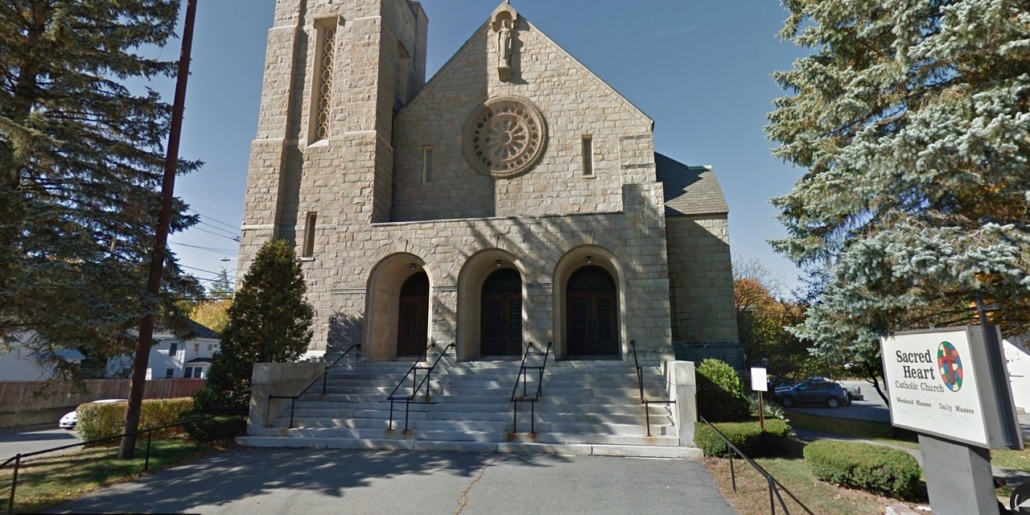
Sacred Heart Catholic Church in Waterville (photo: Google streetview)

The Diocese of Portland has announced major updates to the pandemic protocols currently in place at all 141 Catholic churches in Maine.

The following actions took effect on Monday, May 24:

• Masks are no longer required for any person at any time, inside or outside the churches.
• Capacity limits, advance registration, and the gathering of contact tracing information for those attending Masses are eliminated.
• Pew seating arrangements to establish six or more feet of distance between each person/family are eliminated. Those attending Masses are welcome to sit where they are comfortable. All pews will be available for seating.
• The distribution of Holy Communion to the homebound is restored.
• Indoor choir practices can be held without distancing.

For those not yet comfortable with a return to Mass, many churches will provide spaces in other areas, like parish halls, for additional, spread out seating during Masses. The extensive livestreaming schedule at Maine parishes will also remain in place. Moving forward, adjustments to the schedule will be made in the “Parishes and Mass Times” section of www.portlanddiocese.org. The obligation to attend Mass will continue to be dispensed for the foreseeable future.

“The strict adherence to state and diocesan guidelines has led to the successful operation of our churches since last June. I am so grateful for the many staff, volunteers, and parishioners who sacrificed and followed the protocols to ensure that Maine Catholics were able to participate in Mass and receive the Eucharist over the last year,” said Bishop Robert Deeley. “The Catholic Church always works to guide those it encounters to live in harmony and peace. ”

We hope that by continuing to offer a variety of ways to participate in Mass and through updating these protocols, all will feel welcomed to grow in their faith together in Christ.”

I’M JUST CURIOUS: A little more salt

by Debbie Walker

Hi everyone! I used a reference about using salt to gargle a sore throat and a white warm salt sock to ease an infected ear. I did find that one as interesting. I am really surprised no one told Mom about it when my brother and I had earache problems as children.

Anyway, there were also other uses for salt and the miracle cures. Deborah Tukin was the author of the article in Farmer’s Almanac 2020. I hope you enjoy reading this kind of information because I do enjoy passing it on. It’s become a bit of an interest to me how the old remedies and uses are coming back into the homes all these years after modern chemicals hit the shelves.

I seem to remember in my earlier years our home cabinets and shelves were not loaded down with all the products as might be today. I am happy to see things go back to the basic and ‘old’ ways. What are some of the old remedies of your families as household uses?

Okay, back to salt!

Heat Exhaustion: in hot weather heat exhaustion can be the result of salt depletion or dehydration. Stir one teaspoon of sea salt into a liter of water and sip. Needless to say, get to a cooler place, remove shoes, maybe lie down, and use an ice pack for face and neck.

Dehydration: For those hot sweaty times you need to replace electrolytes and increase energy, make your own sports drink (maybe not Gatorade). To 8-ounces of filtered water, add a teaspoon of raw honey, protein powder and a pinch of Himalayan Sea salt. Stir and drink.

Allergies, sinus infection or a cold:

Seashore: Yes, a seashore might be just what we need. It’s low in pollen, that makes it great for allergy sufferers. Salty air is also great for healing sinus infections. Swimming in ocean speeds the healing of minor cuts and pimples. I will add that I was told years ago that letting your dog paddle around a bit does a number on any fleas.

There are many uses for salt around the home. You will find plenty of uses on your computer or in books and magazines. It is still important to do a little of your own research.

Yesterday I was painting my shelf and wound up with paint on myself. I kept painting, it dried and did not want to come off later. BUT guess what I discovered. I remembered something I read about using coconut oil to get the paint off. IT WORKS! It really does. I guess I need to look up other uses for it.

Today I had my follow-up for my urinary surgery about three weeks ago. I had a visit with Christy, the representative of the maker of my little bladder miracle. She explained that once the work was done the next thing is to find the right program setting for me. It was just a little trial and error. I am happy to say we have found my happy place! If any of my story sounds familiar to you, don’t torture yourself anymore. It’s just not necessary. Good luck.

I am just curious what thoughts or ideas you are hiding, share with me. I have shared with you. And I can keep secrets! Please send any questions or comments my way at DebbieWalker@townline.org. Have a great week and thanks for reading!

REVIEW POTPOURRI – Pianist: Emil Gilels

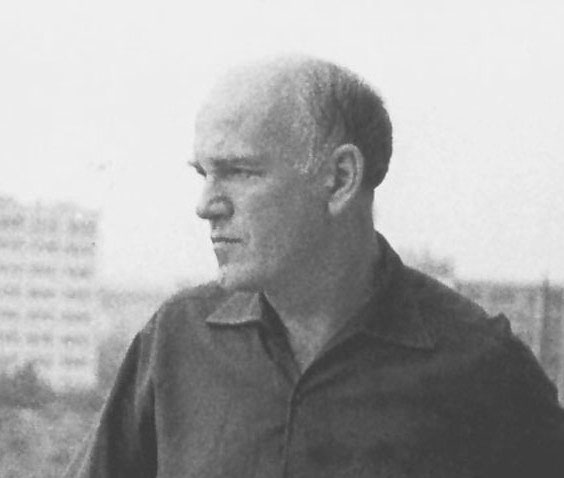
Sviatoslav Richter

Peter Catesby Peter Cates

Emil Gilels

Emil Gilels

In 1955, Russian pianist Emil Gilels (1916-985) made his debut in the United States, being one of a handful of musicians allowed to tour outside the Iron Curtain. His entourage, like other touring musicians from the Soviet Union, included several ‘friends’ who were KGB operatives prepared to shoot in case Gilels tried to seek asylum.

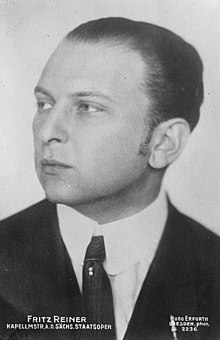
Fritz Reiner

He made two recordings with Fritz Reiner and the Chicago Symphony – the Tchaikovsky 1st Piano Concerto and the Brahms 2nd – which were distinguished by an unusually refined technical virtuosity, delicacy but full-blooded musicality. He and Reiner, who was otherwise notorious for scathing sarcasm with orchestra members, had a most congenial relationship. (Many years later, Gilels was collaborating with the young Simon Rattle who made a mess with his conducting. Gilels jumped up from the piano bench and screamed at the young maestro for his stupidity. Since then, Rattle’s conducting has drastically improved.)

When Gilels was complimented for his playing during his first appearances, he replied, “Wait until you hear Richter.” He was referring to his good friend, pianist Sviatoslav Richter (1915-1997) who first toured the U.S. in 1960. Richter was a big, broad-shouldered man with huge hands that swept across the piano with dazzling power, unlike Gilels who was shorter and had smaller hands.

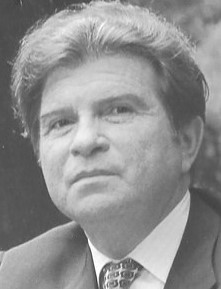
Simon Rattle

Two outstanding Richter recordings are his ones of the 2 Piano Concertos of Franz Liszt and of Rach­ma­ninoff’s 2nd Piano Concerto. I would also add his record of Beethoven’s Appassionata Sonata, one that Gilels did very well with a much different approach from Richter.

Richter had a miraculous memory for the names of every single individual he ever met, no matter how briefly, and found it annoying. He also preferred doing free concerts for small groups in such places as a country church.

Both pianists have recordings accessible on YouTube.


POETRY CORNER: I must go

I must go

by Marilou Suchar
May 16, 2015

The ocean is calling to my heart,
I must go
To walk the shore, and in me store
The smell, the feel, the love.

The ocean beckons me, some, now
And see,
See the waves, the shells, feel the warm sand
And maybe just be. Come hold my hand.

The ocean cries – the longing, the yearning
I must return
To the seagulls cry
To the glistening waves
To the wind in my face
To the sound

I must go. The ocean calls me.

MAINE MEMORIES: A fun birthday when I was a girl

photo by Will Clayton (flickr.com/photos/spool32)

by Evangeline T.

Hello and welcome to Maine Memories, little snippets of life from our home state.

This week, I want to tell you about a fun birthday I had as a girl.

When I was ten, we moved to a 250-acre farm.

Like most farms back then, the house, shed, and barn were connected. If you walked around the house outside, you needed to walk around the shed and barn, too.

Dad had fenced off an area for pasture, so walking around the house meant climbing over the first section of fence, walking across the corner, and then climbing over the second section to complete your journey. The second fence section had a large pole gate in it. A pole gate was long poles that slid to one side so you could have access to the pasture.

For my 11th birthday, mom gave me a party with my new friends. She planned games, baked a beautiful cake, and made delicious ice cream. We all got a chance to turn the crank on the churn to help the ice cream freeze.

One of the games we played was if you lost, you had to pay a forfeit. The forfeits were written by mom on slips of paper placed in a jar. Of course, I lost. When I picked out my forfeit, it said to run around the house once.

Out the door I went, everyone else went also to watch me.

I wore a pretty blue dress, so I was careful. I slid under the first section of fence without a problem. Cheers went up from my friends.

I crossed the corner and came to the second section of fencing. Going between the poles on the gate seemed my easiest way.

It was a great plan, except for one thing: the old cow in the pasture had been observing me and figured I might need a little help. My blue dress going between the poles of that gate caught her eye, and she proceeded to butt me with her big hard head right where I sat. I landed on the other side of the gate, dress safe and sound. My pride was another matter!

Everyone laughed, and the cow, well, she voiced her opinion of the whole thing with a loud “moo”. I never did like that cow!

Up and down the Kennebec Valley: Goodwill-Hinckley – Part 2

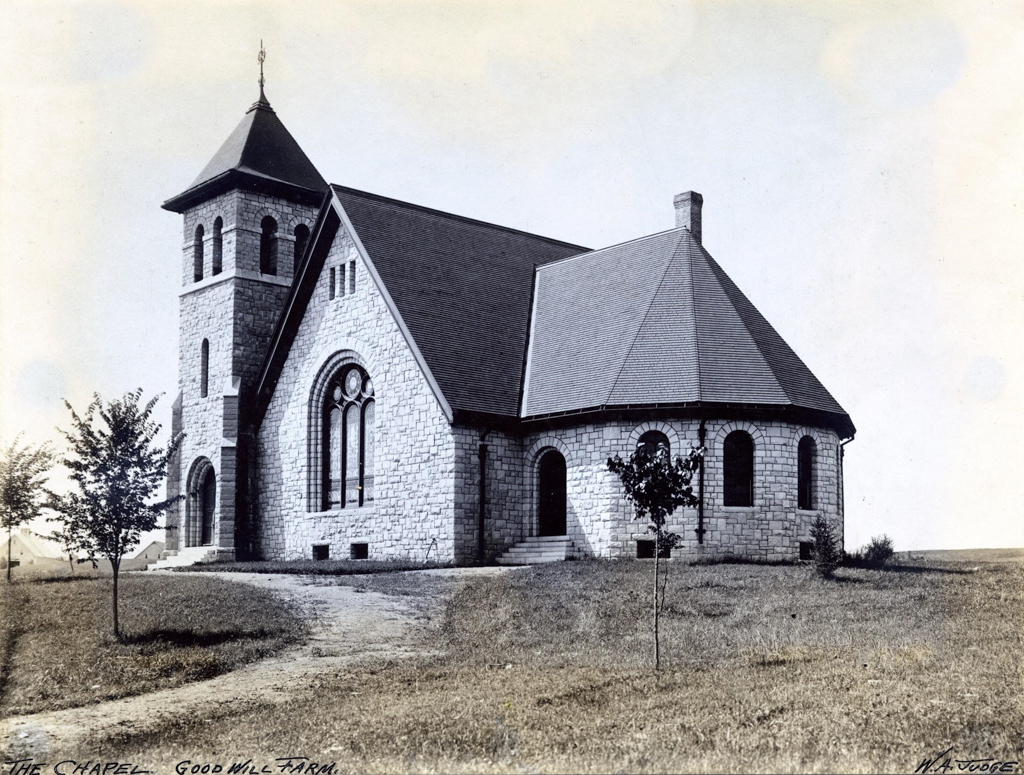
Moody Chapel

by Mary Grow

Averill school, Prescott admin, Kent woodworking, Carnegie library

The Goodwill-Hinckley campus has more buildings of historic interest than there was space to describe in the May 20 The Town Line article, including a third school included in the boundaries of the National Register area.

The Averill School, later Averill High School and now Averill/Alfond School, dates from 1930. Originally a two-story Georgian Revival brick building, with chimneys on either end, it acquired two wings and more chimneys on its new ends.

After listening to school founder George W. Hinckley’s requests for a new school nearer the center of campus, Keyes Fibre executive Dr. George C. Averill (1869-1954) and his second wife, Frances Mosher Averill (1873-1962), provided money for the school, and remained important supporters of Goodwill-Hinckley for years. (Averill also bought, in 1944, the Great Pond property for the Boy Scouts to build Camp Bomazeen, in Belgrade.)

Later, Maine philanthropists Harold and Bibby Alfond supported redoing the Averill School interior and adding a middle school; the building was rededicated in September 2000. The school’s online information says it is coed, serving students in grades six through 12, with a 4:1 student:teacher ratio.

The Averill family also provided Averill Cottage. An on-line photo caption relates its story: on Jan. 2, 1927, during a service in Moody Chapel, Hinckley announced a gift of $20,000 to build another girls’ home and name it in honor of Leah S. Averill, George Averill’s mother. The donor was identified as Averill’s second wife, Frances B. Mosher, of Bangor. Maintenance Superintendent James Tuttle built the two-and-a-half-story wooden Colonial Revival residence with its spacious porch; it was dedicated Sept. 18, 1927.

Frances Moody, of Bath, mentioned in the May 20 article as the funder of the Moody School building, made the donation that led to construction of Moody Memorial Chapel. The stone chapel was built in 1897 and expanded in 1927, after the congregation outgrew the original space.

The architect was Wilfred Mansur (1855-1921), described as the most prominent architect in Bangor in the late 1800s and early 1900s. Most of his work was done in Bangor, including the Penobscot County courthouse, the Mount Hope Chapel and Office in Mount Hope Cemetery and several buildings in Bangor’s historic district.

Moody Chapel is in Romanesque style, which Mansur used on other buildings as well. It features arched windows and a square bell tower. Two stained-glass windows honoring Frances and Mary Moody face east and west, one showing flowers and the other fruit.

The windows were created by Cyrus Hamlin Farley (1839-1934), of Portland. A web page from Church on the Cape UMC, a Cape Porpoise church with six Farley windows, says Farley began a career making nautical instruments; switched to eyeglasses; and then switched again to windows, ornamental and ordinary.

Goodwill School closed in 1909 after the Maine attorney general found its effort to become a college preparatory school violated its charter and state funds were withdrawn. Leaders reorganized and raised money and the school reopened.

After the reorganization, a 2011 Harold Alfond Foundation gift made it possible for Kennebec Valley Community College to acquire part of the Goodwill-Hinckley campus, including Moody Chapel. The college, the foundation and “a team of preservation professionals” went to work to restore the building.

As with the Moody School, extensive reconstruction was needed, including “reattachment of veneer stones to the wall core,” rebuilding “the two buttresses at the front of the building,” and restoring the bell tower from lobby to roof.
Carnegie Library

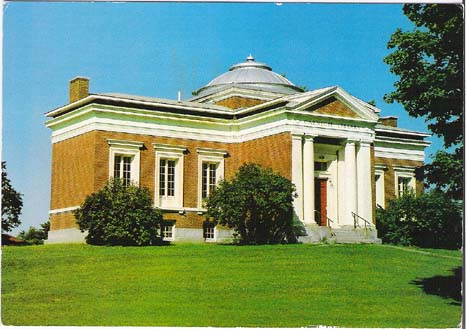
Goodwill-Hinckley’s Carnegie Library was designed by Albert Randolph Ross (1868-1948), built in 1906 and 1907 and dedicated May 29, 1907, according to Wikipedia’s list of Ross’s works. The Carnegie Corporation of New York donated $15,000 in 1905 for the building.

The brick and granite building is in Classical style. Photos on line show tall pillars flanking a central entrance, with a large dome over the center section and a chimney at the end of each wing. There are basement windows below tall main-floor windows.

An on-line site explains that Hinckley always realized that his school needed a library. As soon as he started it in 1889 he began soliciting books, and within a few years had 150.

By 1904 the library had grown to 5,000 volumes. The on-line site says on New Year’s Eve 1904 the original Moody School (built in 1895; see the May 20 issue of The Town Line, which did not include this recently-discovered information) burned down and the books were lost.

When Hinckley started rebuilding in the summer of 1905, he sought funding from Andrew Carnegie, leading to the grant that allowed construction of the Carnegie Library.

Architect Ross was born in Connecticut, son of architect John Wesley Ross (1830-1914), he practiced in Buffalo and New York City before moving in 1901 to what Wikipedia calls Negro Island off Boothbay Harbor. Some of his many other works include the Pittsfield Public Library (on the National Register of Historic Places) and the Old Town Public Library, both dated 1904.

(A July 27, 2020, letter to the editor of the Boothbay Register, signed by six couples who made up the Negro Island Property Owners Association, announced the island’s name had been changed, by unanimous vote, to Oak Island. The original name dated to the mid-1700s, the letter said, and had been making the island’s residents “increasingly uncomfortable.” The new name was chosen because of numerous oak trees and as a symbol of “strength, endurance and serenity.”)

The first Goodwill-Hinckley librarian was Hinckley’s sister, Jane E. Hinckley. (She was also the first Matron, the first office employee, and the organizer and first director of the boys’ choir, among other roles.) The on-line site mentioned above as a source of the library’s history says the library’s collection had expanded to 12,000 volumes by the time she died in February 1914.

The Goodwill-Hinckley Library closed in 2008. Recently, it has reopened with grants and donations paying for renovations and updates. Like other contemporary libraries, Goodwill-Hinckley’s now offers high-speed internet service, a 3D printer and other contemporary technological features.

The Prescott Memorial Administration Building was designed by New York architect Edgar A. Josselyn and built in 1916. The application to add the campus to the National Register of Historic Places gives the additional dates 1921 and 1922, and one on-line source says the original building burned.

The two-story brick building is in Georgian Renaissance style. On-line photos dated 1916 and 1926 each show a square three-story central tower with an arched window above the entrance and above that level an impressive wooden cupola. The square bottom of the cupola has four clock faces; above them, two receding round towers with windows are topped by a small golden dome and a weathervane.

An on-line slideshow says Portland-based landscape architect Carl Rust Parker (1882-1966) laid out Prescott Drive, a main road through the campus, and sited the Prescott building. He explained to Hinckley that the building should be “in a commanding position, and be easily accessible from the railroad, highway and the rest of the campus.”

Building and (presumably) roadway were named in honor of Amos L. Prescott (1853-1926). Born in South Berwick and later moving to Passaic, New Jersey, Prescott was a successful manufacturer of stove polish. He served on the board of Good Will Homes and donated money for the building.

The single-story brick Kent Woodworking Shop named in the 1986 application for Historic Register listing is another of Josselyn’s Georgian Renaissance buildings, built in 1919. On-line information is lacking.

The woodworking shop might have been successor to the 1903 Quincy Manual Training Building, where students from Goodwill and from outside, mostly boys, learned “carpentry, drafting, printing, and metal work.” The building now houses the L. C. Bates Museum (see the May 20 issue of The Town Line).

George Walter Hinckley
George Walter Hinckley

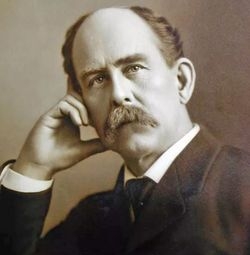
George Walter Hinckley (1853-1950), a Connecticut native trained as a minister and a teacher, wanted to help underprivileged and troubled youngsters. An on-line history describes his seeing another child arrested for trying to steal from a lunch pail because he was starving. As a teen-ager, Hinckley persuaded his parents to take in an orphan boy.

By 1889 Hinckley was in Maine, “doing fieldwork for the American Sunday School Union of Philadelphia.” He bought the 125-acre Isaac Chase farm, in Fairfield, owned by former Senator Margaret Chase Smith’s grandparents. The farm became the basis of Goodwill-Hinckley, and Hinckley devoted most of the rest of his life to raising money to support and expand it.

In addition to his sister, Jane Hinckley, filling many roles, Hinckley’s older son, Walter Palmer (1885-1963) succeeded his father as manager in 1919; and his younger daughter, Faith Jayne (1891- 1987) worked at the school.

Walter’s daughter Harriet married Donald Price, whose parents had been school employees, and the younger couple also worked there.

The present campus offers a variety of walking trails, a bird sanctuary, an arboretum, an artificial pond, a picnic area and gardening and farming spaces, including greenhouses. Located on the campus are:

  • The Maine Academy of Natural Sciences, Maine’s first charter high school, emphasizing agriculture, forestry and environmental science, some of whose students live in on-campus housing;
  • The Glenn Stratton Learning Center, a day school for students in kindergarten through 12th grade whose “significant social, emotional and behavioral problems” make public school difficult for them;
  • The Roundel Residential Center, providing “safe and supportive housing with specialized support services” for people in need aged from 12 to 21; and
  • The College Step-Up Program, providing housing and support for high-school graduates or GED (General Education Diploma) holders as they work toward a community college degree or certification.

The Goodwill-Hinckley website, provides a telephone number – 207-238-4000 – and an email address –info@gwh.org. It shows a map of trails and monuments on campus and invites people to schedule a visit. The name Goodwill-Hinckley refers to an organization as well as the physical property; donations are welcome.

Carnegie Libraries
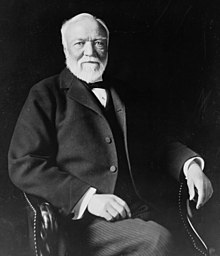
Andrew Carnegie

Andrew Carnegie (1835-1919) was born in Scotland, emigrated to the United States when he was 12, invested wisely and became for a time the richest man in America, even richer than John D. Rockefeller. He was noted for giving away almost all of his fortune through foundations and organizations that supported the arts, science, education, world peace and other causes.

A “Carnegie library” is a library built with financial assistance from a Carnegie fund. Wikipedia says between 1883 and 1929 Carnegie money helped build 2,509 libraries world-wide, including 1,689 in the United States. Others were in places as distant as South Africa, New Zealand, Mauritius and Fiji.

Maine’s 20 Carnegie libraries were funded between 1901 and 1912, with the exception of $2,500 awarded in 1897 to finish the Gardiner Library. The most common grant in Maine was $10,000; the most generous was Lewiston’s $60,000 in 1901. The state’s total came to $311,450.

Of the 20 libraries, 18 were or are public; Goodwill-Hinckley’s and the University of Maine at Orono’s are categorized as academic. Eighteen of the 20 are still libraries, including Goodwill-Hinckley, Waterville, Oakland and Pittsfield.

Freeport’s Main Street library was replaced in 1997 and is now home to a private business. UMO’s Carnegie Hall houses the Virtual Environment and Multimodal Interaction (VEMI) Laboratory.


ShineOnCass event includes education and PJ party with baby animals

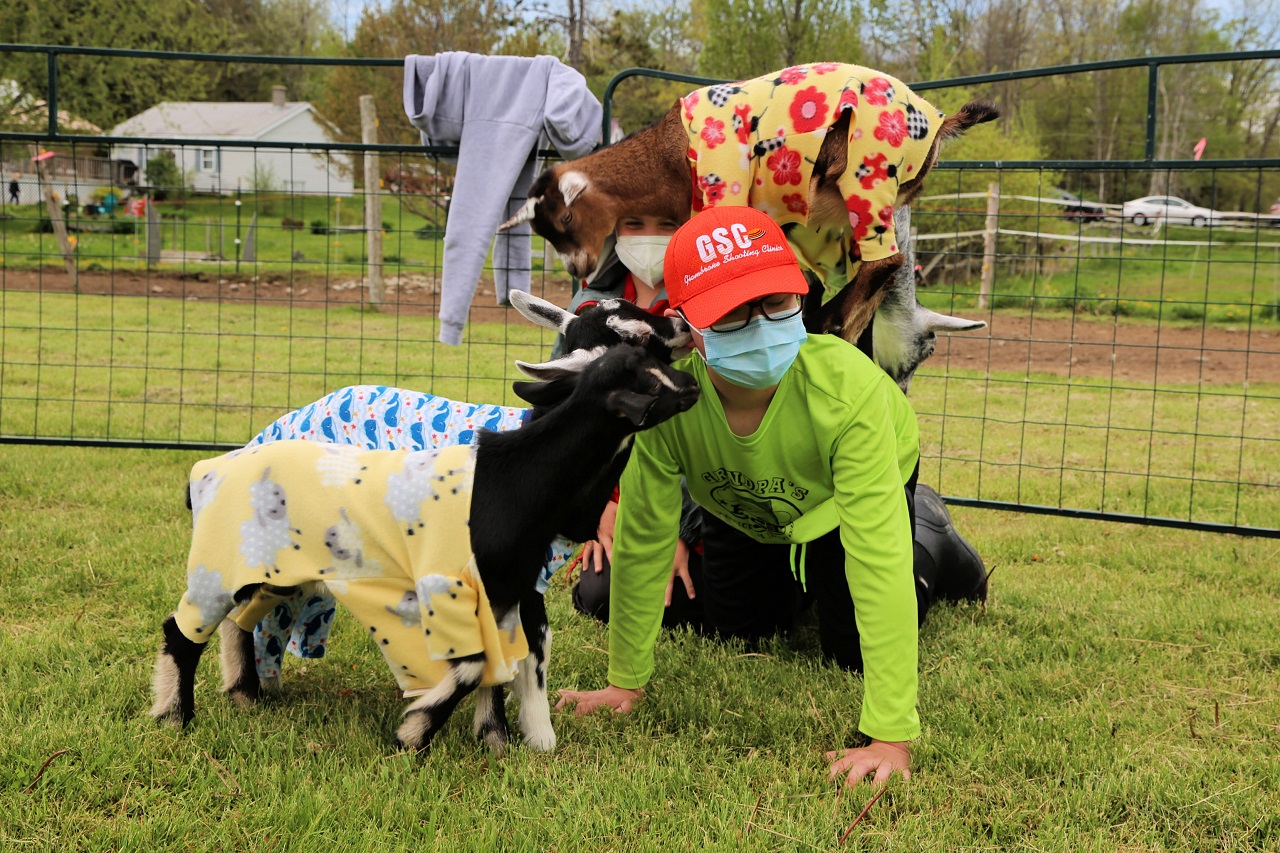
Mac Vandeventer gets to know the goats. (photo courtesy of Monica Charette)

by Monica Charette

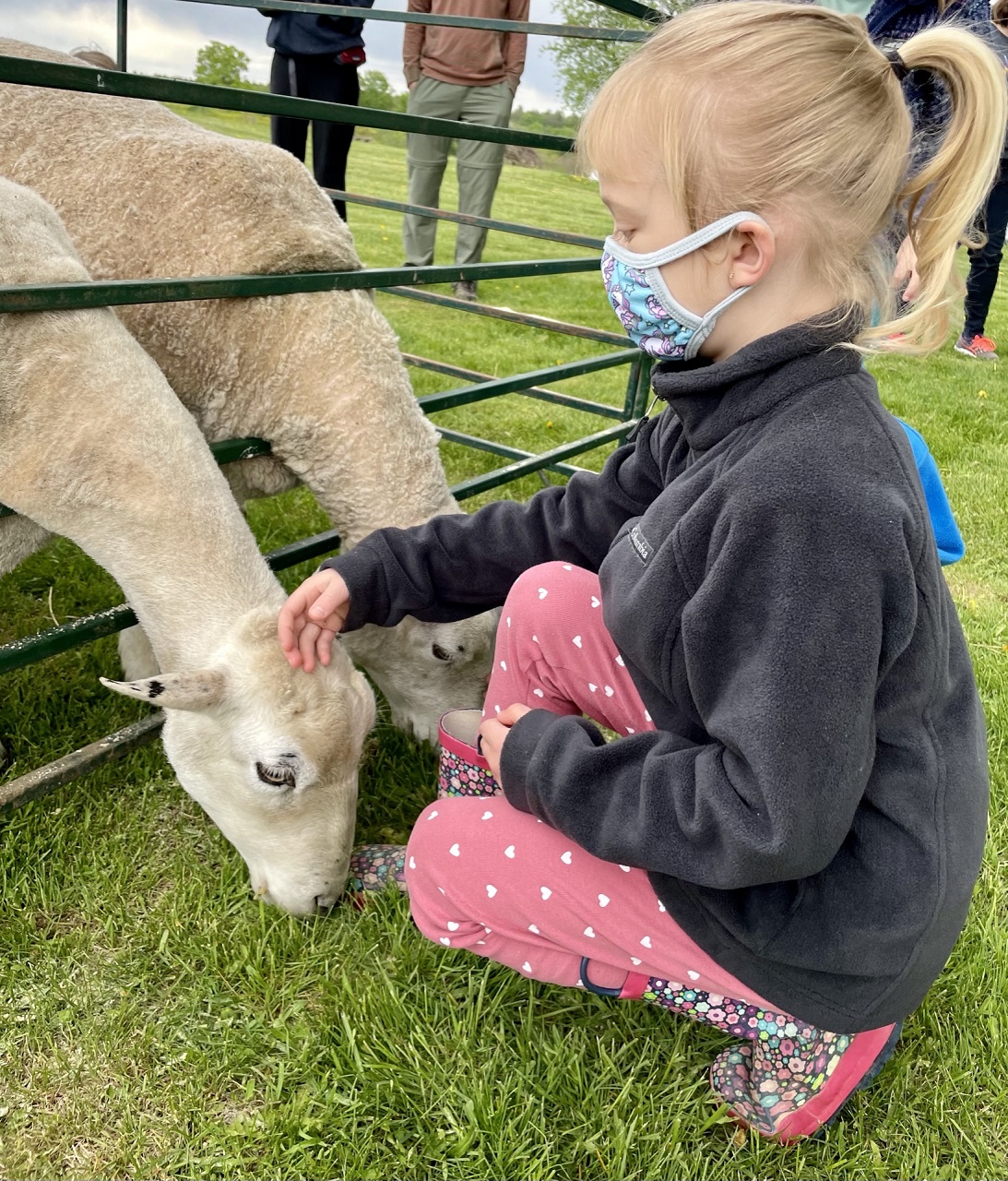
Claire Slevinsky pets a two-week-old baby lamb and learns how to card sheep wool at Hart-to-Hart Farm in Albion. (photo courtesy
of Monica Charette)

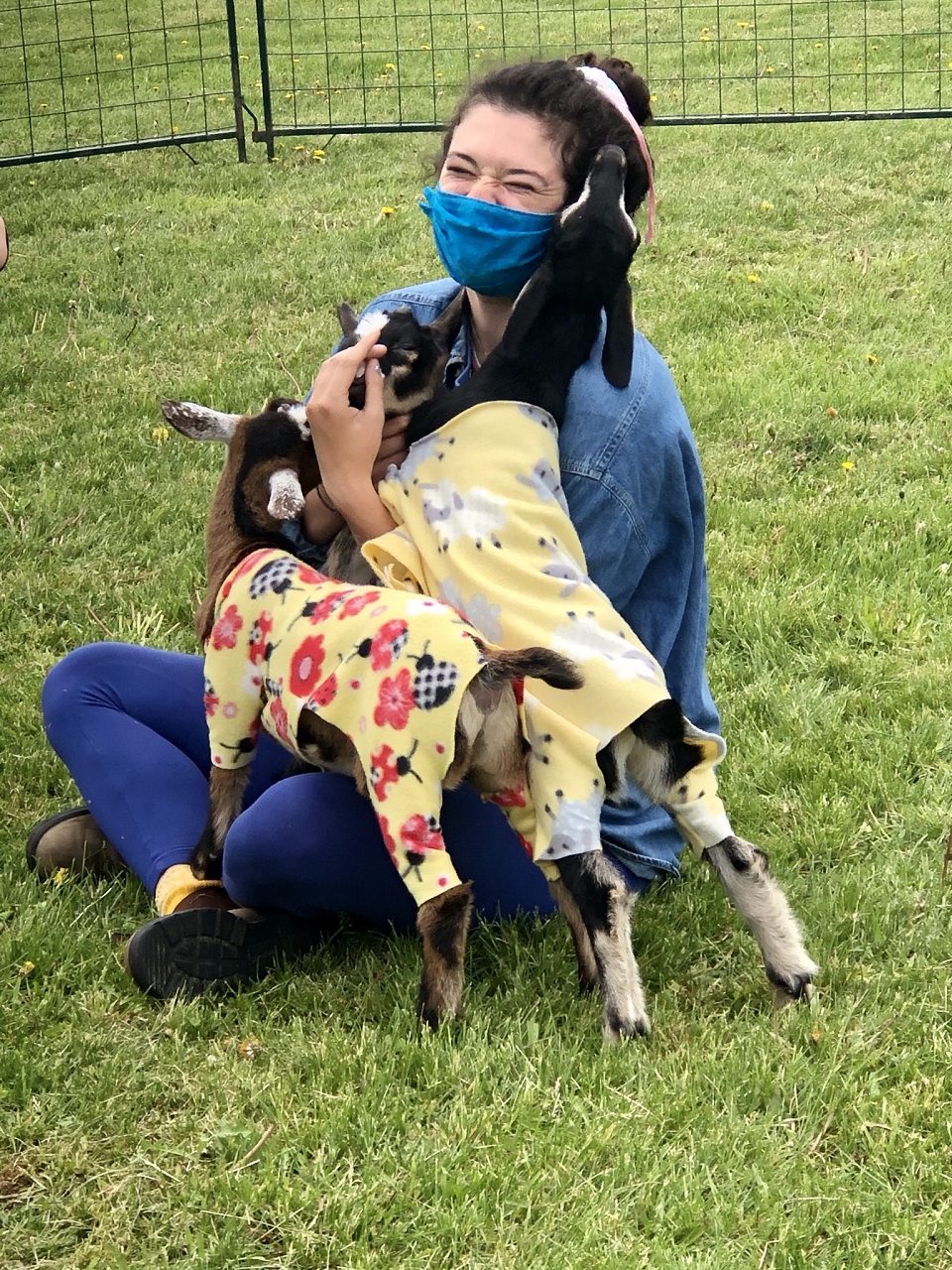
It was a pajama party like no other at Hart-to-Hart Farm & Education Center in Albion on May 16, when 100 children, dressed in their pajamas, welcomed baby lambs, goats, calves, and other newborn animals – also wearing pajamas – as part of the annual ShineOnCass Animal Baby Shower.

This year’s event featured hands-on educational sessions, including teaching kids how to milk a cow, fetch eggs from a real chicken coop, spin lamb’s wool, and stretch out at goat yoga! Children were able to hold the newborn babies, learn about caring for them, and experience a working, organic farm.

Linda Hartkopf, owner of Hart-to-Hart Farm, with her husband, Doug, said she enjoys the opportunity to share her love for animals with the community.

“Many of the children who came have never been on a working farm,” said Hartkopf. “We take great pride in educating them about caring for animals, and sharing our love and pride in raising them. There’s nothing like introducing a child to a newborn animal.”

Paige Smith comes out to volunteer in honor and in memory of her former soccer teammate and friend, Cassidy Charette, at the annual ShineOnCass Animal Baby Shower & PJ Party at Hart-to-Hart Farm in Albion. (photo courtesy
of Monica Charette)

Hart-to-Hart Farm is a family-owned and operated organic dairy farm that offers a variety of summer educational programs for children, adults and families. The event is held each year in memory of Cassidy Charette, an Oakland teen who died in a hayride accident in 2014. Cassidy, known for her kindness as an active community volunteer, was also passionate about caring for animals as a long-time summer camper at Hart-to-Hart Farm.

“Every year we get further away from losing Cass, holds a special place for us all,” said Cassidy’s friend Shawna Lachance, who now serves on the foundation’s board of directors. “We knowing we are continuing the work she would have lived her life doing.”

Families attending the event made monetary gifts and donated a truckload of food and pet items, which was donated to Humane Society Waterville Area in honor and memory of Cassidy, who was also a shelter volunteer.

For information about Hart-to-Hart Farm & Education Center, visit hart2hartfarm.org. For more event images, visit the ShineOnCass Facebook page. To learn more about the ShineOnCass Foundation, please visit shineoncass.org.


Maine Fiber FUSION set for June 5-6, 2021

Rabbits from the Daylily B True Rabbitry, in Windsor.

A baker’s dozen of Maine fiber farmers and artists will be selling their products on Saturday and Sunday, June 5 – 6, from 10 a.m. to 6 p.m., at The Fusion of Windsor, 243 Ridge Road (Rte. 32), Windsor, just a half mile north of the Windsor Fairgrounds.

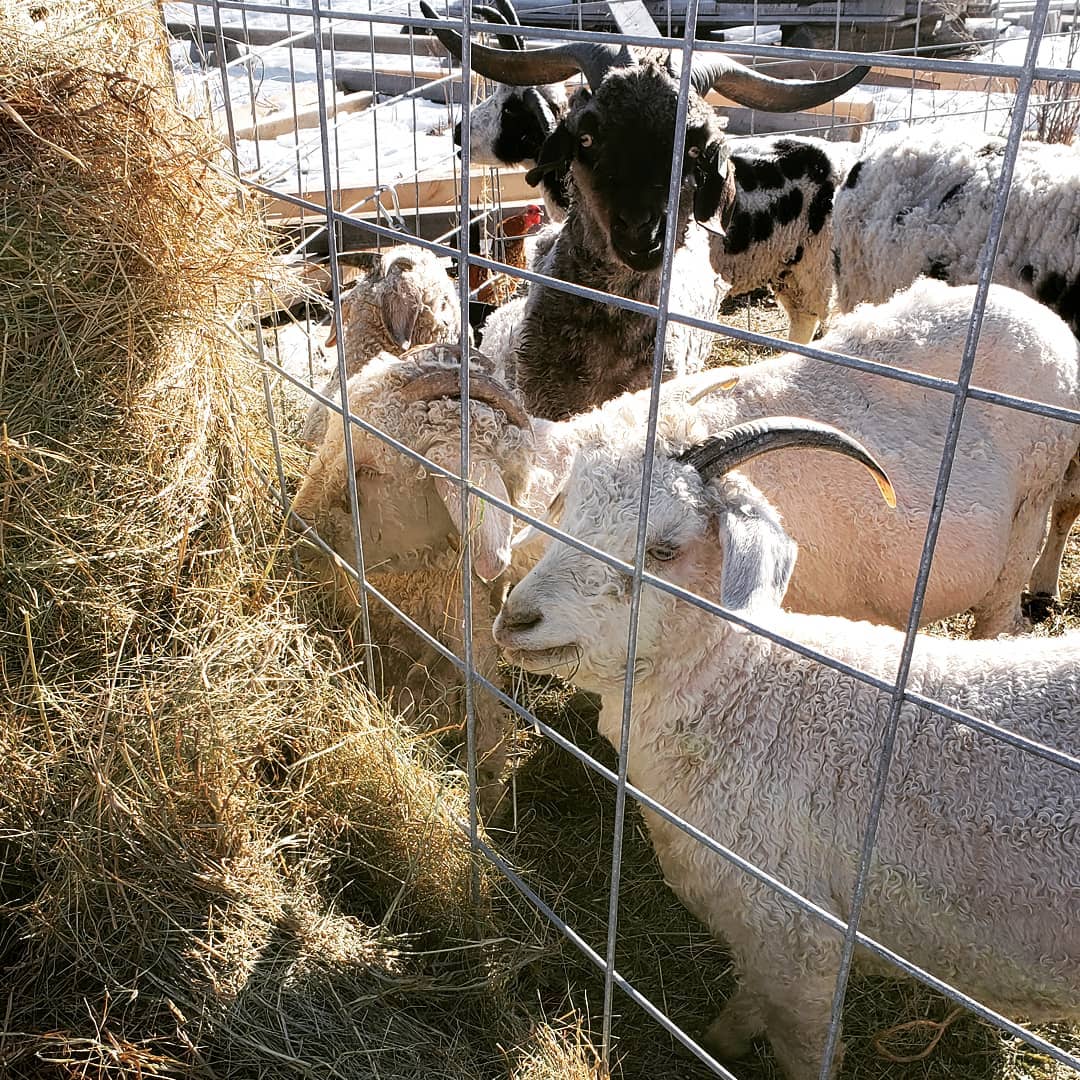
Hawthorne & Thistle Farmstead, in Washington, will have fleeces and yarns from her Jacob sheep and angora goats, and other farm products.

Maine Fiber Fusion will be held outdoors, rain or shine, free to visitors, with Maine CDC pandemic guidelines observed. A wide range of products from sheep, angora rabbits, alpacas, and angora goats will be available.

Several 4-H fiber farmers will be on hand to assist and to accept donations for their programs. There will be a door prize drawing on Sunday at 2 p.m.

This event is a small, one-time, substitute for Maine Fiber Frolic, which has been held at the Windsor Fairgrounds annually.

As the Frolic was canceled again this year due to the pandemic, three fiber friends approached The Fusion of Windsor owner, Antoinette Turner, with the idea of holding a smaller event at her site. With Toni’s enthusiastic support, the Fiber Fusion team – Sandra Grecenko, of Windsor, Steph Grant, of Washington, and Jude Hsiang, of South China—began contacting other Maine fiber farmers and craft folks.

Anyone interested in fine yarns, spinning fibers, and knitted, crocheted, and felted items will find quality, locally-grown and created products. Fiber tools will be available for sale as well.

Visitors are encouraged to bring their spinning wheel, knitting or crocheting and join the fun.

Kelly McKenzie, of Cedar Valley Fibers, in Albion, will bring her handspun and hand dyed yarns, fibers and knitwear. Sandra Grecenko, of Daylilly B True Rabbitry, in Windsor, raises several varieties of angora rabbits and sheep and offers yarns crocheted items. Steph Grant, of Hawthorne &Thistle Farmstead, in Washington, will have fleeces and yarns from her Jacob sheep and angora goats, and other farm products.

Jude Hsiang, of Versicolor, in South China, dyes yarns using traditional plant materials, and knits, sews, and weaves when not giving dyeing workshops. Linda Russo, of Maine Fiber Barn, and Theresa Morin, two alpaca farmers in Whitefield, will have fleeces, yarns and knitted hats scarves, mittens, and toys for sale.

Alice Seeger, owner of Belfast Fiberarts, will bring spinning wheels, looms, other fiber tools, and some luxury fibers. Alice teaches weaving and other classes at the shop, which also has a membership option for studio time.

Beth Acker, of Acker’s Acres Angoras, in New Gloucester, will be selling angora yarns and fibers, and other products. Anna Barber, of The Barber’s Bunnies, in Bremen, also raises angora rabbits in addition to offering yarns, knitwear, nuno felted and needle felted items.

Janet Beardsley, of Catawampus Farm & Fibers, in Minot, raises Colored Angora goats and Jacob Sheep, and will be selling wool, mohair, and hand-painted yarns. Amanda St. Peter, of Gray, is yet another Jacob sheep shepherd.

Lee and Alan Fernald, of Broken Road Farm, in Hartford, will bring raw wool and roving for spinners as well as other sheep, goat, and rabbit products. Susan Kendrick, a shearer, in New Gloucester, will have raw wool from seven different breeds of sheep.

These fiber farmers are just a few of the many Maine folks who have participated in Maine Fiber Frolic in the past—selling their products, giving demonstrations, and leading classes. All are hoping for the return of Maine Fiber Frolic in 2022.

Free ME from Lung Cancer breathes life into community

by Carla Gade

When was the last time you took a good deep breath? During the past year I think we all have learned to not take our health and breathing for granted. Yet, this is a goal that the Free ME from Lung Cancer foundation continually works toward. Since 2013, the health and welfare of lung cancer patients, survivors, caregivers, and preventative measures has been the primary goal of the Maine non-profit based in Augusta. In fact, Free ME from Lung Cancer’s CEO, Debra Violette, a lung cancer survivor herself, steadfastly serves the organization, breathing life to reinvigorate its active mission, pandemic or not.

During the past year, Deb, was able to get FMFLC accredited by the Better Business Bureau Wise Giving Alliance. She also testified before the Health and Human Services Committee in support of LD 819 which is “An act to reduce lung cancer rates in Maine by requiring testing for and mitigation of radon in residential buildings by landlords.” Deb asked Senator Joe Baldacci to sponsor the bill and Representatives O’Connell, Roeder, and Stover are co-sponsors.

Early last year, the FMFLC board decided that funding raised would stay here in Maine. Support was provided to area hospital by providing funding to help with their COVED-19 relief funds. Five hundred care bags for lung cancer patients were issued, they helped a single Mom get a radon air system installed and provided a grant to help high risk uninsured and underinsured patients get access to an early lung cancer screening. With funds in 2019 Free ME from Lung Cancer partnered with the Dana Farber Cancer Institute’s lung cancer research program. The two-year research grant program is currently recruiting for its next grantee.

So, what are you going to do to keep yourself and those you love refreshed during these continuing challenging times? How about a weekend on the coast? Getting a new gas grill for your small gatherings? Planning a bear hunt for the fall or a Caribbean vacation now that things are beginning to open up. Visiting a local eatery to support local businesses is great and obtaining money saving gift certificates on quality products and services is always a win. Let FMFLC help.

Free ME from Lung Cancer’s online auction gives you a chance to bid on these and many great items thanks to generous donors and sponsors. Enjoy bidding on many great items while contributing to fundraising efforts. Giving to non-profits, including FMFLC, has been significantly down during the Coronavirus pandemic. Your participation will help save lives. The auction is scheduled for will take place from June 11 through 20, 2021. To participate, please register at http://airauctioneer.com/fmflc-2021.

The auction is one of the foundation’s two annual fundraisers. The Save Your Breath 5K Run, Walk, Walk-Run will take place on November 6, 2021 at the Kennebec Valley YMCA. A virtual 5-K is also available. Cash prizes and an award ceremony will follow immediately after at the Bateau Brewery. To register for this event, please visit http://freemefromlungcancer.org.

To learn more about Free ME from Lung Cancer please visit our website (above) and sign up for our newsletter. You can connect on social media @freemefromlungcancer. The opportunity to volunteer as a Board member or assistant is always open and a vital way to serve. To Life!

Carla Gade serves as the Social Media Director for Free Me from Lung Cancer as well as librarian, in China Village.