Max Kenney named Central Maine’s 2025 Young Professional of the Year

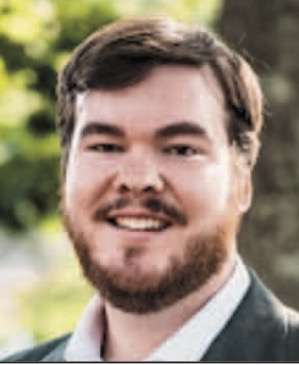
Max Kenney

Engineer, civic leader, and Fairfield native recognized for driving innovation, community growth, and the next generation of leadership across Central Maine

Central Maine Growth Council (CMGC) and KV Connect, the region’s vibrant network for rising professionals, proudly announce Max Kenney as the recipient of the 2025 Young Professional of the Year Award. The honor was presented at CMGC’s annual meeting on October 20, 2025, supported by Kennebec Savings Bank, Valley Beverage, and Bricks Coworking & Innovation Space.

The Young Professional of the Year Award celebrates emerging leaders who embody professional excellence, civic commitment, and a passion for community growth. Kenney’s leadership, entrepreneurial drive, and volunteerism reflect the energy, creativity, and collaboration propelling Central Maine’s next generation forward.

A Fairfield native, Kenney grew up surrounded by family-owned businesses that have long served as local institutions – Belanger’s Drive-In, Tozier’s Dairy Farm, and TDF Auto. This early exposure to small business, entrepreneurship, and community service shaped his values and commitment to giving back. After earning an environmental engineering degree from the University of New Hampshire, Kenney worked in southern Maine before returning home during the pandemic—a move emblematic of the region’s growing wave of “millennial boomerangs.”

Today, Kenney serves as an engineer with the Kennebec Water District, where he manages construction projects, oversees new service connections, and ensures the delivery of safe, reliable, and affordable water to residents and businesses across the greater Waterville region. His technical expertise and passion for public infrastructure play an essential role in supporting the area’s long-term economic growth and quality of life.

“Max represents the future of Central Maine – talented, community-driven, and deeply committed to building something lasting,” said Garvan Donegan, President & CEO at Central Maine Growth Council. “Beyond his professional accomplishments, Max actively shapes the region and Fairfield’s future through his service on multiple municipal committees and as a frequent contributor to the Fairfield Economic and Community Development Committee. He’s not just working here—he’s investing in the region through his leadership and civic engagement, making him an outstanding ambassador for Central Maine’s next generation.”

Outside of his professional role, Kenney is a civic leader and community advocate. He currently serves as the 2025 Chairman of KV Connect, where he helps connect and empower rising professionals through networking, service, and mentorship. He also serves as an elected member of the MSAD 49 Board of School Directors and contributes to several Town of Fairfield committees, including the Planning Board and Budget Committee.

“Central Maine has given me so much—a sense of community, opportunity, and belonging,” said Max Kenney. “Being able to give back through my work and volunteer service is deeply rewarding. I’m honored to be recognized by CMGC and KV Connect and grateful to be part of a region that invests in its young professionals and believes in its future.”

Kenney’s blend of professional excellence, civic leadership, and community pride reflects the momentum and optimism fueling Central Maine’s next generation of leaders.

Submitted by the Central Maine Growth Council.

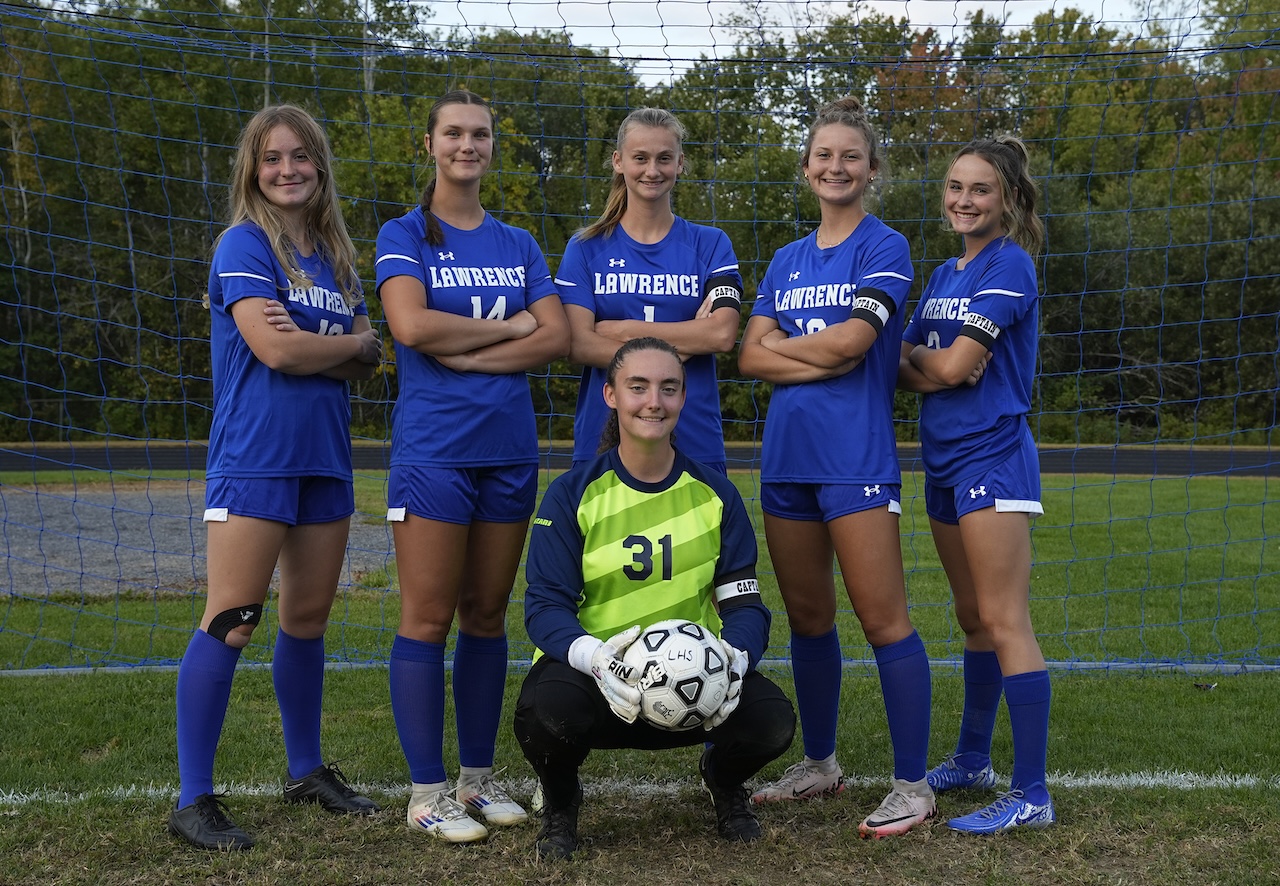
PHOTOS: Lawrence High School holds homecoming parade

Members of the Fairfield PAL field hockey team during the Lawrence High School Homecoming parade on October 3. (photo by Ramey Stevens,
Central Maine Photography staff)

The Clinton Lions PAL cheerleading float during the Lawrence High School Homecoming parade on October 3. (photo by Ramey Stevens, Central Maine Photography staff)

PHOTOS: Fairfield’s PAL Night

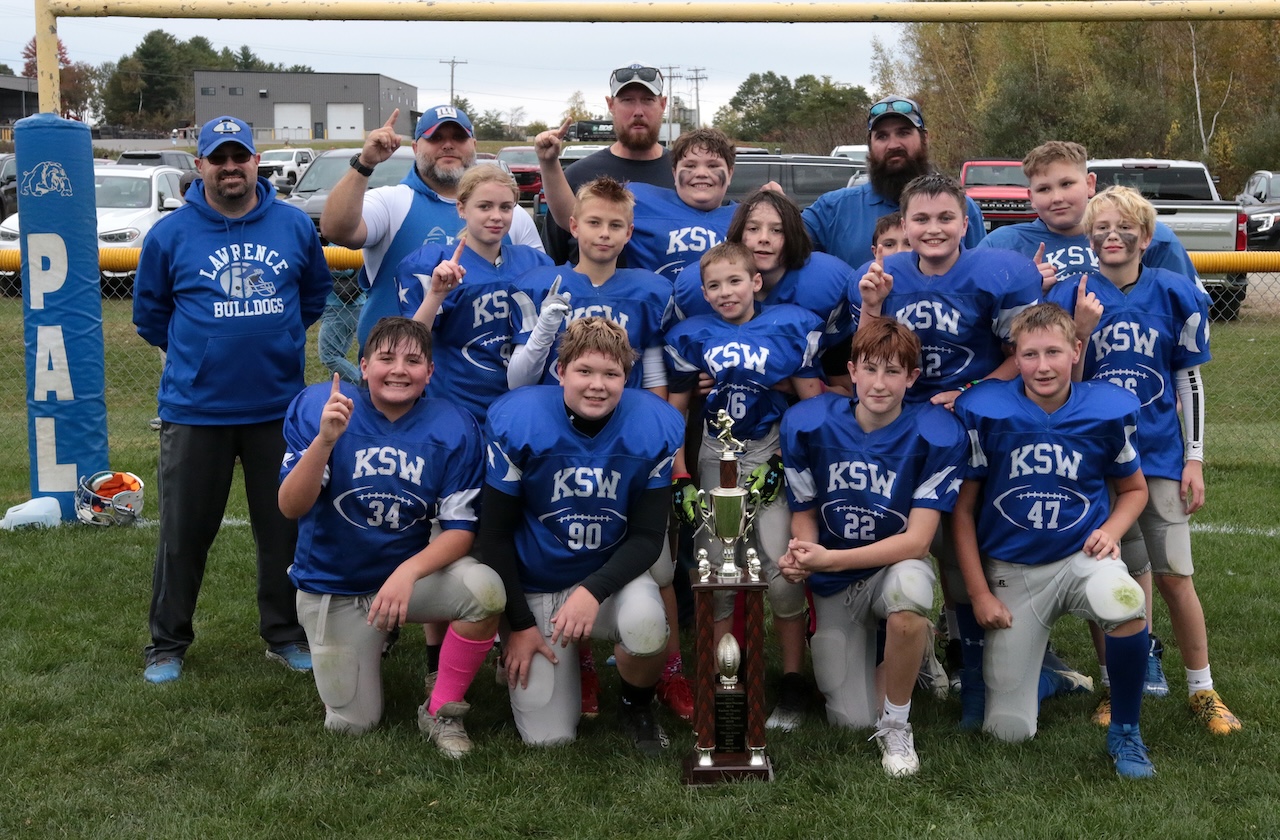
PAL night on Keyes field on September 26, as Lawrence High School took on the Deering Rams. The junior Clinton team cheers loudly in the end zone for Lawrence. From left to right, Graham Martin, Wesley Chenevert, Eric Nickerson, Coach Jaron Boivin, Lincoln Gerow, Greyson Martin, Kaden Boivin, Bennett Bolster, Coach Ryan Martin, and Cohen Harriman. (photo by Ramey Stevens, Central Maine Photography)

Yankee Trophy cheer on Lawrence High School from the end zone. From left to right, Bailey Taylor, Graisen Breton, Graham Deome, Ashton Gagnon, Kaiya Stevens, Jamo Clark, Jace Elliott, and TJ Edwards. (photo by Ramey Stevens, Central Maine Photography)

SNHU announces summer 2025 president’s list

Southern New Hampshire University (SNHU), in Manchester, New Hampshire, congratulates the following students on being named to the Summer 2025 President’s List. The summer terms run from May to August.

Wesberg Jeremie, of Vassalboro; Nina Labbe, of Oakland; Blake Laweryson, of North Anson; Tamara Butler, of Madison; Alex Akers, of Madison; River Garling, of Madison; Grace Marshall, of Fairfield; Allison Nickerson, of Fairfield; Jasmine Cayford, of Canaan; Jessica Keay, of Albion; Gregory Jones, of Waterville; Trevor Lovely, of Winslow; Brandie Bryson-Cyrus, of Waterville; Andrew Cronk, of China; and Jamison Bragdon, of Augusta.

Up and Down the Kennebec Valley: Revolution affects Fairfield – Continued

by Mary Grow

(See part 1 of this series here.)

This article will continue the story of Fairfield men who fought in the Revolutionary War, beginning – after a digression – with one important man mentioned last week, William Kendall.

* * * * * *

Photos of the memorial in Fairfield’s Emery Hill Cemetery that the Silence Howard Hayden Chapter, Daughters of the American Revolution, put up in 1911, show General William Kendall’s as the second name. After him come Daniel Page (miscarved as Daniel Pace), David Emery and George Parkhurst, all profiled in last week’s article.

Above these names, in a different script, is the name George Hobbs. A copy of the 1878 map of Shawmut shows a house owned by R. T. Hobbs; otherwise, neither George nor any other Hobbs is mentioned in the Fairfield history.

Fairfield Historical Society member Barbara Gunvaldsen has George Hobbs’ name, and the names of his commanding officers, on her list of Fairfield men who served in the Revolution. FamilySearch’s biography does not identify him as a Revolutionary War veteran.

FamilySearch says George Hobbs was born April 7, 1764, in Berwick, and died Sept. 1, 1853, in Fairfield. (Other men who fought in the Revolution were born as late as 1764.) Your writer found no other record on line, and nothing about R. T. Hobbs.

Compared to Hobbs, William Kendall is famous, although details of his military service are available only in specialized war-related records.

Kendall was born in Georgetown, Maine, on Sept. 1, 1759, according to Major General Carleton Edward Fisher’s 1970 Clinton history; Fisher claimed him as an early – before 1777 – Clinton settler. Find a Grave says he was born Nov. 19, 1759, son of Uzziah and Elizabeth (Pierce) Kendall.

The 1988 Fairfield history says he enlisted in Winslow (Gunvaldsen says in Clinton, as does Fisher, quoting his widow’s claim for a state bounty) in March 1777, as a private, and was “honorably discharged in 1780.” (Your writer surmises that his military titles came from later service in the state militia.)

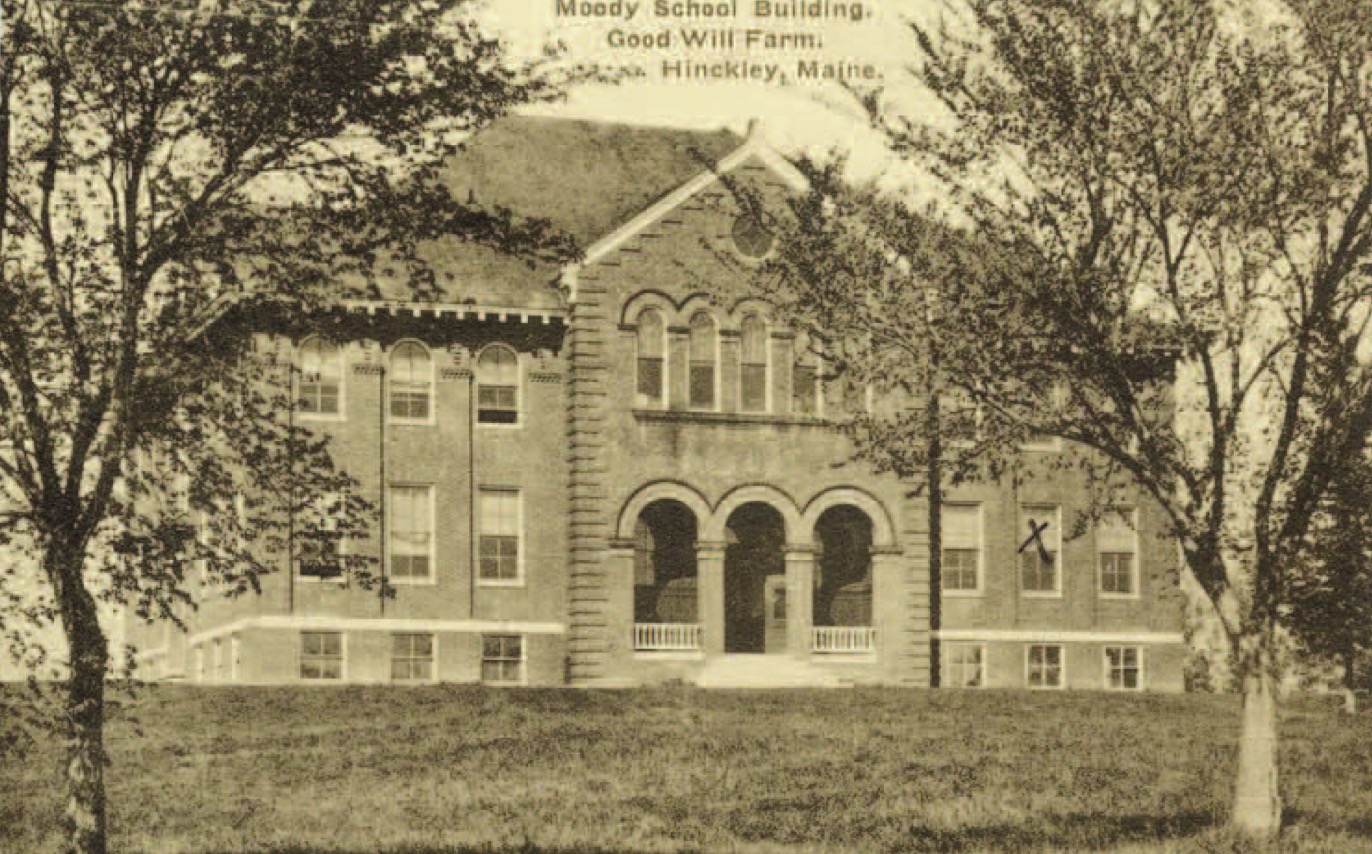
Kendall promptly came to Fairfield. The town history says in 1780, he “took over” unfinished saw and grist mills atop a two-year-old dam Jonas Dutton built between the west shore of the Kennebec and the closest island, now named Mill Island.

These mills remained in the Kendall family until 1835, the history says, run by Kendall, a brother and an unspecified number of sons. Other men started mills, “but during this era the Kendall Mills were dominant.”

Kendall also bought most of the land that is now downtown Fairfield, with the result that the area was called Kendall’s Mills from 1780 until the post office there was renamed Fairfield in 1872.

Several sources tell the story of Kendall marrying Abigail Chase (born in Augusta, or Clinton, Feb. 2, 1765) on Christmas Day, 1782, and paddling with her in his canoe down the river from Hinckley, in northern Fairfield, to his property. One source questions this account, pointing out that the Kennebec was probably frozen on Dec. 25 and that a sleigh would be more appropriate for a newly-wed couple anyway.

The Fairfield history says the Kendalls lived first in a log house at the foot (riverside end) of present-day Western Avenue. Before 1800, they moved a short distance uphill into a big brick house “on the northwest corner of the intersection of Western Avenue and Newhall Street.”

The history quotes a traveling Congregational minister named Paul Coffin, who visited Fairfield in (or before) the 1790s. Coffin recorded that on a Sunday, he preached all day at “Major Kendall’s” and “Spent a pleasant evening with the Major and his comely and sweet tempered wife.”

Another quotation in the history is from an unnamed 1824 traveler who came south from Emery Hill, past the Emery, Park and Kendall houses. The Kendall house “then stood in the center of a large field extending to the road. Upon the bank of the river and nearly opposite the house stood General Kendall’s store, a small structure….Just below the store stood the saw and grist mills of Gen. Kendall, the only mills in the place.” One more house farther south completed the 1824 inventory.

Included in the history is an undated – probably 1890s – photo of the Kendall house. It was square, with a good-sized rectangular ell on the west, both two stories, and a slightly sloped roof. What looks like the main entrance faced south, on Lawrence Avenue, with a square portico.

On the east side was another large door, from which a sidewalk led to the Newhall Street sidewalk. The sidewalks look smoother than the unpaved streets.

Each visible second-floor wall had five windows, the center one above the first-floor door. Five tall chimneys rose from each corner of the square and the far end of the ell.

In addition to his manufacturing interests, the history says Kendall ran the store “on the site of the present [1988] post office building” until his death. He was a Fairfield selectman for eight terms.

An on-line genealogy adds that Kendall served as Somerset County sheriff (no date) and as a member of Maine’s first legislature (in 1820), and was Kendall’s Mills postmaster in 1816.

Find a Grave lists the first names – no dates or other information – of William and Abigail’s eight sons and three daughters. The oldest son was named William. The Fairfield history called him William Jr., and said that in 1827 he invented the “circular log saw,” which replaced the up-and-down saws previously used and “revolutionized the lumber industry because of its superior speed and control.”

William Kendall died Aug. 11, 1827, according to Find a Grave. The history writer regretted that he did not live long enough “to see the success of his son’s invention.”

Find a Grave quotes the inscription on Kendall’s gravestone:

Rest in peace, departed spirit
Husband, Sire, and friend is gone
All thy honor fame and merit
Pass away virtue still thy name shall own.

The writer surmised that Kendall left Abigail well off: under the March 1835 state law (see box), she applied for and received a 200-acre land grant, which she promptly sold for $70.

The on-line genealogy says Abigail died Oct. 14, 1855. The inscription on her gravestone in Emery Hill Cemetery reads:

Mother thou art gone to rest
Thy toils and cares are o’er
And sorrow, pain, and suffering now,
Shall ne’er distress thee more.

* * * * * *

The Fairfield history lists Reuben Wyman as another Revolutionary veteran, probably not related to the Daniel Wyman profiled last week.

Reuben Wyman was born in 1764 in Worcester, Massachusetts, the history says (an on-line genealogy says Lunenberg, a town in Worcester County; an on-line Wyman genealogy says 1762, in Fairfield [presumably Maine]).

When Wyman was 15, according to the history, he became a fifer in a regiment that went to Springfield. Afterwards, “he served continuously from 1781 until his discharge in November 1783, sometimes as a private and sometimes as a fifer.”

The genealogy says around 1785, he married Jonathan and Jerusha Emery’s daughter, Hannah (born about 1764), and they had at least two sons and two daughters between 1786 and 1793. The history says he married Olive Hunt, at an unknown date.

The Wyman genealogy confirms both accounts, with differing dates. This source says in 1778, in Dracut, Massachusetts, Wyman married Hannah Emery, born in 1758 in Dracut. They had two sons and three daughters by 1786; the first daughter’s date and place of birth are unknown, the oldest son, another Reuben Wyman, was born in Damariscotta and the last three children were born in Dracut. Hannah died March 25, 1816 (place of death not listed).

On April 3, 1823, in Clinton, Wyman married Olive Hunt, born in 1770. They had a son, born in Fairfield about 1825.

Wyman was a Fairfield selectman in 1791, the town history says. He was a Clinton resident when he “applied for recompense for his military services” in September 1818, but had returned to Fairfield by 1837 and, an on-line source says, lived there in 1840.

Several sources agree that Wyman died May 16, 1841.

The Fairfield history continues with a list of 10 Revolutionary veterans who moved to Fairfield, including those readers met last week and this week (see the Jan. 27, 2022, article in The Town Line history series for summary information on others).

Gunvaldsen’s list of Fairfield men who served in the Revolution contains 40 names, including all of those discussed in this and the preceding article.

* * * * * *

Across the Kennebec from Fairfield in the 1770s was what became the Town of Clinton, organized first around 1790 as Hancock Plantation and in 1795 as Clinton. Until March 1842, this town included what is now the separate Town of Benton, giving it more frontage on the east bank of the Kennebec River than it has had since Benton became a separate town (then named Sebasticook).

The Sebasticook River runs southwest through Clinton and Benton on its way to join the Kennebec in Winslow, creating a second water access for early settlers.

Henry Kingsbury’s 1892 Kennebec County history says this area was barely settled by 1775.

However, Fisher’s 1970 Clinton history names about 20 men, many with families, who were probably in Clinton by 1775. An on-line town website says there was a dam (with “a gap for fish”) across the Sebasticook River at present-day Benton Falls in or soon after 1769, and a sawmill on the Sebasticook built in 1773.

Fisher described the early Clinton settlers as mostly poor, “industrious, daring, even courageous,” as shown by their leaving “the relative comfort of well-established towns” for “a wild, untamed wilderness.”

They were starting their lives over, beginning by cutting enough trees to clear space for a house, garden and farm while using natural resources to stay fed and protected from the weather. The area beyond Fort Halifax was still Native American country; Fisher wrote that it was only after the War of 1812 that settlers felt completely safe from attack.

Fisher summarized the effects of the Revolution on the future town of Clinton primarily in terms of population change. Some of the first settlers moved southward during the war. After the war, some returned; and Fisher identified many families in the second wave of settlement, after 1782, as headed by Revolutionary veterans.

Information on several of these men will be shared in next week’s article in this series.

Land grants

In 1835, the Maine legislature approved a “Resolve in favor of certain Officers and Soldiers of the Revolutionary War, and the widows of the deceased Officers and Soldiers.” This action gave 200 acres of land to anyone who had served at least three years while a resident of Massachusetts, including the District of Maine. The land was in parts of Penobscot and Washington counties.

Main sources

Fairfield Historical Society Fairfield, Maine 1788-1988 (1988)
Fisher, Major General Carleton Edward History of Clinton, Maine (1970)
Fairfield Historical Society files

Websites, miscellaneous.
Up and Down the Kennebec Valley: Revolution affects Fairfield

by Mary Grow

In the 1770s, the next town north of Winslow on the west bank of the Kennebec River was Fairfield, organized as a plantation in 1774; and on the east bank, the part of Clinton that later became Benton. This article introduces some Revolutionary veterans with Fairfield connections; next week’s article will offer information on more veterans from Fairfield and from Clinton.

The 1988 Fairfield bicentennial history says Jonathan Emery built the first house in town in 1771, on Emery Hill, upriver from the present downtown. (Last week’s article repeated the story that Benedict Arnold stayed with the Emerys for a week or more while his army got their heavy bateaux through the Kennebec River rapids.)

By April 1775, the plantation was home to nine families. The writer(s) of the history surmised that it took a while for the settlers even to hear about Lexington and Concord; and when they did get the news, it was “quite conceivable that concerns with their survival in the wilderness were more important to them than the political issues in the country from which they had emigrated.”

If the settlers feared a British attack, the writer continued, Fort Halifax was only four miles away. Feeling both otherwise occupied and unthreatened, no man from the nine families immediately “took up his flintlock and made off down the Kennebec to join in the conflict.”

The history records four of Fairfield’s early settlers as enlisting before the Revolutionary War ended: David Emery, who was Jonathan and Jerusha (Barron) Emery’s oldest son; Josiah Burgess and his younger brother, Thomas Burgess; and Daniel Wyman.

The Fairfield Historical Society’s collection includes part of a long article on the dedication of a monument in Emery Hill Cemetery honoring David Emery and three more Revolutionary veterans, William Kendall, Daniel Page and George Parkhurst.

* * * * * *

According to WikiTree, David Emery (Sept. 24, 1754 – Nov. 18, 1830 or 1834) was born in Dracut, Massachusetts. (So were the next six Emery children, three boys and three girls; at least one of David’s brothers, James [born in 1766] later moved to Fairfield, dying there in November 1831. Another son was born in Winthrop, Maine, in 1770, and the last boy and girl in Fairfield, in 1773 and 1777 respectively.)

David was 21 when he joined his father at the end of September 1775. He might have been in the militia in Massachusetts or Maine, the history writer said; but his first recorded service began March 12, 1777, when he joined the Second Lincoln County (Maine) Regiment, presumably at Fort Halifax.

An extract from an Emery genealogy, found on line, dates Emery’s military service to September 1775, when, it says, he enlisted in Captain Scott’s company on Arnold’s expedition. He went as far as Dead River, where he – and probably many others of his company – were among those who turned back.

He joined the army again in Massachusetts and served during the siege of Boston, which ended when the British evacuated the city in mid-March 1776. Enlisting yet again in Winslow, for three years, he joined the army at Ticonderoga, New York, and spent two years there, the genealogy says.

On Feb. 2, 1778, according to the Fairfield history, Emery transferred to the Continental Army and “completed his military career in General Washington’s Guard.” Mustered out at Valley Forge on Jan. 23, 1779, the history says (or March 1780, in Morristown, New Jersey, according to the genealogy), “he returned to Fairfield and married Abigail Goodwin.”

WikiTree’s account of his service lists officers under whom he served; it ends with “16th Massachusetts Regt. Life Guards, 1778-1780,” and says he was a private in this regiment. This source says Abigail was born in 1763 in Castine; dates their marriage intentions April 5, 1782; and lists six sons and four daughters born in Fairfield between 1782 or 1783 and 1809.

Find a Grave says Emery died in 1830; WikiTree says Abigail died in 1838, both in Fairfield. Find a Grave lists David, but not Abigail, among the 16 Emerys buried in Emery Hill Cemetery.

* * * * * *

Josiah Burgess (July 16, 1736 – Dec. 12, 1828), was a Sandwich, Massachusetts, native who moved to Fairfield at an unknown date. The Fairfield history says he came with his wife, Dorcas (another source names her Doris Lois Hinckley and gives her birth date as Sept. 26, 1742).

FamilySearch and WikiTree agree that Dorcas was Burgess’s second wife. He first married Lois Swift, on Sept. 1, 1764, in Falmouth, Massachusetts, by whom he had one son and one daughter. Lois died soon after the daughter was born.

Burgess then married Dorcas or Doris, on either Dec. 16, 1769, or Jan. 5, 1770, in Falmouth, Massachusetts. Josiah and Dorcas had two sons and four daughters between 1770 and 1781.

Perhaps because Burgess still had family in Sandwich, the Fairfield history says he returned there and in March 1776 joined the First Barnstable Company as a first lieutenant.

The history says Burgess’ service was mostly in Rhode Island and “around Falmouth” (Massachusetts). He resigned in March 1779 and came back to Fairfield, where he later served as a selectman for five terms; he was first elected Aug. 19, 1788, at the newly incorporated town’s first town meeting.

Burgess died Dec. 12, 1828, and Dorcas died March 5, 1838, both in Fairfield, several sources – for once, in agreement – say.

Thomas Burgess (May 23, 1741 – April 20, 1823), the Fairfield history says, joined his older brother’s company in March 1779, served seven days and came to Fairfield with Josiah. Here he married Annis Fuller; he, too, served as a selectman (six terms, according to the history) and twice as treasurer.

WikiTree’s summary says Thomas Burgess was born in Sandwich, Massachusetts, and died in Rochester, Massachusetts. The related biography lists Fairfield as the place where Thomas was born (highly unlikely) and died (possible). It dates his marriage to Annis Fuller Dec. 3, 1767 (before, not after, the Revolution) and lists three sons and three daughters (including twins Sarah and Temperance) born between 1768 and 1782.

* * * * * *

Daniel Wyman (1752 – 1829) was born in Dresden and “moved up river the spring before the battle of Lexington and Concord. Unmarried and largely unsettled, he enlisted in the Second Massachusetts Line.” Wyman was honorably discharged at the end of three years (the history says 1776, an apparent error), married and spent the rest of his life in Fairfield.

At the Aug. 19, 1788, first town meeting, the Fairfield history says Wyman was chosen one of two tithingmen, with Lemuel Tobey. Merriam-Webster’s dictionary says in New England, a tithingman’s main responsibility was “preserving order in church during divine service and enforcing the observance of the Sabbath.”

(The Historic Ipswich website has this paragraph: “A powerful figure in the dull monotony of Puritan meeting houses was the tithingman, whose task was to enforce the observance of the Sabbath and to preserve order during service. Armed with a knobbed rod in hand he kept vigil, rapping restless boys on the head to restore order. On the other end of the staff was a foxtail with which he banished the sleep of those who had nodded off.”)

* * * * * *

William Kendall was a major figure in the history of Fairfield (part of which was called Kendall’s Mills for years). His biographical information will be postponed a week due to space limits.

* * * * * *

Daniel Page, the Fairfield history says, was born in Haverhill, Massachusetts, in 1753 or 1754 (Find a Grave says April 16, 1754), and enlisted from that town as a drummer in 1777.

Find a Grave names his wife as Lydia Haynes, born in 1758, and lists two daughters and three sons, born between 1780 and 1797.

The history says Page applied for a veterans’ land grant from Fairfield before his death in September 1836 (Sept. 2, according to Find a Grave). The Maine State archives files include his May 1835, application, in which Page stated that he enlisted in 1777 and was honorably discharged in 1780 after three years’ service.

On Jan. 17, 1837, Lydia received a piece of land, according to the Fairfield history. Find a Grave says she did not have time to do anything with it, as she died Feb. 14, 1837, and is buried with her husband in Emery Hill Cemetery.

The third name on the stone over their graves is Sophronia Keith, who died March 20 (or perhaps March 29), 1833, aged 31. Neither of Daniel and Lydia’s daughters was named Sophronia, according to Find a Grave.

An on-line search for Sophronia Keith brought one result: FamilySearch said Sophronia Ann Page married Howard C. Keith on July 11, 1831, in Canaan, and they had at least one son, born in 1832. The website had no other information on Sophronia Page.

* * * * * *

George Parkhurst was not a Fairfield resident during the Revolution, but he is buried – and honored – in Emery Hill Cemetery.

Fairfield Historical Society member Barbara Gunvaldsen’s list of 40 Revolutionary veterans with a Fairfield connection says Parkhurst was born in Harvard, Massachusetts, in 1750 or 1752 (on-line sources accept 1752). FamilySearch says Parkhurst was born in Petersham, Massachusetts, Aug. 10, 1752. WikiTree names his birth town as Nichewog.

(Harvard and Petersham, northwest of Boston, are about 40 miles apart. Wikipedia offers Nichewaug, part of Petersham.)

WikiTree’s summary of Parkhurst’s military service says he first enlisted in May 1775, for less than eight months, during which he was in Colonel John Stark’s New Hampshire regiment and fought at the Battle of Bunker Hill on June 17, 1775.

In March 1777, Parkhurst re-enlisted in the Massachusetts Line and served another five years and three months. Major battles listed include Hubbardton, Vermont, in July 1777; Saratoga, in Stillwater, New York, in September and October 1777; Monmouth, at Monmouth Court House, in New Jersey, in June 1778; Stony Point, New York, in July 1779; and the siege of Yorktown, Virginia, that ended with British General Charles Cornwallis’ surrender on Oct. 19, 1781.

FamilySearch names Parkhurst’s wife as Cecelia de Wolf and says they married July 12, 1784, in Surry, New Hampshire, and had at least four sons and two daughters between 1782 and after 1797 (no date is given for the last son’s birth).

WikiTree says Cecilia was Parkhust’s first wife, by whom he had four children. She died about 1811, in Fairfield, and on Jan. 22, 1814, in Fairfield, he married Sarah Grantham, born there on Jan. 25, 1770.

Sarah gave Parkhurst another daughter, Lucy; Lucy’s biographical sketch – attached to the page with the marriage date – says she was born in Palermo, Maine, on Jan. 13, 1814. Sarah died in Fairfield sometime after June 1, 1830.

WikiTree says Parkhurst applied for his military pension on April 3, 1818, from Fairfax (later Albion). On April 11, he was approved for $96 a year. An “assets-test act” of 1820 led to the pension being taken away; it was restored on Feb. 7, 1827.

Parkhurst died on Nov. 21, 1830, in Fairfield, FamilySearch and WikiTree say.

Main sources

Fairfield Historical Society Fairfield, Maine 1788-1988 (1988)
Fairfield Historical Society files

Websites, miscellaneous.
EVENTS: Mid-Maine Chamber to host a Night in Monte Carlo

Mid-Maine Chamber of Commerce’s Super Raffle Dinner is back, with more entertainment than ever before. Dress in your best Monte Carlo-themed costume and join the annual dinner, which will be hosted on September 25 at Kennebec Valley Community College, in the Kennebec Room, Carter Hall. This year’s event, titled A Night in Monte Carlo, is sponsored by Huhtamaki and will begin with a social hour at 5 p.m., followed by dinner and drawings at 6:30 p.m. Dinner will be provided by Amici’s Cucina with a cash bar provided. This year’s program will feature a comedian to liven the evening.

Tickets are on sale now, at the price of $135, which includes dinner for two and a prize. Drawings begin with prizes valued at a minimum of $25 and grow as the drawings proceed. Top cash prizes are $500, $1,500, and $3,000. There is also a 50/50, Day’s Jewelry piece and Second Chance Cash drawing of $500, as well as a costume contest and Punch-A-Bunch game prizes.

Chamber member businesses are encouraged to donate a raffle prize. To donate, or to purchase a ticket, contact the Chamber at 873.3315 or Cindy@midmainechamber.com.

Additional event sponsors are: Bar Harbor Bank and Trust, Bowman Constructors, Central Maine Motors Auto Group, Choice Wealth Advisors and Day’s Jewelers.

Up and Down the Kennebec Valley: Arnold’s expedition

by Mary Grow

Before continuing upriver, this subseries will summarize the one Revolutionary event that did have a direct impact on towns along the Kennebec River. That was the fall 1775 American expedition intended to take Québec City from the British (who had taken it from the French in September 1759).

In September and October of 1775, Colonel Benedict Arnold led an army of about 1,100 men from Newburyport, Massachusetts, up the Kennebec River, across the Height of Land and down the Chaudiere River to the St. Lawrence.

Among documents at Fairfield’s Cotton Smith House, home of the Fairfield Historical Society, is a 1946 Bangor Daily News article quoting Louise Coburn’s Skowhegan history: she said the army consisted of 10 New England infantry companies and three companies of riflemen from Pennsylvania and Virgina.

(The 1890 Cotton Smith House has been on the National Register of Historic Places since 1992.)

Scattered partial reenactments of this “march to Québec” are being organized in the fall of 2025. Among organizing groups is the Arnold Expedition Historical Society, headquartered in Pittston’s Reuben Colburn house (built in 1765, a state historic site and on the National Register of Historic Places since 2004).

A personal note: your writer learned about Arnold’s march to Québec when she was very young, through the historical novels of Maine writer Kenneth Roberts. Arundel, published in 1930, tells of the expedition and the unsuccessful attack on the city. Rabble in Arms, published in 1933, is the story of the army’s retreat down the St. Lawrence and Richelieu rivers and Lake Champlain.

Roberts highly admired General Arnold. Each novel is told from the perspective of a participant looking back to his youth, so there are references to Arnold’s subsequent switch to the British side; but his conduct in 1775 is consistently praised, and his detractors damned.

Captain Peter Merrill, of Arundel, Maine, fictional narrator of Rabble in Arms, explained that he intended to write a history of part of the war, and found Arnold “an inseparable part” of his project. He wrote:

“Benedict Arnold was a great leader: a great general: a great mariner: the most brilliant soldier of the Revolution. He was the bravest man I have ever known. Patriotism burned in him like an unquenchable flame.”

Why, then, did Arnold switch sides in September 1780? To Roberts (and a few others) the answer is, again, patriotism. Having witnessed the incompetence, corruption and general worthlessness of the Congress that mismanaged the war, costing – wasting – too many lives, Arnold believed the country’s salvation required re-submitting to British rule, with competent Americans as administrators, until the colonies were strong enough to revolt successfully.

* * * * * *

Benedict Arnold

Arnold’s army left Massachusetts on Sept. 19, 1775; reached the mouth of the Kennebec the next day; and stopped first at Gardinerstown (later Pittston), south of Augusta. Here 200 wooden bateaux had been hastily built in Reuben Colburn’s shipyard at Agry Point (named for a 1774 settler), on the east bank of the Kennebec.

(An on-line map shows the Colburn House on Arnold Road, and Agry Point Road running south from the south end of Arnold Road and dead-ending on the south side of Morton Brook.)

According to Colburn House information on the Town of Pittston’s website, Colburn had suggested attacking Québec via the Kennebec and had sent General George Washington “critical information.” Given only about three weeks’ notice to provide the bateaux, he had had to use green lumber, which did not hold up well; the boats leaked copiously, and fell apart under rough handling, on the water and on portages.

The website says Colburn himself and some of his crew went upriver with the troops, “carrying supplies and repairing the boats as they traveled.”

Henry Kingsbury, in his 1892 Kennebec County history, wrote that the army moved immediately upriver to Fort Western in future Augusta, where Arnold arrived on Sept. 21. For more than a week, he and some of his officers stayed with Captain James Howard at the fort.

On the evening of Sept. 23, Kingsbury wrote (using Capt. Simeon Thayer’s diary of the expedition for his source), a soldier named John McCormick got into a fight with a messmate at the fort, Reuben Bishop, and shot him. A report in the January-February, 2022, issue of the Kennebec Historical Society’s newsletter says alcohol was involved.

A prompt court-martial ordered McCormick hanged at 3 p.m. Sept. 26. Arnold, however, intervened and forwarded the case to Washington, “with a recommendation for mercy.” The KHS report says McCormick “was sent to a military jail in Boston, where he ultimately died of natural causes.”

On a website called Journey with Murphy reached through Old Fort Western’s website, a descendant of Sergeant Bishop called him “the first casualty of the Arnold expedition.” She wrote that he was born Nov. 2, 1740 (probably in central Massachusetts); enlisted soon after the Battle of Lexington; and served at the siege of Boston before joining Arnold’s expedition.

By her account, McCormick’s quarrel was not with Bishop, but with his (McCormick’s) captain, William Goodrich. After McCormick was thrown out of the house where they were billeted, he shot back into it, hitting Bishop as he lay by the fireside.

Bishop was buried somewhere near the fort. Kingsbury believed Willow Street was later “laid out over his unheeded grave.” His descendant wrote that his body was moved to Fort Western’s cemetery, and was by 2024 in Riverside Cemetery.

On Sept. 24, 1775, James North wrote in his 1870 Augusta history, Arnold sent a small exploring party ahead to collect information about the proposed route. They went most of the way across the Height of Land. North said the party’s guides were Nehemiah Getchell and John Horn, of Vassalboro.

Alma Pierce Robbins mentions in her 1971 Vassalboro history several earlier histories. One, she said, referred to “Berry and Getchell who had been sent forward…,” implying that they were part of, or guides for, the scouting party.

Different sources list other local men as guides for parts of the expedition. WikiTree cites a 1979 letter from a descendant of Dennis Getchell, of Vassalboro (see last week’s article) saying Dennis and three of his brothers, John, Nehemiah and Samuel, were scouts for Arnold, with Arnold’s journals as the source of the information.

Rev. Edwin Carey Whittemore, in his 1902 centennial history of Waterville, also named Nehemiah Getchell and John Horn as guides for the exploring party. He added, quoting an unnamed source, that a man named Jackins, who lived north of Teconnet Falls, served as a guide for the expedition.

Major General Carleton Edward Fisher, in his 1970 history of Clinton, wrote that Jackins (Jaquin, Jakens, Jackens, Jakins, Jackquith) was a French (and French-speaking) Huguenot who came to Winslow via Germany around 1772. Fisher believed Arnold sent Jackins to Québec with a letter in November 1775, citing expedition records kept by Arnold and others.

(Your writer, extrapolating from other sources, guesses the letter was to supporters in and around Québec letting them know an expedition was on the way.)

Two Native guides, Natanis and Sabatis (Sabbatis, Sabbatus), are named in several accounts, and in Kenneth Roberts’ novel. Some sources identify them as Abenakis (also called Wabanakis), others specify the Abenaki/Wabanaki band called Norridgewocks. Some say the two men were brothers or cousins.

Robbins called them “guides of no mean ability.” Both spent time in Vassalboro, she wrote, and “there are a few reports of those settlers who actually knew these two Indians.” As of 1971, she said, Sabatis’ name was on a boulder on Oak Grove Seminary grounds. Natanis Golf Course, on Webber Pond Road, was named after the 18th-century Natanis.

North wrote that over the period between Sept. 25 and Sept. 30, Arnold’s men moved from Fort Western to Fort Halifax, some in the bateaux (with most of the supplies) and some marching along the east bank of the river on the rough road laid out in 1754, when the forts were built to deter attacks by Natives backed by the French.

Robbins cited an account that the whole army camped on both sides of the Kennebec, in Vassalboro “while their bateaux were being repaired”; and Arnold “was entertained” at Moses Taber’s house.

(Your writer found no readily available information on Moses Taber. He was probably one of the Tabers who were among Vassalboro’s early settlers. They were Quakers; Taber Hill, the elevation north of Webber Pond about half-way between the Kennebec River and China Lake, is named after them.)

In Winslow, according to Whittemore’s history, an early settler, surveyor, doctor and selectman named John McKechnie treated sick soldiers from Arnold’s army

Above Fort Halifax, there was a miles-long stretch of waterfalls and rapids. Here the men had either to unload the bateaux, carry them past the danger zone, bring up the supplies and reload the boats; or haul the loaded boats upriver, in waist-deep autumn-cold water, against a strong current, over a rocky bottom.

North quoted a letter Arnold sent to George Washington in mid-October in which he compared his men to “amphibious animals, as they were a great part of the time under water.”

Several sources say that while his army labored up-river, Arnold made his headquarters in the first house built in Fairfield, Jonathan Emery’s, a short distance north of the present downtown. The Fairfield bicentennial history says Arnold was there a week; a WikiTree biography says two weeks, during which Emery, a carpenter, helped repair some of the bateaux.

(There will be more about Jonathan Emery and his family in next week’s article.)

By the time the army reached Norridgewock Falls in early October, North wrote (referring to Dr. Isaac Senter’s journal), many of the boats were wrecked. Worse, the wooden casks of bread, fish and peas were soaked and the food ruined, leaving the men with little to eat for the rest of the journey but salt pork, flour and whatever game they could kill.

From Norridgewock, North wrote, it was forty miles to the Great Carrying Place where the army left the Kennebec to go overland to the Dead River. After a very difficult journey (described in more or less detail in numerous sources, including North), during which men died and several companies abandoned the expedition and went home, about 600 remaining soldiers reached the St. Lawrence River on Nov. 9.

They besieged Québec and, with reinforcements, attacked the city the night of Dec. 31 1775. They failed to overcome the defenders, and many men were killed, wounded (including Arnold) or captured.

* * * * * *

Kingsbury summarized one effect of the expedition on the Kennebec Valley in the first of his two chapters on military history. He wrote that “The rare beauty of the valley through which they passed, the waving meadows, the heavy forest growth, made a lasting impression” that was not erased by the much harder journey that followed. The post-war peace brought continued hardship and hunger in the valley as “famishing regiments of soldiers” seized any available food on their way to homes along the coast. It “brought, also, many of the members of the Arnold expedition back as permanent settlers.”

Main sources

Kingsbury, Henry D., ed., Illustrated History of Kennebec County Maine 1625-1892 (1892)
North, James W., The History of Augusta (1870)
Local historical society collections

Websites, miscellaneous.
TEAM PHOTO: Senior football camp

The 2025 annual PAL Senior Football Camp (July 29-31), was held at the Lawrence High School, and led by Lawrence varsity Coach John Hersom and his high school football players. It was organized by PAL football director, Nick Nadeau. Photo by Ramey Stevens, Central Maine Photography staff

Winfree honored for academic success

Karen Winfree

Seven Maine community college students were honored Wednesday for their academic success and campus and community involvement at a luncheon ceremony, at Maple Hill Farm, in Hallowell. The event was hosted by the Maine Community College System (MCCS) Board of Trustees.

They included Karen Winfree, of Fairfield, Kennebec Valley Community College.

In addition to being recognized as Students of the Year, they each received a John and Jana Lapoint Leadership Award in the amount of $1,000.

Mr. Lapoint was president of UF Strainrite in Lewiston and a trustee of the Maine Community College System. After his death in 1995, his widow, Jana Lapoint, served on the Board from 1995 to 2006 and helped establish the fund for the annual awards.