FOR YOUR HEALTH: Long COVID Upends Lives, Even In The Young And Healthy

Young, strong, and healthy, Rob Smith didn’t think he had to ­worry about COVID. He did—and it changed his life forever.

by We Can Do This COVID-19
Public Education Campaign

(NAPSI)—Running was Rob Smith’s passion. He ran every day, ate healthy foods, and had good sleep habits. Because of his healthy lifestyle, Smith believed that it was very unlikely COVID-19 would have a serious effect on his health. In September 2020, at the age of 22, Smith contracted the virus, and his life changed forever.

“I used to run 5 or 6 miles a day. Now, when I walk up a flight of stairs, I’m gasping for air,” said Smith, who misses his daily exercise. “It feels like my brain is clouded, and I can’t think straight. It’s surreal.”

Smith is not alone. Though many healthy young people who contract COVID have mild symptoms and recover quickly, others experience a wide range of new, returning or ongoing health problems that can persist for months. This condition is referred to as long COVID. As scientists work to learn more about long COVID, many mysteries remain.

“COVID is extremely unpredictable,” said Ann Marie Pettis, immediate past president of the Association for Professionals in Infection Control and Epidemiology in Rochester, NY. “It is impossible to know who will recover readily, who will experience severe life-threatening illness, or who will have long COVID haunt them for months or even longer. Staying up to date on vaccines is the best way to prevent the devastating consequences of long COVID.”

Symptoms of long COVID can vary. Many, like Smith, report shortness of breath and difficulty with memory and thinking, often described as “brain fog.” Other common symptoms of long COVID include fatigue, pain, fast or irregular heartbeat, loss of taste and smell, memory problems, mood changes, and hair loss.

Katelyn Van Dyke, an athletic 20-year-old, contracted COVID in November 2020. Two months later she began to experience severe symptoms of long COVID. Van Dyke began having trouble remembering things, and she struggled to breathe with simple activity.

“I was a varsity soccer player in high school, and now I get winded just from walking,” Van Dyke said. “I can’t remember things. It’s unbearable.”

It is common for people with long COVID to have breathing issues, a possible indication of lung damage. COVID can damage organs including the lungs, heart, and brain. Symptoms can last many months after COVID illness.

Recent studies have also found serious increases in the risk for many kinds of cardiovascular disease in COVID survivors, including for people who were not hospitalized for COVID. Cardiovascular risks can be significantly higher for people who have had COVID regardless of their age, race, sex, or other cardiovascular risk factors.

Three weeks after getting COVID, dancer Isaiah Smith began experiencing chest pains.

“I used to be able to dance all day,” said Smith, who is 26. “But now just getting up gives me chest pain. And I can’t comprehend words at times. This has honestly been a very scary journey. I’m telling my long COVID story because I wouldn’t wish this on anyone.”

The risk of contracting long COVID is real—especially for those who have not been vaccinated and boosted. Remaining up to date on vaccinations provides the best protection against severe illness and long COVID.

Learn More

For accurate, science-based information about vaccines, visit www.vaccines.gov.
CRITTER CHATTER: Preparing for the arrival of spring

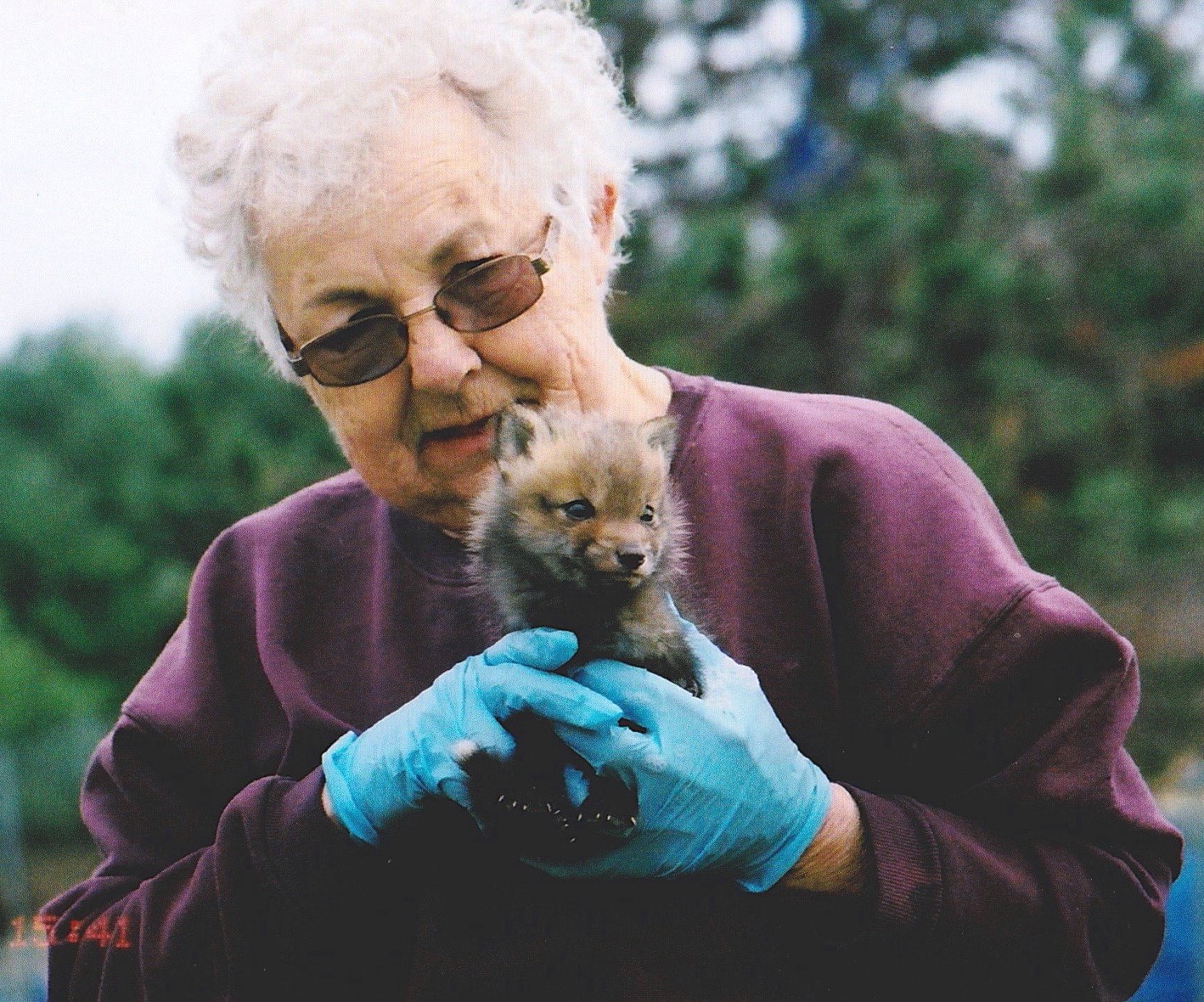
The late Carleen Cote with a baby fox. (Duck Pond file photo)

by Jayne Winters

While the recent signs of an early spring encourage most of us to anxiously look forward to warmer days and more outside activities, this time of year is one of mixed emotions for Don Cote and the volunteers at Duck Pond Wildlife Care Center.

These last weeks of winter still require shoveling, plowing, and sanding; freeing water tubs from ice; replacing soiled and sometimes frozen bedding; cleaning pens; doing multiple loads of daily laundry; washing and disinfecting food dishes; preparing meals; and tending to injured and sick animals. Wildlife rehabbers are not ‘fair weather’ friends: whether it rains or snows or the wind howls, the critters must be cared for several times a day.

Don also takes care of a variety of his own ducks and geese year ‘round, requiring nesting materials, fresh water and different feed. So, while the folks at Duck Pond won’t miss doing chores in frigid temperatures, they’re also thinking about the busyness of the coming spring and how to begin preparing for it.

As Carleen [Cote] wrote in 2004, March is when they begin looking at catalogues and deciding what supplies will be needed. Orders for milk, milk replacements, supplements, electrolytes, vitamins, and foodstuffs for so many animals are mind boggling. Typical spring admissions include squirrels, chipmunks, woodchucks, skunks, raccoons, porcupines, foxes, opossums, fawns, and the occasional mice, rabbits, birds, coyotes, and bobcats. It’s hard to plan for so many different needs.

In addition, Don has to be sure there are special bottles, nipples and syringes for feeding the very young babies, as well as enough medications, bandages and other first aid items for emergency treatment of wounds and broken bones on injured, abandoned or orphaned animals that will soon arrive.

With warmer weather come more admissions from vehicular accidents, especially youngsters who haven’t yet learned the dangers and survival skills of living in the wild. There are also admissions from well-meaning citizens who think little ones have been abandoned by their mothers, when in actuality they may be seeking food or a better den area to raise their brood.

On a happier and more rewarding note, this is the time of year to think about when and where to release the animals that have overwintered at Duck Pond because they were too young or not well enough for fall release. This May will see the three bobcat kittens, several deer, foxes and raccoons return to the fields and forests that await them. Although I’m sure some of the young residents at the Care Center hold a special place in Don’s and the volunteers’ hearts, I’m also sure they feel a sense of gratitude to know their months of nurturing care truly made a difference.

Don plans to continue to gradually keep admissions and long-term residents to a more manageable level by transferring many rescued critters to other rehabbers who have so generously offered to assist in their care. Please check these websites to see if there is a rehabber closer to you to help make critter care at Duck Pond more practicable: https://www.mainevetmed.org/wildlife-rehabilitation or https://www.maine.gov/ifw/fish-wildlife/wildlife/living-with-wildlife/orphaned-injured-wildlife/rehabilitation.html. Donald Cote operates Duck Pond Wildlife Care Center on Rte. 3 in Vassalboro. It is a non-profit state permitted rehab facility supported by his own resources & outside donations. Mailing address: 1787 North Belfast Ave., Vassalboro ME 04989 TEL: (207) 445-4326.

OPINIONS: Who needs broadband? What can you do?

Photo credit: Barta IV, https://www.flickr.com/photos/98640399@N08/9287370881

COMMUNITY COMMENTARY

by Amy Davidoff

Who needs broadband? We all do. Do we all have it? Undoubtedly not, but we don’t know and need to find out. A town broadband committee can encourage speed testing and get us the information we need.

Broadband availability and affordability are critical for the health and welfare of our town. What is broadband? Maine broadband standards are now 100 mbps download and upload speeds. Very few of us have that speed. There are federal funds available to build infrastructure and expand access to broadband, but we can’t tap into it without knowing what we need.

As we have learned through the past two years, access to the internet is critical for so much in our lives. It is critical for educational opportunities for kids and adults, for telehealth appointments and medical information, for attracting/retaining businesses, for improving citizen engagement. Some of us have adequate internet speeds, at least for now, while others have either slow speeds (underserved) or no internet at all (unserved). Whether it is available and whether it is affordable to our citizens are important questions to answer.

So, what can you do?

Take the internet speed test:

The Maine Broadband Coalition has the way to collect the data: https://www.mainebroadbandcoalition.org.

This will help us identify who has no internet access (by indicating that you have no service), and what internet speeds the rest of us have.

Want to do more?

The Vassalboro Select Board members agreed to form an ad hoc Broadband Committee. Your passion and/or expertise would be most welcomed. Want to know more? Please contact Amy Davidoff, (207) 284-3417, adavidoff@une.edu.

SCORES & OUTDOORS – Osprey vs. eagle: ruling the skies

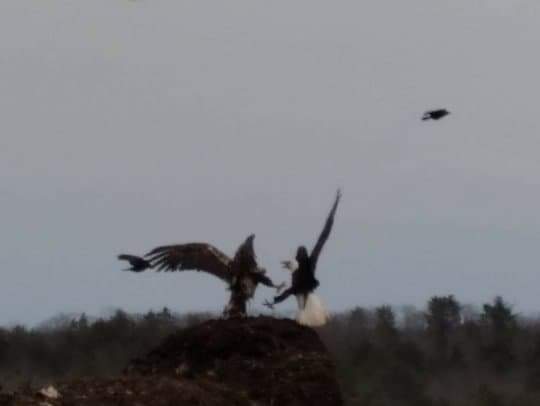
Osprey and bald eagle do battle. (photo by Gary Kennedy)

Roland D. Halleeby Roland D. Hallee

Recently, a regular contributor to The Town Line, Gary Kennedy, of Chelsea, and his wife Julie witnessed a battle between an osprey and a bald eagle, probably over territorial rites – or food.

I could relate to the story as my wife and I witnessed the same a few years ago while fishing on Webber Pond. In both instances, the bald eagle won the day. So, do bald eagles and ospreys get along?

Opportunistic bald eagles and ospreys share much of the same habitat, so ospreys are frequently the victims of nest raids by the eagles. Proud, powerful and the national symbol of the United States, bald eagles are birds of prey that are extremely territorial during nesting season but highly social at other times.

They use their talons to fish; or, instead of catching their own, they’ll go after an osprey or another fish-eating bird, forcing it to drop its prey, which the eagle grabs in midair.

Opportunists, they’ll also scavenge carrion or catch and eat amphibians, invertebrates, small mammals, reptiles and other birds’ fledglings.

Once an eagle gets you in its sights, it can be a vigorous foe—as that osprey recently learned.

Ospreys require nest sites in open surroundings for easy approach, with wide, sturdy bases and safety from ground predators, such as raccoons.

In Kennedy’s video, you see a bald eagle and an osprey do combat. As part of their plan of attack, at dusk, with both osprey parents away, the bald eagle will sweep in from over the water toward the nest containing three chicks. One of the osprey parents will engage the eagle, ready to defend the nest, but it can’t match the speed and strength of the eagle, which manages to nab one of the chicks with its huge talons before taking off.

It’s not uncommon for osprey to lose their entire brood to eagle attacks.

Adept at soaring and diving but not as maneuverable as other hawks, ospreys fly with stiff wingbeats in a steady, rowing motion. They do, however, vigorously chase birds that encroach on their nests.

But ospreys, too, launch their share of attacks ­– and some of them are on eagles. They have been observed attacking a Canada gooose who happened to be at the wrong place at the wrong time.

Is it a coincidence that bald eagles will frequently build their nests near osprey nests. Not really. It’s just the bald eagle is smart enough to know that if it nests near ospreys, that it will have ample opportunity to steal fish from the ospreys throughout summer?

However, there are many differences between ospreys and bald eagles.

Size: Osprey have an average 59- to 70-inch wingspan and weigh three to four pounds. They have long, narrow wings with a marked kink that makes them look like an M-shape from below.

The bald eagle is one of the largest birds in North America, with an average 80-inch wingspan and weighing 6.5 to almost 14 pounds.

Diet: Osprey eat a diet of about 99 percent fish, usually 4 – 12 inches long. The type of fish varies depending on where in the world the osprey lives.

Bald eagles love fish as well, and sometimes rather than doing their own hunting they will harass osprey, making them drop their fish or even steal their fish right out of their talons.

Bald eagles also eat birds, reptiles, amphibians, rabbits and muskrat, both live or as carrion. They sometimes gorge on food and digest it over several days, and they can also survive fasting for many days or even weeks.

Beak: An osprey’s beak is black, short and has a sharp hook that helps it tear into fish to eat.

Bald eagles have a yellow beak which is also hooked for tearing into flesh.

Special abilities: Osprey can dive about three feet into the water to catch fish, and they can dive both head and feet first. They also have the ability to take off straight from the water instead of having to swim to shore.

Sometimes bald eagles hunt cooperatively, with one individual flushing prey toward another.

Nest: Osprey nests are built of sticks and lined with bark, sod, grasses, corn stalks and other softer materials. Most nesting platforms are about 5 feet wide and a foot deep. However, it has been seen that osprey who nest in the same place year after year have ended up with nests 10-13 feet deep and 3-6 feet in diameter.

Osprey also like to nest in open areas, usually built on snags, treetops, cliffs or human-built platforms, cell phone towers or light towers.

Bald eagles nest in trees, usually conifers, and create huge nests — five to six feet wide and two to four feet deep – out of sticks lined with grass, moss or corn stalks. Nests can take up to three months to build. Bald eagles typically build near the trunk of a tree, high but not at the crown like osprey. Some eagles also nest on the ground when necessary, using kelp or driftwood for construction near coastal shorelines.

Ospreys and bald eagles, although they usually share territory, and in the case of the eagle, the osprey’s catch of the day, are quite different in their own right.

Roland’s trivia question of the week:

Has anyone pitched a no-hitter in the World Series?

Answer can be found here.

FOR YOUR HEALTH: Gym Or No Gym? Finding Your Ideal Exercise Routine

The immersive JRNY digital fitness platform features hundreds of workouts.

(NAPSI)—They say old habits die hard, but for a lot of people the last two years have proven otherwise. The COVID-19 pandemic fueled a seismic shift in the way people view physical and mental health—and lately, many have had a chance to reflect on old habits and routines.

If you’re looking to improve your physical or mental health, there may be no better tool than exercise. It offers numerous benefits including lower blood pressure, improved bone health and reduced risk of diseases. Moving your body stimulates different parts of your brain to release feel-good chemicals including serotonin, endorphins and dopamine, leading to a cascade effect of better sleep, sharper thinking, reduced stress and enhanced mood.

With the mass adoption of hybrid work models that let you swap your morning commutes with a sweat session or moment of mindfulness, the reopening of gyms and fitness centers and spring right around the corner, now’s a good time to replace your old, tired routines.

Tom Holland, exercise physiologist and Bowflex fitness advisor, says it’s an exciting moment in fitness and a great time for people to begin thinking about what their exercise routine might look like, with so many options available including working out at home, outside or at the gym.

Here are a few ideas to help you get started:

• Take up a new at-home routine: At-home workouts are the new normal for many and can be just as effective as a workout done at a gym—not to mention easier to fit into a busy routine. Fitness apps such as the JRNY digital fitness platform (https://www.bowflex.com/jrny.html)—which offers a range of classes including strength, stretching, yoga and Pilates—can be great tools to take the guesswork out of trying a new exercise.

“At-home fitness equipment is better than ever before and you no longer need a gym membership to get in a great workout,” says Holland. “With new digital technologies such as wearables and connected machines, you can get the kind of customized, comprehensive fitness plans that were once reserved for professional athletes.”

Versatile home equipment such as the Bowflex VeloCore Bike 22” (https://www.bowflex.com/bikes/velocore/100914.html) are great for getting in a cardio session without the need to go to a gym. With the JRNY app on the VeloCore bike, you can tour new cities, participate in trainer-led rides or catch up on your favorite shows on Netflix, Hulu, Amazon Prime Video, HBO Max and Disney+.

Sweat the small stuff: Even small amounts of exercise can be beneficial. If you’re at a desk or sitting still most of the day, try standing up at frequent intervals throughout the day, going for walks or doing short workouts such as jumping jacks or squats. This can help counter the negative effects of a sedentary lifestyle, which is especially important in the work-from-home era.

• Get outside: There’s a strong link between time spent outdoors and physiological benefits, including reduced stress and mental fatigue and improved mood.

“Consider taking a daily walk or picking up an outdoor hobby to ensure you’re getting enough time outside,” suggests Holland. “Pets can be a great reason to get outside more frequently, so if you’ve ever thought about getting a dog, maybe now is the time!”

• Take up a family or group activity: Exercise doesn’t have to be a solo activity. In fact, it can be a great opportunity to spend some quality time with friends and family. Recreational sports such as pickleball are easy to learn and can be accessible fun for the whole family, no matter the age or ability level.

“Pickleball is a new activity I’ve discovered and one my whole family has been enjoying,” Holland adds. “If you’re thinking about giving it a try but are concerned about your fitness level, I recommend exercises like bodyweight squats, skaters and jumping jacks as a warm-up to get your body in pickleball-playing shape.”

GROWING YOUR BUSINESS: The book business owners should read

Growing your businessby Dan Beaulieu
Business consultant

Here is a book all business owners should read:

Leaders Eat Last: Why some teams pull together, and others don’t.
By Simon Sinek
Copyright 2014 Portfolio/Penguin Random House L.L.C.
Price: $18.00 Paperback
Pages: 350 pages with index
A time for leaders

Leaders create culture and culture; the right culture, is what makes great companies and organizations. Leaders lead by example. Leaders allow the key word there being allow their teams to be great.

No matter the size of your organization from three people to 3,000 people, culture is always important. Culture is what makes a great company in the end. And that must come from the top.

The simple example of a company president walking down the hall of his company and bending down to pick up a piece of paper off the floor is powerful. Much more powerful than all the talks about keeping the place clean.

Leaders look out for their people. In fact, author Simon Sinek says that we need to treat employees like our children and look out for them the same way we would our children.

A few years back, in the ‘80s, when Milton Friedman’s economics declared that companies only goal was to make money for the shareholders. Yikes! Look where that got us.

The big heroes at that time were Jack Welch and Al Chainsaw Dunlap whose answer to every problem was to cut heads. And whenever they did that, Wall Street cheered!

As an aside the children and now grandchildren of these headless victims watched this happen. It affected them first hand. No wonder they come to us today with a deep built-in distrust of corporations.

Consider where we are today, now when these ensuing generations are wary of joining companies, They don’t trust companies. They witnessed first hand that lauded leaders like Mr. Welch bragged about laying off ten percent of his management staff every year. What are they supposed to think?

No longer is this style treatment working, nor will it work in the future. The new trend of leader eats last. This means she takes care of here people first…and then they will take care of her.

As an example of the new kind of leader, the kind who is succeeding today, the author relates the story of Bob Chapman and his company Barry-Wehmiller. Bob Chapman is known for buying distressed companies and making them better. When one of these companies ran into trouble, Bob did not want to lay off people, which went against everything that he had been taught. He felt that if his family ran into financial difficulties, he would not send a couple of his kids away. And the same thing applied to his company.

Instead of laying off people he talked to his people, and they found ways to cooperate with one another to make sure everyone took care of everyone else.

This is just one example of how leaders eat last. How they are finding ways to take care of their people which in turn will take care of the company.

Okay, I can hear some of you humming Kumbaya in disgust. Sorry you feel that way, for your own sake. You had better read this book and get religion, or you are going to be one of those companies that goes out of business for lack of a work force. It will certainly help you be a great leader of a growing company.

I’M JUST CURIOUS: Old time remedies continued

by Debbie Walker

This week I want to thank Tom for sending me another remedy for getting rid of warts. It went something like this: “Take two pennies (one for each hand) and go to a place out of doors such as a field. Take a penny and rub it on the warts of the opposite hand and then throw it over that shoulder (left hand rubbed, throw over that shoulder.” Tom says after a couple of weeks, the warts turned black and fell off, never to return. Me, I just like the results without the fancy reason.

I have a friend whose mother taught him something a little different. If you get cut and it doesn’t want to quit bleeding, you pour black pepper in it. I did see that work. Don’t forget if you have question you might want to talk to your nurse, or maybe your pharmacist.

Banish Headaches:

Strong coffee may lesson the severity of a sick headache (sometimes called a migraine).

Soaking the hands in very in very hot water will ease pain in the head.

The distinctive fragrance of fresh green apples is very useful for relieving the pain of a migraine headache.

Coughs, Congestion and Sore Throats:

Chew honeycomb every day to relieve breathing tract problems. It will make you immune to allergy producing germs; honeycomb is most effective when it when it comes from bees in local hives.

Ease a sore throat and stop sinus drainage with one teaspoon vinegar in a glass of water. Gargle once an hour until cured.

Toast thinly sliced bread and then spread butter on both sides. Cover with scalded milk and spoon feed it to those suffering with a fever or the aches of flu.

I have a few things completely off topic that I would like to share with you while you are still in your winter months:

Outsmart Common Winter Stains:

Erase hot chocolate spills with salt: Simply blot the stain with water, cover with salt, then buff with a damp sponge dipped in laundry detergent.

Lift candle wax with this hot and cold trick: To easily get rid of wax stains, first rub the spots with an ice cube (this hardens the wax) scrape off with a butter knife. Then place folded paper towels on the area and press with a warm (not hot) dry iron to remelt and absorb any excess wax and voila!

Eliminate lotion marks with dishwashing liquid: greasy lotion is great for dry skin, but it leaves stains on your clothes! To remove them stir 1 teaspoon of dishwashing detergent ( it breaks down and lifts grease) into three teaspoons of water and pour onto stain, Pat liquid into the stain with a clean toothbrush then let sit for two minutes before rinsing with cool water,

I’m just curious what you will be doing with your time this week. Take time to relax whenever you can. It’s important. Contact me at DebbieWalker@yahoo.com.

REVIEW POTPOURRI – Conductor/violinist: Lorin Maazel

Lorin Maazel

Peter Catesby Peter Cates

Lorin Maazel

Conductor/violinist Lorin Maazel (1930-2015) was a child prodigy and at 9 years of age guest-conducted the New York Philharmonic at the 1939 World’s Fair at the invitation of Leopold Stokowski.

Maazel had a reputation for being a little supercilious prig; when he inquired at a rehearsal, “What are we playing today, gentlemen?”, someone yelled out, “How about cowboys and Indians?”

When he was in third grade, he was enrolled in advanced French and calculus. As a teenager, he was a member of the Pittsburgh Symphony during its years under the holy terror leadership of Fritz Reiner and was one of the founding members of that city’s renowned Fine Arts Quartet (its cellist George Sopkin retired to the Maine woods in the late 70s).

Maazel headed to Europe for further study and made an impression in guest-conducting engagements. In 1960, he was the first American to conduct at the summer Wagner Festival in Bayreuth, Germany.

By 1965, he was music director of the West Berlin Deutsche Opera and Radio Symphony Orchestra, with which he recorded Verdi’s Traviata, Beethoven’s Fidelio, and Puccini’s Tosca at the opera and Bach’s B minor Mass and Mozart’s Symphonies 38 and 39, to name a few that stand out.

Also exemplary were sets of the Tchaikovsky 6 Symphonies and Sibelius’s 7 with the Vienna Philharmonic.

Maazel’s conducting style was a strange mixture of very exciting and willfully hum drum, as though he was either ignited by a particular piece or didn’t give a hoot. Interestingly, I noticed in having attended two of his concerts that, when he was willfully hum drum in the performance, he seemed to be enjoying himself and quite transfixed.

His technique was crystal clear, he had a photogenic memory and he learned new works at the speed of light.

His appearances in the United States were slow to come but he did guest-conduct several times with the New York Philharmonic during the early to mid ‘60s when Leonard Bernstein was out of town.

Then in 1972, he succeeded the late George Szell as music director of the Cleveland Orchestra and won Grammies for the orchestra’s recordings of the complete Prokofiev Romeo and Juliet ballet and George Gershwin’s opera Porgy and Bess.

His appointment there did spark controversy. He was one of four candidates with the others being Istvan Kertesz, Rafael Fruhbeck de Burgos and Claudio Abbado and was the last choice in a poll taken among the players in the orchestra, but the trustees and other moneymen pulled a fast one and chose Maazel.

I cherish his Cleveland sets of the Beethoven 9 and Brahms 4 Symphonies for, again, their feisty and perverse eccentricities and the very colorful Moussorgsky Pictures at an Exhibition.

From 1982 to 1985, Maazel spent very turbulent years as music director of the Vienna State Opera, succeeded André Previn in Pittsburgh in 1988, took a position in 1996 with the Bavarian Radio Orchestra, in Munich, and then led the New York Philharmonic from 2002 to 2008.

Maazel owned a 600-acre farm in Castleton, Virginia, where he and his third wife set up a summer music school and festival during the 2000s.

By early 2014, the conductor’s health was failing and he died in July of that year.

His widow is still running the Castleton Summer Music Festival.

Much of Lorin Maazel’s music making can be accessed on YouTube.

SMALL SPACE GARDENING: Always room for strawberries

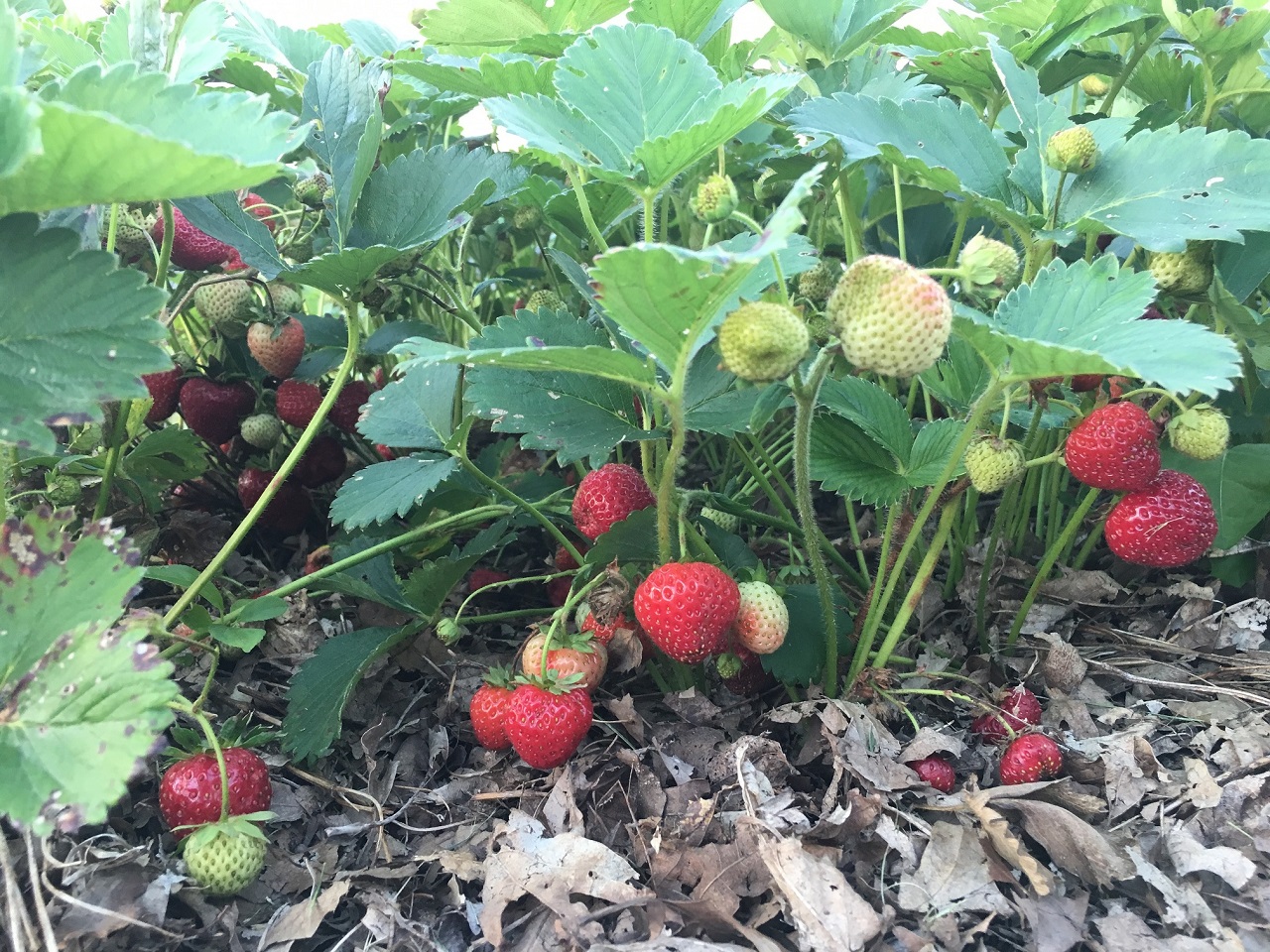
Delizz® is a day-neutral strawberry that was the first ever strawberry to be selected as an All-America Selections winner. (photo courtesy of MelindaMyers.com)

by Melinda Myers

As you plan this year’s garden, be sure to include some strawberries. They are low in calories, high in vitamin C and antioxidants, and provide seasonal interest in gardens and containers.

Best of all, you don’t need much space to grow this delicious fruit. There are three types of strawberries: June or spring bearing, everbearing, and day neutral. Select the best type of strawberry for your space and harvest needs.

June-bearing strawberries produce one crop of berries in late spring to early summer, depending on where you garden. They produce the largest harvest but in the shortest span of time. Plant now and enjoy an abundant harvest next year.

Everbearing strawberries usually produce two crops of berries each year. You’ll enjoy fresh strawberries early and late in the season, while day-neutral plants produce berries throughout the growing season.

Delizz®, a day-neutral strawberry, was the first ever strawberry to be selected as an All-America Selections Winner. Just like the flower and vegetable winners, it was tested nationally and selected for its performance for the home garden. This 2016 winner is a compact plant perfect for hanging baskets, containers or garden beds. It can be started from seed or transplants and will produce sweet fruit the first year and all season long, even during hot weather.

Up the ornamental appeal of traditional in-ground plantings with a star shaped or tiered bed. The elevated beds make for easier planting, weeding, and harvesting. You’ll find a variety of tiered shaped beds to purchase or plans to make your own.

Use strawberries as a groundcover in sunny well-drained locations for an abundant harvest. Their attractive leaves, white flowers, red fruit and brilliant red fall color add sparkle to the landscape and provide fresh fruit for your meals.

Or grow them in a container, window box or hanging basket on your porch, balcony, or deck. They’ll be close at hand and easy to harvest.

Mix a few everbearing or day-neutral strawberries in with flowers to create an edible and ornamental planter. The harvest will be smaller when grown in a mixed container, but the flowers, fruit and fall color add ornamental appeal and the fruit will be a welcome treat.

Boost the harvest by growing strawberries in their own container. Fill a hanging basket and watch as the runners cascade over the edge for added ornamental appeal.

Try filling a traditional strawberry pot – container with planting hole openings on the top and sides – with plants that produce several harvests and remove the runners as needed. Keep all the plants from top to bottom looking their best with this DIY watering device. Place soil on the bottom of the container. Set a couple of perforated PVC down through the planter. Slide the plants through the hole from the inside of the pot. Fill the remaining space with soil. Gently tamp and water thoroughly to eliminate air pockets. As you water, the water travels through the pipe and out the holes, providing moisture to all plants from top to bottom.

Check containers daily and water thoroughly and often enough to keep the soil slightly moist. Reduce maintenance and increase success by incorporating a low nitrogen slow-release fertilizer into the soil at planting or sprinkle over the soil surface as needed. This type of fertilizer promotes growth without interfering with flowering and fruit production.

Start now identifying spaces to add strawberries to your landscape, deck and balcony. Then order seeds or plants early for the greatest selection. Before you know it, you’ll be enjoying garden fresh strawberries in your morning cereal, salads or as a snack at the end of the day.

Melinda Myers has written more than 20 gardening books, including The Midwest Gardener’s Handbook and Small Space Gardening. She hosts The Great Courses “How to Grow Anything” DVD series and the nationally-syndicated Melinda’s Garden Moment TV & radio program. Myers is a columnist and contributing editor for Birds & Blooms magazine. Her website is www.melindamyers.com.

SCORES & OUTDOORS: Giant spiders expected to drop from sky across the East Coast this spring

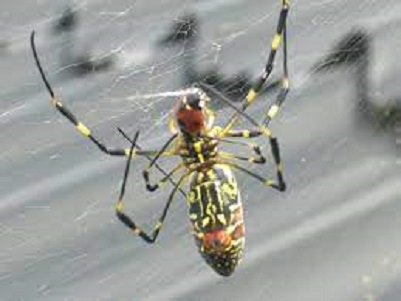
Large Joro spider.

Roland D. Halleeby Roland D. Hallee

OK, ladies and gentlemen, get ready for this. The ticks are out early, the brown tail moth caterpillar is ready to wreak havoc on us for another year, and, of course, there is the black fly season. And now… A creepy, large yellow and black spider with a bulbous, bright yellow body is crawling along a tree branch, and, are you ready for this?, will be literally falling from the sky.

An invasive species of spider the size of a child’s hand is expected to “colonize” the entire East Coast by parachuting down from the sky, researchers at the University of Georgia announced last week. and no, this is not an early April Fools’ joke!

Large Joro spiders — millions of them — are expected to begin “ballooning” up and down the East Coast as early as May. Researchers have determined the spiders can tolerate cold weather, but are harmless to humans as their fangs are too small to break human skin. Although the spider is not aggressive, they will bite to protect themselves. The bite is considered quite painful, but not life-threatening.

All spiders are venomous, but some are dangerously venomous, like the black widow and brown recluse here in the United States, but the Joros are not.

The Joro spider is native to Japan but began infiltrating the U.S. in 2013, concentrating in the southeast and specifically Georgia, according to National Public Radio. (What is it with new nuisances coming from the Far East?) They fanned out across the state using their webs as tiny, terrifying parachutes to travel with the wind. They were first spotted in Hoschton, Georgia, in 2013. Since then, they have been spotted in numerous locations in northeast Georgia and also in Greenville, South Carolina. It is believed the species will become naturalized.

Andy Davis, author of the study and a researcher at Georgia’s Odum School of Ecology, says it isn’t certain how far north the spiders will travel, but they may make it as far north as Washington D.C. or even Delaware. (Whew! For a minute there I thought we were going to be Ground Zero.)

“It looks like the Joro could probably survive throughout most of the Eastern Seaboard here, which is pretty sobering,” says Davis.

They are bright yellow, black, blue, and red and can grow up to three inches.

They likely traveled across the globe on shipping containers, similar to when the Bubonic plague entered the United States. They are expected to colonize much of the Eastern Seaboard of the United States due to their relative imperviousness to the cold.

Their life cycle begins in early spring, but they get big in June and are often seen in July and August.

They’re named for Jorōgumo, a creature of Japanese folklore that can change her appearance into that of a beautiful woman. She seeks men to seduce, whom she then binds in her silk and devours.

As of 2021, their impact on their new ecosystem is unknown. They have been observed catching the brown marmorated stink bug, another invasive species that native spiders have not been known to eat, and it has also been hoped they may consume mosquitoes and flies (Wouldn’t that be great? But, be careful what you wish for).

Some hope the impact of the species will be positive due to their harmless nature and consumption of primarily invasive or nuisance insects, however, because of the relative lack of information about their ecology and the usual negative effects of most non-native species, it remains unknown whether Joro spiders may ultimately have a positive or negative effect on the ecosystem

Researchers say there’s nothing we can do. There isn’t much to stop them from getting established up and down the east coast through the ballooning dispersal method. Experts said it will likely take much longer than just this spring or summer for the spiders to get established throughout the eastern United States. Instead, it’s thought they will slowly colonize the east coast over the course of the next decade or so.

They’re coming and they’re harmless. Still, I say let’s build a wall to stop them from moving north, and keep them south of Delaware.

Roland’s trivia question of the week:

Who was the winning pitcher for the Boston Red Sox in the clinching game in the 2018 World Series?

Answer can be found here.